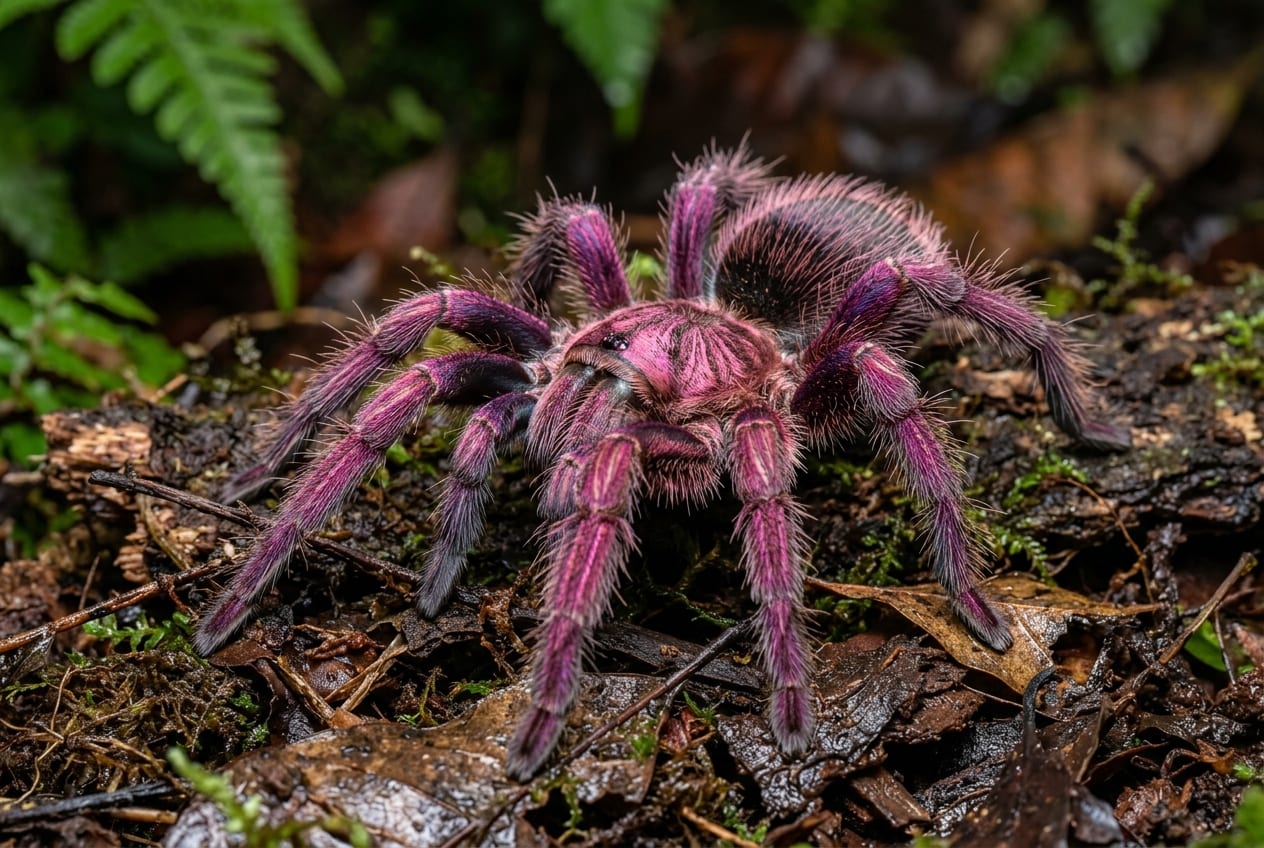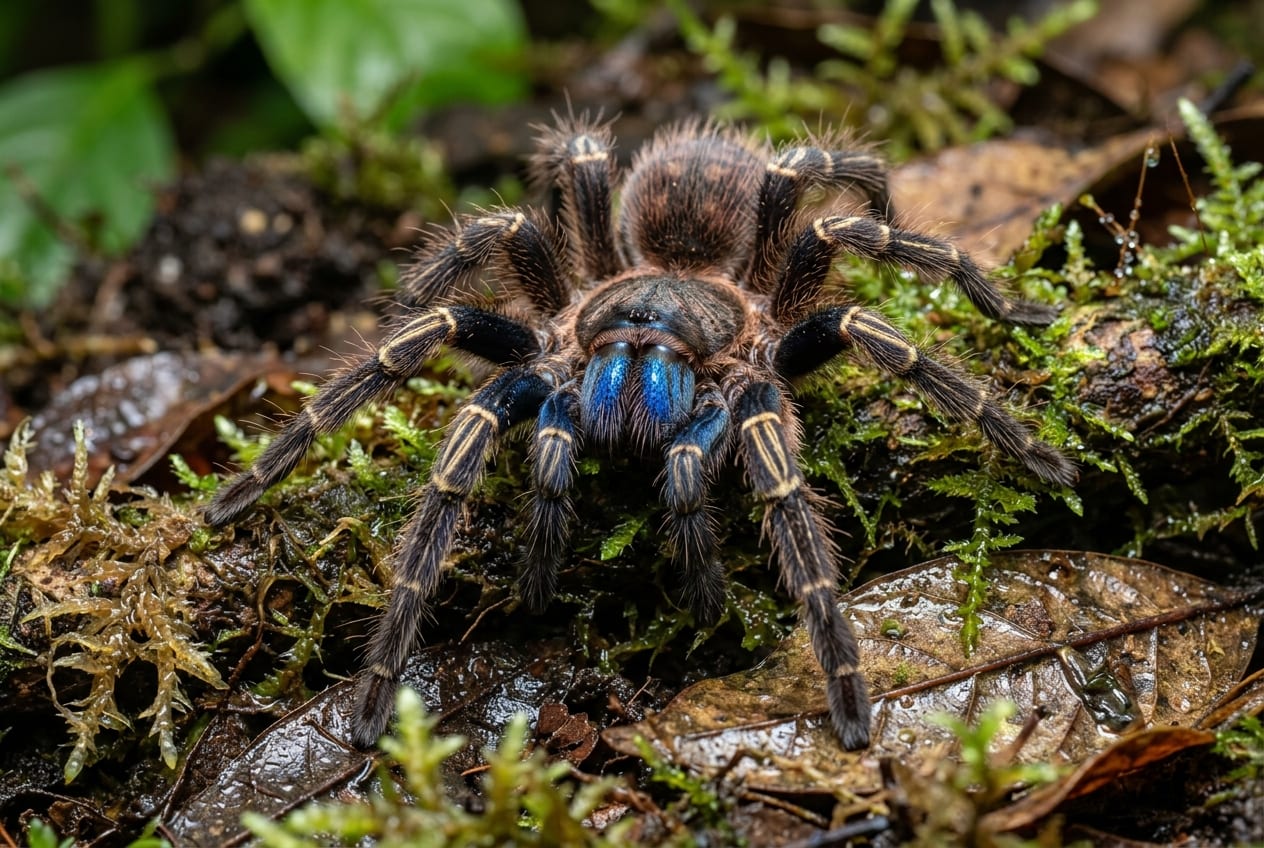
AI-generated image
Blue Fang Tarantula
IntermediateEphebopus cyanognathus
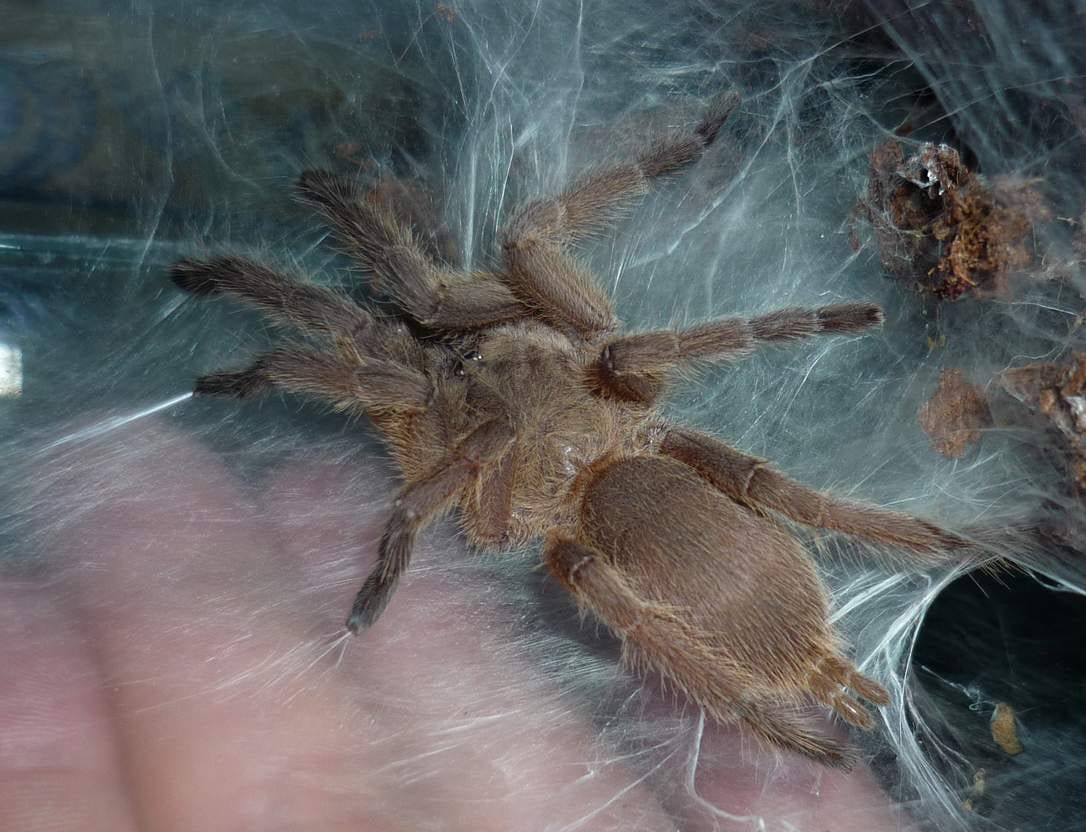
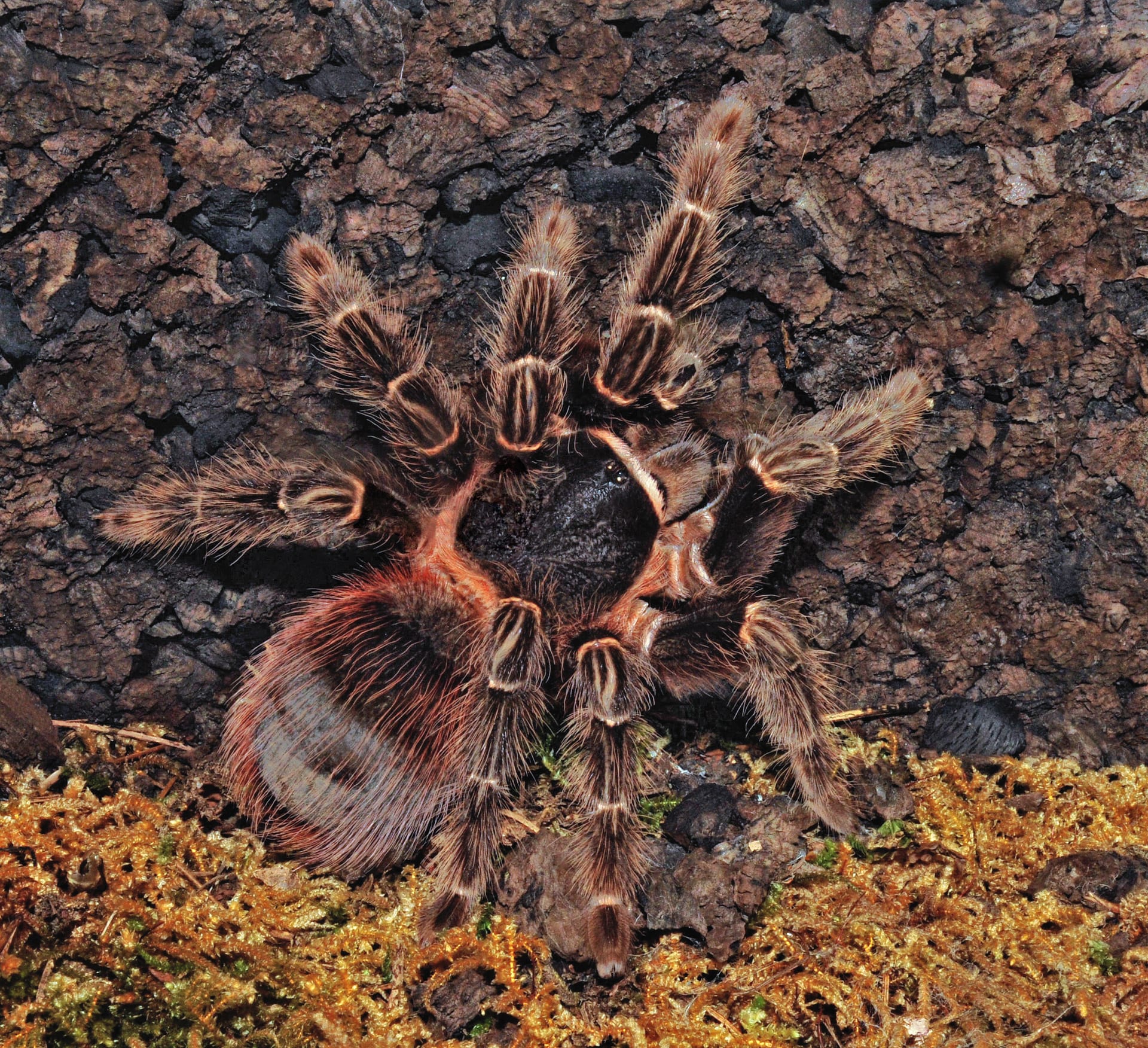
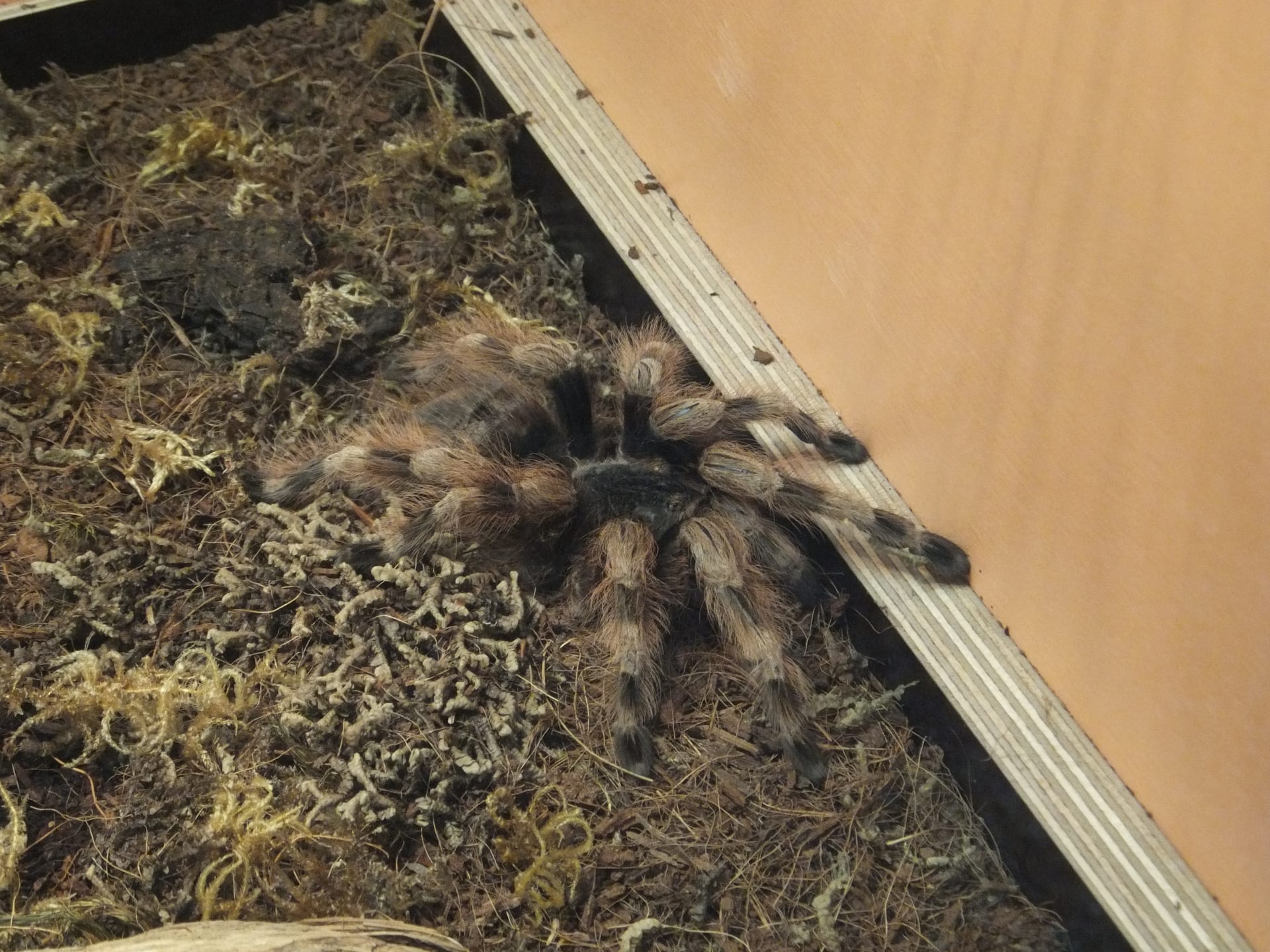
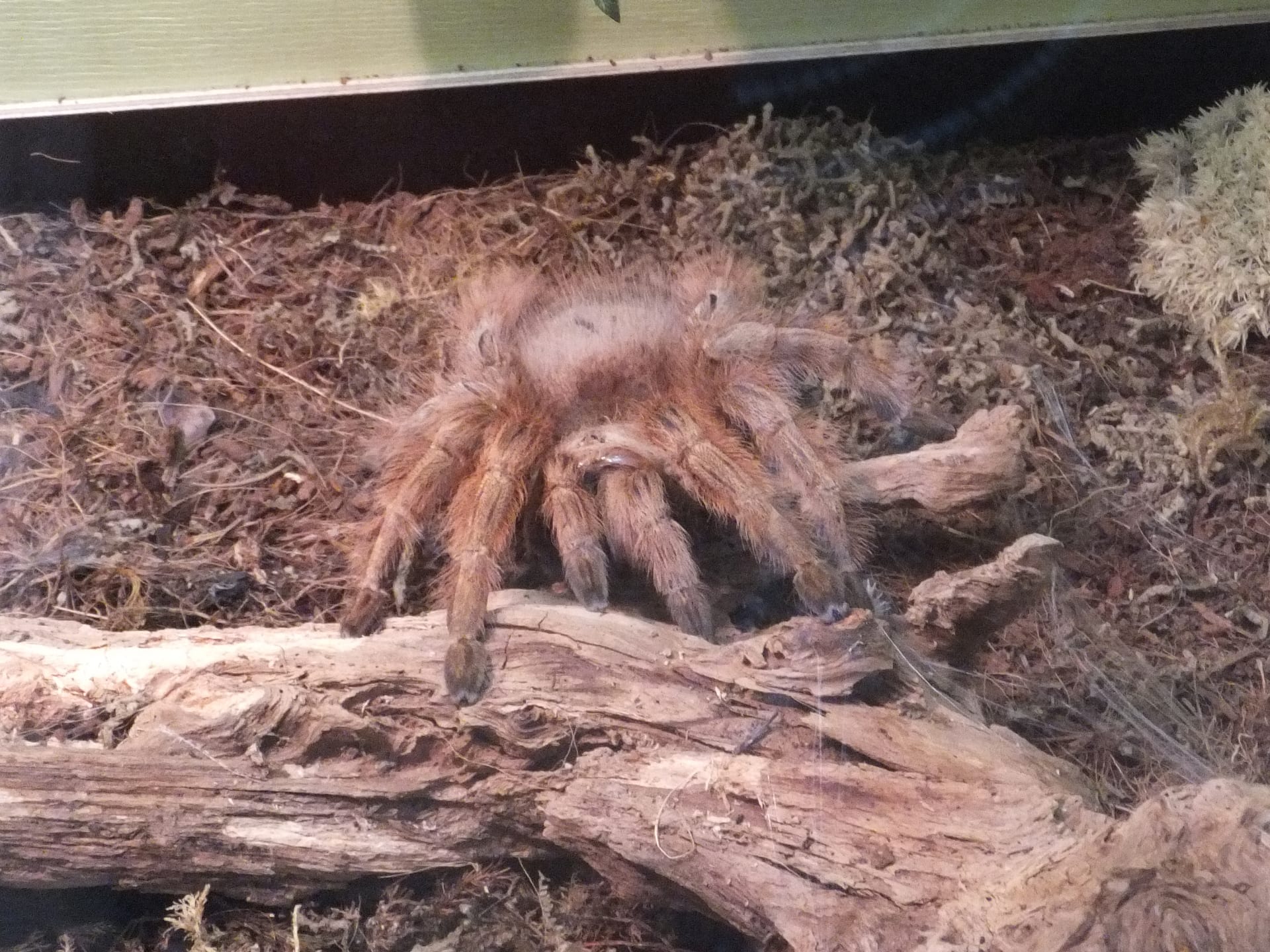
A terrestrial tarantula endemic to French Guiana, notable for metallic blue chelicerae and yellow rings on the legs. A small species at about 14cm leg span, adults burrow while spiderlings are semi-arboreal.
Difficulty
Intermediate
Temperature
23〜27℃
Lifespan
Females 12-15 years, males 3-4 years
Size
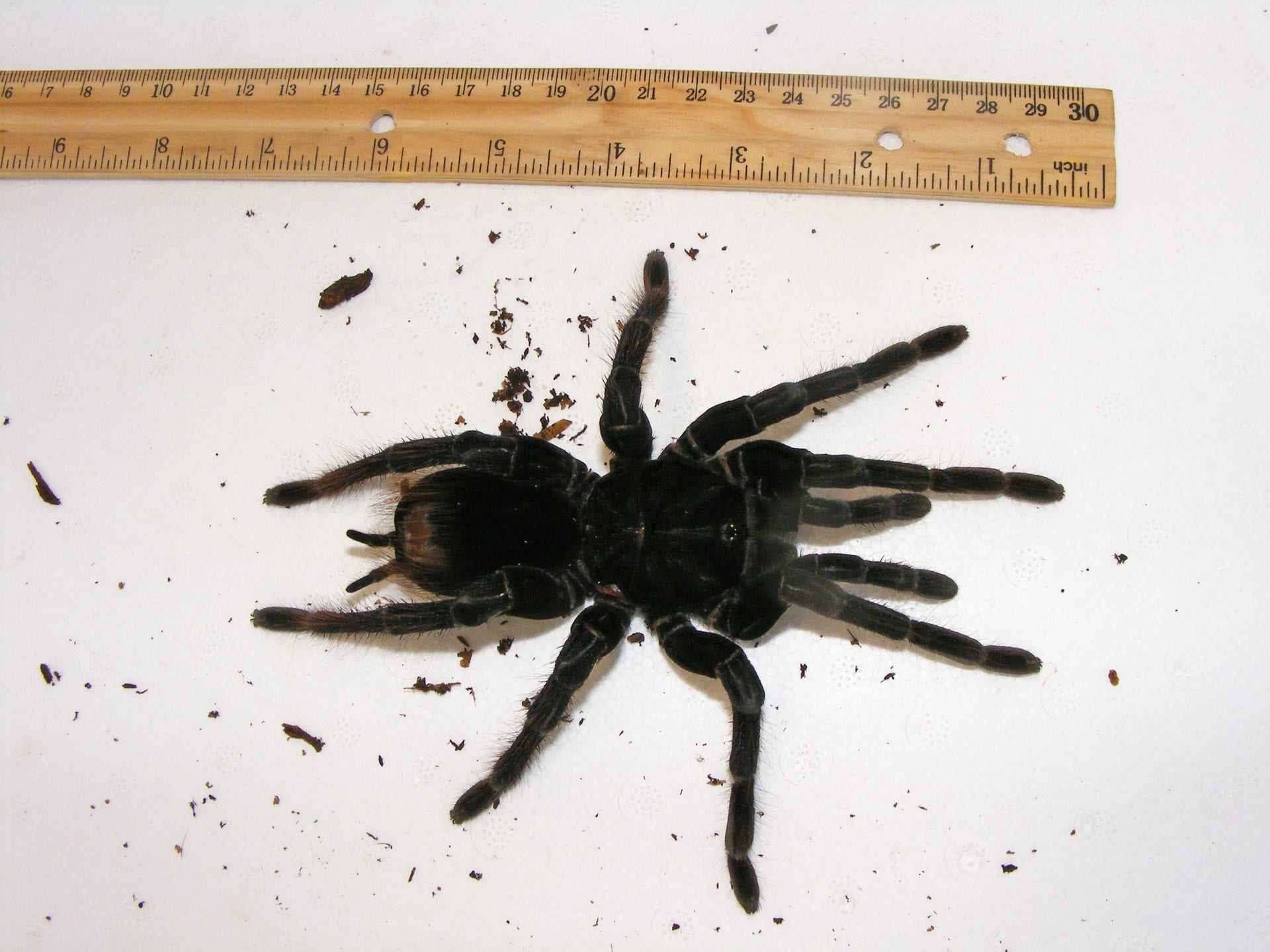
Body 4-5.5cm, leg span 11-14cm
Humidity
70〜80%
Diet
Active live insects such as crickets and roaches
About
Ephebopus cyanognathus was described in 2000 by West and Marshall and is endemic to French Guiana. The specific name is Latinised Greek for blue jaw and refers to the blue setae on the basal segments of the chelicerae. Adults are brown to blackish brown; females have deep blue chelicerae while males are purplish, and both retain yellow rings between the femur and patella of every leg. Juveniles are brighter still, with a golden-green abdomen and pinkish legs. It is recorded from the Tresor nature reserve, the type locality, as well as Roura, Kourou and Saul, digging burrows in year-round damp clay and lateritic soils on shaded steep slopes at 200-300m. In captivity an enclosure of about 30 by 30 by 35cm with a substrate layer of ten-odd centimetres suits it, at 23-27 C and 70-80 percent humidity. It prefers to flee but will flick hairs or bite if cornered.
Source: Wikipedia (CC BY-SA 4.0)
Lifespan of the Blue Fang Tarantula
The Blue Fang Tarantula lives Females 12-15 years, males 3-4 years.
Size of the Blue Fang Tarantula
The Blue Fang Tarantula grows to Body 4-5.5cm, leg span 11-14cm.
Body length is 4-5.5cm and leg span up to 14cm, making it small for a tarantula.
Temperature & humidity for the Blue Fang Tarantula
The ideal temperature for the Blue Fang Tarantula is 23〜27℃. Ideal humidity is 70〜80%.
Basic Info
Origin
Endemic to French Guiana, in upland rainforest at 200-300m elevation
Care Specifications
Semi-aggressiveSolitary
Sources: Polish Wikipedia: Ephebopus cyanognathus (husbandry) / German Wikipedia: Ephebopus cyanognathus / Wikipedia: Ephebopus cyanognathus / GBIF
References & Sources
Edited & verified by: BreederDirect editorial team
The taxonomic, regulatory, and husbandry data on this page are compiled and verified against the authoritative primary sources below.
Taxonomy & Authority
Accepted name: Ephebopus cyanognathus West & Marshall, 2000
Authority databases: GBIF
Nomenclature follows global taxonomic authority databases.
Regulations & Conservation Status
Not CITES-listed
Sources: CITES Appendices (species not listed)
Regulations may change. Always verify the latest information with the relevant authorities.
Blue Fang Tarantula Listings
Loading latest listingsFind listings for this species