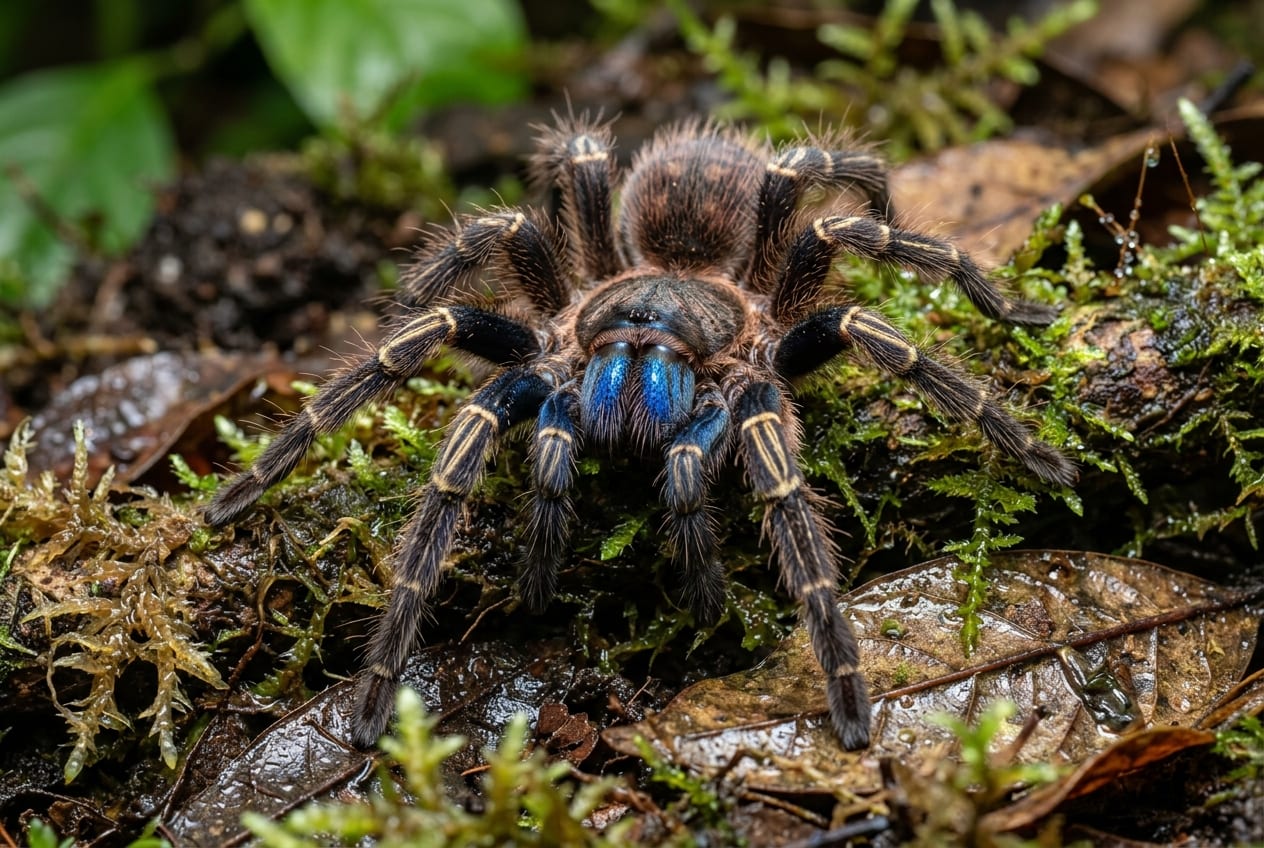
Blue Fang Tarantula
With metallic-blue fangs and bold yellow rings around each leg, the Blue Fang Tarantula is a striking species native to French Guiana. It's a compact tarantula, reaching a legspan of around 11-14cm and a body length of 4-5.5cm. Spiderlings spend much of their time off the ground in slightly elevated hides, while adults switch to a burrowing, ground-dwelling lifestyle, giving keepers a chance to watch its habits change as it grows. Its temperament tends to be calm and unhurried rather than flighty, and its striking coloration has made it a favorite among tarantula enthusiasts. Since it's considered suited to intermediate keepers, it's best welcomed after you've built up some basic tarantula-keeping experience.
View Blue Fang Tarantula encyclopedia →0% commission on your first sales!Register by September 30, 2026 and your first 2 sales are commission-free!
Breeder Wanted!
List on BreederDirect and sell directly to customers nationwide!
5 Transparency Standards You Can Trust
When listing Exotic Invertebrates, Breeders disclose the following. We guarantee transparency on growth stage and breeding unit.
- Real Photos
- Breeding Unit
- Generation Info
- Body Length (mm)
- Country of Origin
Browse all 249 breeds
Verified breeders wanted for Exotic Invertebrates
Breeders are signing up now ahead of launch. Subscribe to be notified when new listings go live.
Getting alerts is free with a member account. When new listings match your saved search, we'll notify you by email and in-app.
Browse other categories
Verified breeders (preview)
Are you raising exotic invertebrates?
Register as a breeder and connect with buyers directly.
Apply as a breederBlue Fang Tarantula key facts
- Care level
- Intermediate
- Lifespan
- Females 12-15 years, males 3-4 years
- Size
- Body 4-5.5cm, leg span 11-14cm
- Temperature
- 23〜27℃
- Humidity
- 70〜80%
- Diet
- Active live insects such as crickets and roaches
- Temperature & Humidity
- Aim for 23-27 C and 70-80 percent humidity. Its habitat is upland forest with year-round damp soil, so do not let the substrate dry out completely.
- Enclosure
- Use an enclosure of about 30 by 30 by 35cm with ten-odd centimetres or more of substrate so it can burrow. Add a hide and leave the finished burrow alone.
- Diet & Feeding
- It prefers active live prey such as crickets and roaches, and responds best when food is placed near the burrow entrance.
- Temperament & Venom
- The venom is considered relatively weak, but the spider is fast and defensive; if cornered it flicks the urticating hairs on its palpal femora or bites.
- Notes
- Spiderlings are semi-arboreal and may web up high, so watch enclosure height and lid gaps. Its speed makes it unsuitable for beginners.
About Blue Fang Tarantula
An intermediate-level tarantula from French Guiana, known for its metallic-blue fangs and yellow-ringed legs. This compact species has an 11-14cm legspan and 4-5.5cm body length; spiderlings live semi-arboreally while adults burrow underground.
7 things to know before welcoming a Blue Fang Tarantula
1Different Needs by Age
Spiderlings are semi-arboreal, so a setup with climbable driftwood or angled cork bark suits them well. As they mature into ground-dwelling burrowers, deepen the substrate and add hides that encourage natural burrowing behavior.
2Substrate for Burrowing
Adults dig and live in burrows, so a moderately deep substrate that holds its shape helps bring out this natural behavior. Keeping the right balance of moisture and firmness makes digging easier for them.
3Calm, But Handle with Care
This species tends to be fairly calm and rarely shows threat displays without provocation, but sudden movements or handling can trigger a defensive reaction. Move slowly during observation and care to keep your tarantula relaxed.
4Hairs and Bites
As with tarantulas generally, some individuals may flick urticating hairs or deliver a painful bite if threatened. Avoid excessive direct handling and use tools for care tasks until you're comfortable with the animal.
5Temperature and Humidity
Native to tropical French Guiana, this species prefers warm temperatures and relatively high humidity. Keep a water dish in the enclosure and ensure adequate ventilation to prevent the environment from becoming too stagnant.
6A Long-Term Commitment
Females can live 12-15 years, so bringing one home means committing to long-term care. Males typically live only 3-4 years after maturing, so lifespan expectations differ significantly by sex.
7Before You Bring One Home
Set up an appropriately sized enclosure, substrate, water dish, and a thermo-hygrometer before your tarantula arrives, so it can settle in with minimal stress. Check whether you're getting a spiderling or an adult, since the ideal layout differs by life stage.
Frequently asked questions about Blue Fang Tarantula
- Q.Is the Blue Fang suitable for beginner keepers?
- A.It's generally considered an intermediate-level species, so some prior tarantula-keeping experience is helpful. It's best to have a handle on temperature and humidity management, plus burrow-friendly setups, before bringing one home.
- Q.Why is there such a big lifespan gap between males and females?
- A.As with many tarantula species, males of the Blue Fang have a much shorter lifespan than females, around 3-4 years compared to 12-15 years for females. Males tend to reach the end of their lifespan after maturing, so your long-term plans will differ depending on the sex of your tarantula.
- Q.Is the Blue Fang regulated under CITES?
- A.The Blue Fang is not subject to CITES. It does not appear on any CITES appendix.
- Q.Do I need to change the setup as it grows from spiderling to adult?
- A.Yes, spiderlings are semi-arboreal and do well with climbable elements, while adults shift to a burrowing, ground-dwelling lifestyle. It's worth adjusting substrate depth and layout as your tarantula matures.
- Q.Is this species aggressive or docile?
- A.The Blue Fang is generally considered calm and doesn't tend to display threats without reason. That said, sudden movements or handling can trigger a defensive reaction, so care should still be taken.
Learn more about Blue Fang Tarantula in the encyclopedia
View Blue Fang Tarantula encyclopedia entry →
Care difficulty, lifespan, size and diet — all basics covered.
More in this category
Can't find the one you're looking for?
Post your wishes for free and breeders with matching animals will contact you with introductions.