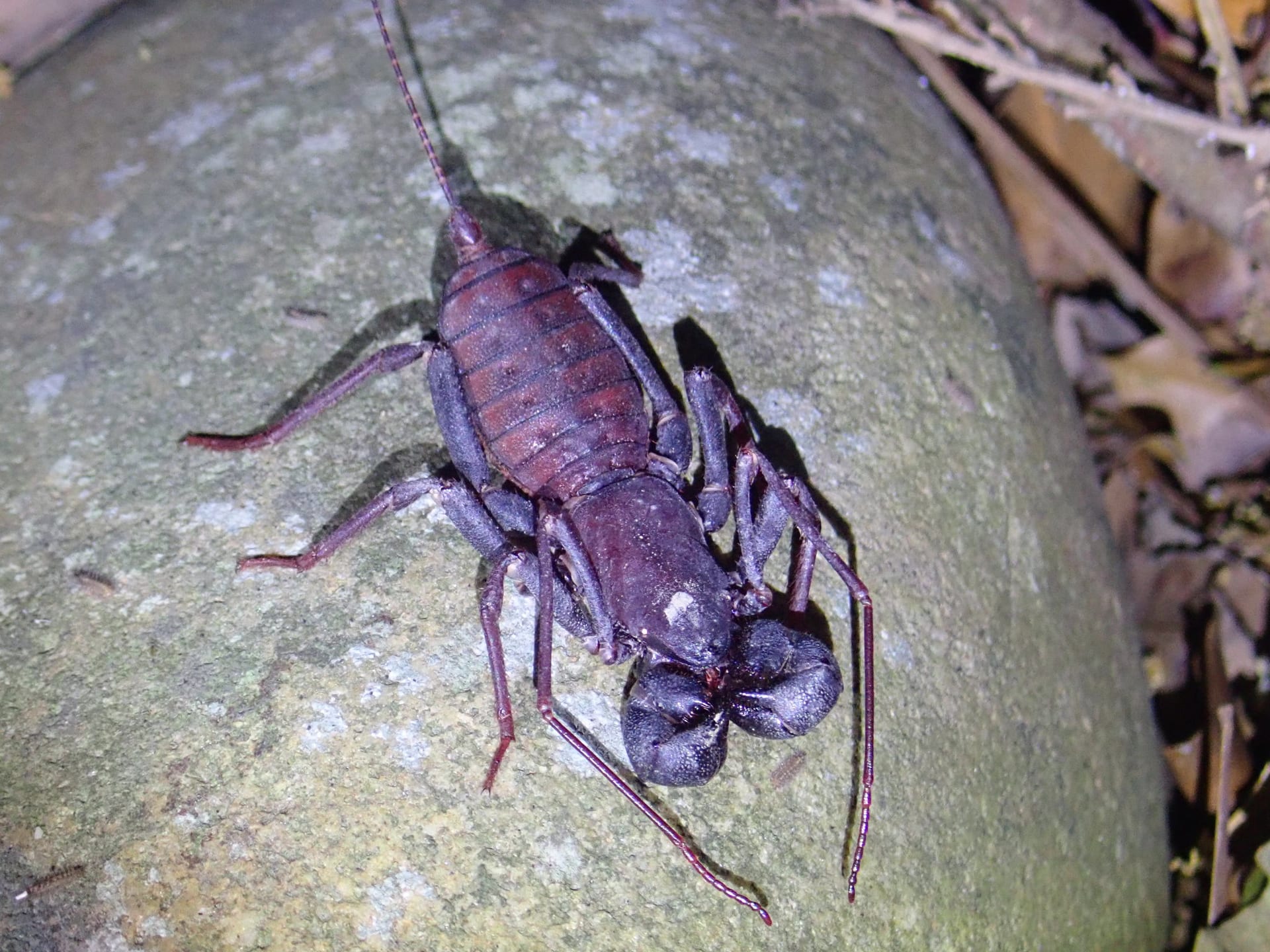
 © 陳度度 / CC BY 4.0
Taiwanese Whip Scorpion
The Taiwanese whip scorpion is a whip scorpion species native to the southern Ryukyu Islands and Taiwan. It reaches about 4 cm in body length, with a jet-black body and a thin, whip-like tail nearly as long as its body — its most distinctive feature. Despite the name, it has no stinger; the tail is a sensory organ, not a weapon. When threatened, it sprays a vinegar-scented defensive fluid, but otherwise it's a calm, secretive animal that spends most of its time tucked away in hiding spots. It can be told apart from the closely related Amami whip scorpion by the shape of a projection on its pedipalps. For keepers drawn to unusual invertebrates, it offers a fascinating glimpse into a lesser-known corner of the arachnid world.
View Taiwanese Whip Scorpion encyclopedia →0% commission on your first sales!Register by September 30, 2026 and your first 2 sales are commission-free!
Breeder Wanted!
List on BreederDirect and sell directly to customers nationwide!
5 Transparency Standards You Can Trust
When listing Exotic Invertebrates, Breeders disclose the following. We guarantee transparency on growth stage and breeding unit.
- Real Photos
- Breeding Unit
- Generation Info
- Body Length (mm)
- Country of Origin
Browse all 286 breeds
Verified breeders wanted for Exotic Invertebrates
Breeders are signing up now ahead of launch. Subscribe to be notified when new listings go live.
Getting alerts is free with a member account. When new listings match your saved search, we'll notify you by email and in-app.
Browse other categories
Verified breeders (preview)
Are you raising exotic invertebrates?
Register as a breeder and connect with buyers directly.
Apply as a breederTaiwanese Whip Scorpion key facts
- Care level
- Intermediate
- Lifespan
- 5-7 years
- Size
- Body about 4cm, with a flagellum roughly as long as the body
- Temperature
- 22〜26℃
- Humidity
- 75〜90%
- Diet
- Insects such as cockroaches and camel crickets, plus millipedes, centipedes and land snails
- Temperature & Humidity
- No source gives figures for this species; the values follow published practice for the congeneric Typopeltis sp. from Java, 22-26 C and 75-90%. As a subtropical island species it is not cold-hardy.
- Enclosure
- A deep bed of damp humus-rich substrate with stone and log-like hides. Egg laying needs enough depth to excavate a brood chamber.
- Diet & Feeding
- Cockroaches and camel crickets, plus millipedes, centipedes and land snails. Missed feedings encourage cannibalism.
- Temperament & Venom
- It has no venom glands but raises its flagellum and sprays a pungent acidic fluid when provoked. Keep it away from skin and eyes.
- Notes
- House singly. The species is native to Japan and collection may be restricted in protected areas.
About Taiwanese Whip Scorpion
A whip scorpion from the southern Ryukyus and Taiwan, about 4 cm long with a whip-like tail as long as its body. Stingless, but sprays a vinegar-scented fluid when threatened.
7 things to know before welcoming a Taiwanese Whip Scorpion
1No Stinger, Ever
The Taiwanese whip scorpion has no stinger. Its whip-like tail, nearly as long as its body, is a sensory organ rather than a venom delivery device. Defense and hunting rely mainly on its pincer-like pedipalps and its vinegar-scented spray.
2Defensive Vinegar Spray
When seriously startled, it sprays a defensive fluid with a strong vinegar-like odor from the base of its tail. The spray can sting if it gets in your eyes or on mucous membranes, so handle care tasks calmly and avoid startling the animal.
3Needs High Humidity
This species naturally favors damp hiding spots, so substrate such as sphagnum moss or leaf litter should hold moisture well, with regular misting to maintain humidity. Letting the enclosure dry out can lead to molting problems and poor health.
4A Nocturnal Hider
It's nocturnal and spends the day motionless under shelter or buried in substrate. Not seeing it during the day is normal — provide several hiding spots so it can settle in comfortably.
5Best Left Unhandled
Handling risks a pinch from the pedipalps or a defensive spray of vinegar-scented fluid, so it's best kept as a display animal rather than handled directly. Use a cup or container to move it when needed.
6Distinguishing the Species
It closely resembles the Amami whip scorpion, and the two are told apart by the shape of a projection on the pedipalps. It's worth confirming with the seller which species is actually being offered before you buy.
7Keep Them Solitary
It isn't an aggressive species, but housing multiple individuals together can lead to conflict, so keeping them one per enclosure is generally recommended.
Frequently asked questions about Taiwanese Whip Scorpion
- Q.Does it sting people?
- A.No — it has no stinger, so it can't sting in the way a true scorpion can. When threatened, it defends itself by pinching with its pedipalps or spraying a vinegar-scented fluid. Handle it calmly to avoid triggering this response.
- Q.What is the tail used for?
- A.The whip-like tail, about as long as the body, is a sensory organ rather than a stinger. It's thought to help the animal sense its surroundings, which is especially useful when moving around in the dark.
- Q.How is it told apart from similar species?
- A.It closely resembles the Amami whip scorpion, and the two are distinguished by the shape of a projection on the pedipalps. If you're unsure, it's a good idea to confirm the exact species with the seller before purchase.
- Q.How difficult is it to keep?
- A.This species is generally considered suitable for keepers with some prior experience. It needs consistent humidity management and adequate hiding spots, but is manageable for anyone who has kept other invertebrates before.
- Q.Can multiple individuals be kept together?
- A.While not an aggressive species, housing multiple individuals in the same enclosure can lead to conflict between them. It's generally best to keep them individually, one per enclosure.
Learn more about Taiwanese Whip Scorpion in the encyclopedia
View Taiwanese Whip Scorpion encyclopedia entry →
Care difficulty, lifespan, size and diet — all basics covered.
More in this category
Can't find the one you're looking for?
Post your wishes for free and breeders with matching animals will contact you with introductions.