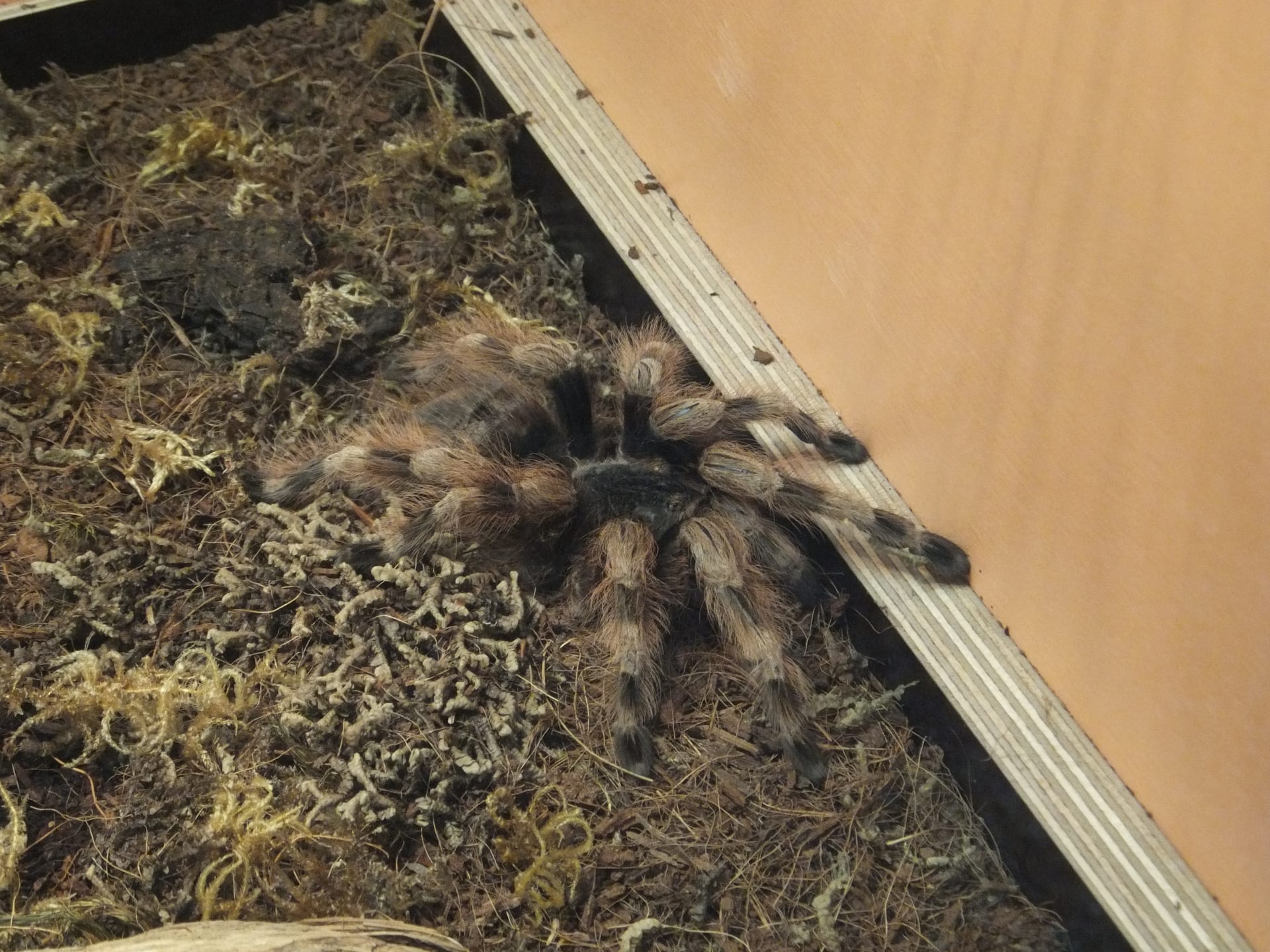
 © Syrio / CC BY-SA 4.0
Brazilian Black and White
The Brazilian Black and White is a striking terrestrial tarantula from Brazil, known for its jet-black legs banded with white stripes and an abdomen covered in long, orange-red hair. In the wild, it shelters in burrows at the base of trees and other hidden spots, spending much of its time tucked away out of sight. It's also well known for readily flicking urticating hairs when it feels threatened, brushing them from its abdomen as a defense. Considered a species for intermediate keepers, it calls for some experience managing temperature and humidity, but rewards the effort with remarkable longevity — females can live around 15 years. Its bold black-and-white contrast and calm, grounded presence make it a favorite among invertebrate enthusiasts.
View Brazilian Black and White encyclopedia →0% commission on your first sales!Register by September 30, 2026 and your first 2 sales are commission-free!
Breeder Wanted!
List on BreederDirect and sell directly to customers nationwide!
5 Transparency Standards You Can Trust
When listing Exotic Invertebrates, Breeders disclose the following. We guarantee transparency on growth stage and breeding unit.
- Real Photos
- Breeding Unit
- Generation Info
- Body Length (mm)
- Country of Origin
Browse all 286 breeds
Verified breeders wanted for Exotic Invertebrates
Breeders are signing up now ahead of launch. Subscribe to be notified when new listings go live.
Getting alerts is free with a member account. When new listings match your saved search, we'll notify you by email and in-app.
Browse other categories
Verified breeders (preview)
Are you raising exotic invertebrates?
Register as a breeder and connect with buyers directly.
Apply as a breederBrazilian Black and White key facts
- Care level
- Intermediate
- Lifespan
- Females about 15 years, males about 4 years
- Size
- Body about 8cm (female) and 6cm (male)
- Diet
- Live insects such as crickets and roaches
- Temperature & Humidity
- Its range spans tropical forest to grassland, so very high humidity should not be assumed.
- Enclosure
- It is terrestrial and hides by day, so use a horizontal enclosure with a deep substrate layer, a cork bark hide and a permanent water dish.
- Diet & Feeding
- Offer live crickets or roaches and remove uneaten prey within a day.
- Temperament & Venom
- Temperament varies a lot between individuals, from docile to nervous, but most are quick to flick urticating hairs.
- Notes
- It carries both type I and type III urticating hairs, which irritate skin strongly. During maintenance protect your eyes and airways.
About Brazilian Black and White
A Brazilian terrestrial tarantula with black legs banded in white and an orange-red hairy abdomen, known for flicking urticating hairs. Suited to intermediate keepers, with females living around 15 years.
7 things to know before welcoming a Brazilian Black and White
1Urticating Hairs
This species is known for readily flicking urticating hairs when startled or provoked, brushing them off its abdomen with its hind legs into the air. Observe it through the enclosure rather than handling it directly.
2Ground-Dwelling Habits
In the wild, this tarantula shelters in burrows at the base of trees and other hidden spots. In captivity, prioritize deep substrate and a hide over height for climbing, since it's a terrestrial species.
3Why Intermediate Level
This species is generally recommended for intermediate keepers. Prior experience managing temperature, humidity, and urticating-hair species helps you provide a more stable setup.
4Lifespan Differs by Sex
Lifespan varies greatly by sex — females live around 15 years, while males live about 4 years. Your long-term care plan will differ significantly depending on which sex you keep.
5Distinctive Appearance
The contrast between its black legs striped with white and its abdomen covered in long, orange-red hair is this species' signature look. The pattern and hair color subtly shift as the tarantula grows, which is part of the fun of keeping it.
6Temperature and Humidity
Being native to Brazil, this tarantula needs stable temperatures and moderate humidity in captivity. Both extreme dryness and excess moisture can affect its condition, so check the substrate regularly.
7Before You Bring One Home
Given its urticating hairs and intermediate difficulty level, it's worth setting up the enclosure, substrate, and hide in advance, and picturing your daily care routine before bringing one home.
Frequently asked questions about Brazilian Black and White
- Q.Can beginners keep this tarantula?
- A.This species is generally considered suited to intermediate keepers. It's best to gain basic tarantula-keeping experience, including handling urticating-hair species, before bringing one home.
- Q.What are urticating hairs?
- A.They're fine hairs the tarantula brushes off its abdomen with its hind legs, typically when startled. This species is known for flicking them readily, and contact with them can cause irritation.
- Q.How big does it get as an adult?
- A.As an adult, females reach about 8 cm in body length, while males reach about 6 cm.
- Q.How long does it live?
- A.Lifespan differs greatly by sex: females live around 15 years, while males live around 4 years. If you want a long-term companion, a female may be a better fit.
- Q.Is this species listed under CITES?
- A.This species is not subject to CITES.
Learn more about Brazilian Black and White in the encyclopedia
View Brazilian Black and White encyclopedia entry →
Care difficulty, lifespan, size and diet — all basics covered.
More in this category
Can't find the one you're looking for?
Post your wishes for free and breeders with matching animals will contact you with introductions.