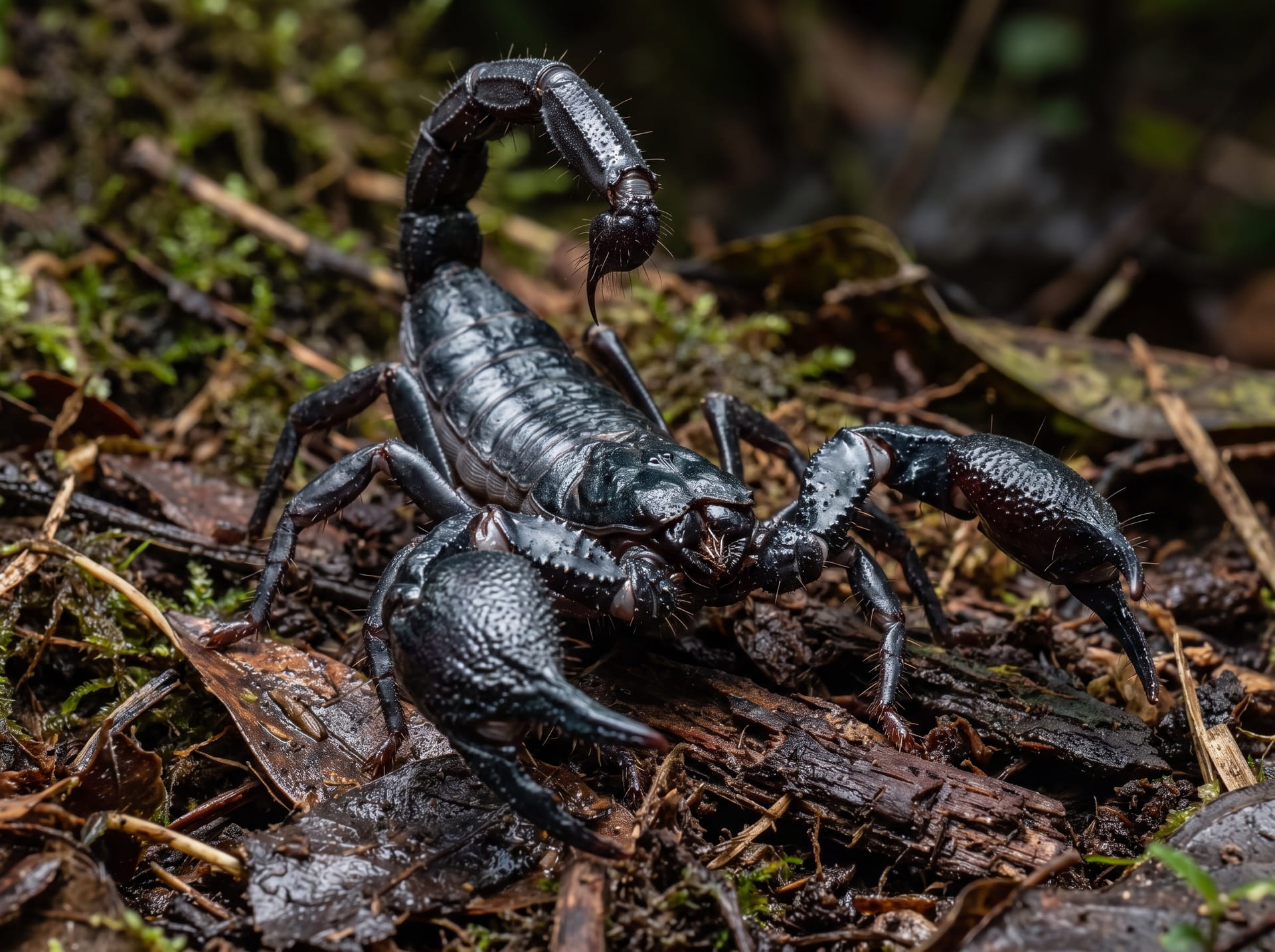
Asian Forest Scorpion
The Asian Forest Scorpion is a large, glossy black scorpion native to the tropical forests of Southeast Asia, prized among exotic invertebrate keepers for its bold, sturdy build. Its venom is mild — comparable to a bee sting — but it is a defensive species that relies on powerful pincers rather than its sting when it feels threatened, so handling calls for care. During the day it tends to stay hidden, showing a calmer side than its intimidating appearance suggests. As long as keepers provide the high humidity it needs, this species is approachable enough for beginners and remains a popular entry point into scorpion keeping.
View Asian Forest Scorpion encyclopedia →0% commission on your first sales!Register by September 30, 2026 and your first 2 sales are commission-free!
Breeder Wanted!
List on BreederDirect and sell directly to customers nationwide!
5 Transparency Standards You Can Trust
When listing Exotic Invertebrates, Breeders disclose the following. We guarantee transparency on growth stage and breeding unit.
- Real Photos
- Breeding Unit
- Generation Info
- Body Length (mm)
- Country of Origin
Browse all 249 breeds
Verified breeders wanted for Exotic Invertebrates
Breeders are signing up now ahead of launch. Subscribe to be notified when new listings go live.
Getting alerts is free with a member account. When new listings match your saved search, we'll notify you by email and in-app.
Browse other categories
Verified breeders (preview)
Are you raising exotic invertebrates?
Register as a breeder and connect with buyers directly.
Apply as a breederAsian Forest Scorpion key facts
- Care level
- Beginner-friendly
- Lifespan
- About 6-8 years
- Size
- 10-13 cm in length
- Temperature
- 24〜30℃
- Humidity
- 70〜85%
- Diet
- Live insects such as crickets and dubia roaches
- Habitat
- Provide deep, moist substrate with hides so it can burrow.
- Temp & Humidity
- Keep 24-30°C and 70-85% humidity; mist regularly as it is sensitive to dryness.
- Feeding
- Feed live prey 1-2 times weekly and provide a shallow water dish.
- Caution
- Venom is mild but it pinches hard and is defensive; handle with tools, not bare hands.
About Asian Forest Scorpion
A care guide to the Asian Forest Scorpion, a large Southeast Asian species with mild venom that suits beginners despite its strong, defensive pinch. Covers lifespan, size, and what to know before bringing one home.
7 things to know before welcoming a Asian Forest Scorpion
1High Humidity Is Essential
As a native of Southeast Asian tropical forests, the Asian Forest Scorpion needs consistently high humidity. Use a moisture-retaining substrate and mist regularly to keep humidity from dropping too low. In overly dry conditions, it may not display its natural behavior.
2Mild Venom, Strong Pinch
Its venom is mild, with effects comparable to a bee sting. However, it is a defensive species that may grip firmly with its pincers when startled or provoked, so it's best to handle situations calmly and avoid sudden movements.
3Nocturnal — Hides by Day
During the day it typically stays hidden under shelters or driftwood, becoming active mainly at night. Not seeing it often is normal behavior, not a sign of poor health.
4Lifespan of 6–8 Years
Adults typically live around 6 to 8 years, making this a longer-term commitment than many other invertebrates. Consider your ability to provide consistent care over that span before bringing one home.
5Adults Reach 10–13 cm
Adults grow to roughly 10 to 13 cm in total length, giving them an impressive presence among exotic invertebrates. Enclosure size and substrate depth should be adjusted as they grow.
6Prepare the Enclosure First
Before bringing one home, set up hides, moisture-retentive substrate, and equipment to maintain stable temperature and humidity. Having the enclosure ready in advance reduces stress during the transition.
7Best Kept Alone
Asian Forest Scorpions are generally kept individually. Housing multiple scorpions together can lead to conflict, so it's best to give each one its own space.
Frequently asked questions about Asian Forest Scorpion
- Q.Is the Asian Forest Scorpion suitable for beginners?
- A.Its mild venom makes it a species generally considered suitable for beginners. That said, it is defensive and pinches firmly, so it's best to learn the basics of care and handling before bringing one home.
- Q.Is its sting dangerous? What happens if I get stung?
- A.Its venom is mild, with effects generally compared to a bee sting. Reactions can vary by person, so avoid unnecessary handling, and consult a medical professional if symptoms are severe.
- Q.How big does it get?
- A.Adults reach roughly 10 to 13 cm in total length. That's a substantial size among exotic invertebrates, so plan for an enclosure that can accommodate its growth.
- Q.How long can I expect to keep one?
- A.Its lifespan is around 6 to 8 years, making it a long-term companion. Make sure you can maintain stable temperature and humidity over that entire period before committing.
- Q.Can I keep multiple together or handle it often?
- A.It's best kept alone, since housing multiple together can lead to conflict. Because it's defensive and pinches firmly, this species is better suited to observation-based care than frequent handling.
Learn more about Asian Forest Scorpion in the encyclopedia
View Asian Forest Scorpion encyclopedia entry →
Care difficulty, lifespan, size and diet — all basics covered.
Asian Forest Scorpion related articles
Millipede and Centipede Care Guide | Comparison with Asian Forest Scorpion Explained
Learn how to care for millipedes and centipedes as pets. This guide covers feeding, temperature, humidity, enclosures, and safety measures for African Giant Millipedes and large centipedes, with comparisons to tarantulas and other exotic species.
Beginner's Guide to Keeping Scorpions | Basic Care for Emperor Scorpions and Asian Forest Scorpions
A beginner's guide to keeping scorpions. Learn about the lifespan, size, toxicity, and price of Asian Forest Scorpions and Emperor Scorpions, how to distinguish them from emperors, how to set up their enclosure, bedding, feeding frequency, and what to do if stung.
More in this category
Can't find the one you're looking for?
Post your wishes for free and breeders with matching animals will contact you with introductions.