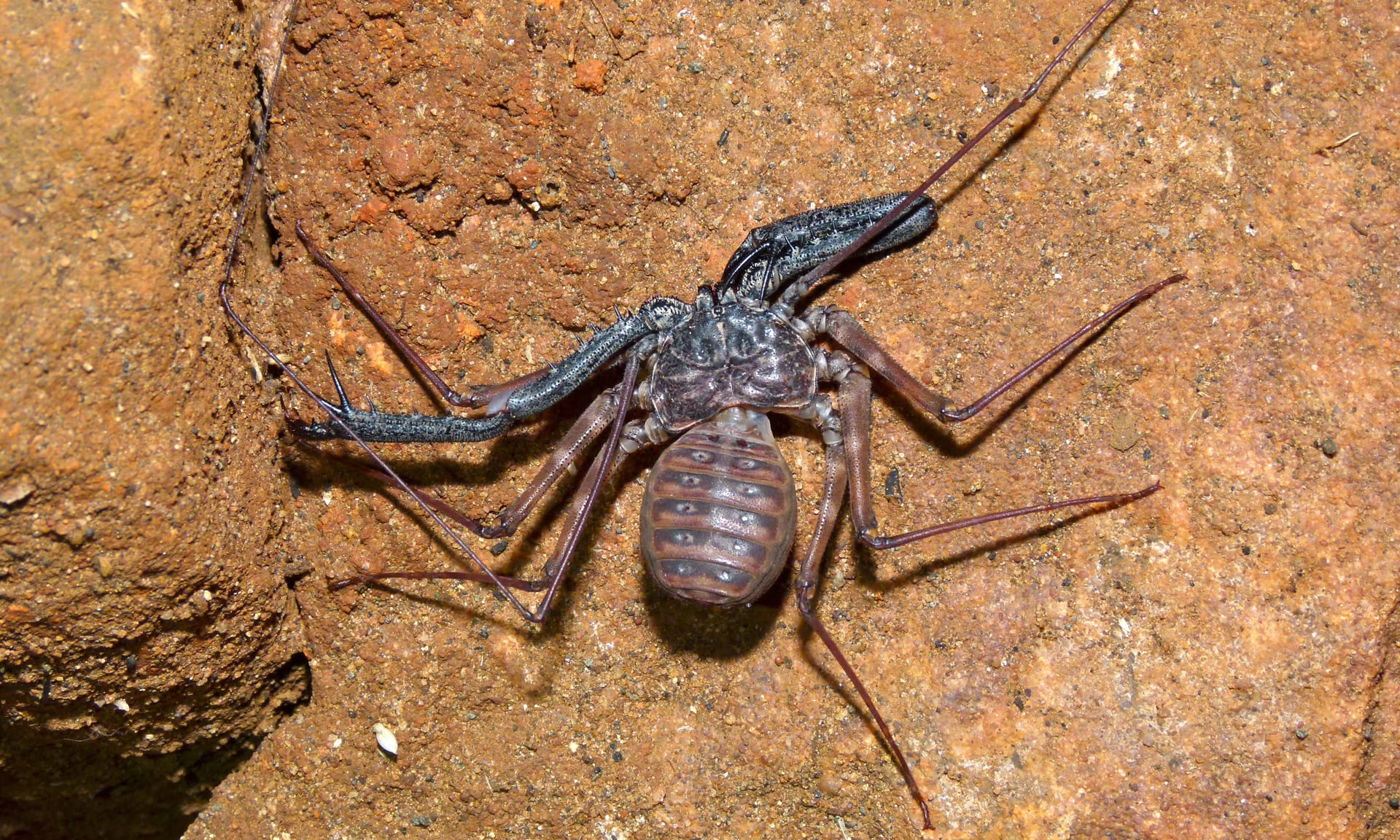
 © Bernard DUPONT / CC BY-SA 2.0
Variegated Whip Spider
Damon variegatus, the variegated whip spider, hails from southern Africa and belongs to the amblypygids — a group of arachnids distinct from true spiders. Despite its spider-like silhouette, it has no fangs and no venom glands, making it a harmless species that's safe to observe up close. Its flattened, mottled body and dramatically elongated first pair of legs are its signature features; these whip-like limbs act as sensory feelers, constantly sweeping the air to map out surroundings and detect prey in the dark. Whip spiders tend to freeze in place for long stretches before darting suddenly, rewarding keepers who enjoy quiet, patient observation. Because several closely related species share the genus and vary by locality, individual specimens often show subtle differences in pattern and coloring.
View Variegated Whip Spider encyclopedia →0% commission on your first sales!Register by September 30, 2026 and your first 2 sales are commission-free!
Breeder Wanted!
List on BreederDirect and sell directly to customers nationwide!
5 Transparency Standards You Can Trust
When listing Exotic Invertebrates, Breeders disclose the following. We guarantee transparency on growth stage and breeding unit.
- Real Photos
- Breeding Unit
- Generation Info
- Body Length (mm)
- Country of Origin
Browse all 249 breeds
Verified breeders wanted for Exotic Invertebrates
Breeders are signing up now ahead of launch. Subscribe to be notified when new listings go live.
Getting alerts is free with a member account. When new listings match your saved search, we'll notify you by email and in-app.
Browse other categories
Verified breeders (preview)
Are you raising exotic invertebrates?
Register as a breeder and connect with buyers directly.
Apply as a breederVariegated Whip Spider key facts
- Care level
- Intermediate
- Lifespan
- 6-9 years
- Temperature
- 23〜26℃
- Humidity
- 75〜85%
- Diet
- Small insects such as crickets and red runner roaches
- Temperature & Humidity
- Congeners are kept at 23-26 C and 75-85% (D. medius) or 25-30 C and 80-95% (D. diadema); this species, from drier country, is best kept at the lower end.
- Enclosure
- A tall enclosure with cork panels and bark for vertical retreats, over damp humus or coconut fibre.
- Diet & Feeding
- It ambushes small insects such as crickets and red runner roaches. Remove uneaten prey.
- Temperament & Venom
- Venomless and silkless. A shy nocturnal species that darts sideways when startled. The spiny pedipalps can give a thorn-like puncture if they grip a finger.
- Notes
- Depending on locality the animal may in fact be Damon sylviae. Without a surface to hang from, moults fail.
About Variegated Whip Spider
Meet Damon variegatus, the variegated whip spider from southern Africa. This venom-free arachnid is known for its whip-like front legs — here's what to know before bringing one home.
7 things to know before welcoming a Variegated Whip Spider
1No Venom, No Worries
Damon variegatus has no venom glands, so a bite carries no toxic risk. Its pincer-like pedipalps can still deliver a pinch, though, so keep fingers clear when handling.
2Whip-Like Front Legs
The elongated first pair of legs that give this species its name aren't used for walking — they act as sensory feelers. Watch for them constantly sweeping the air as the animal maps its surroundings and searches for prey.
3Vertical Hides Matter
This flattened whip spider naturally presses itself into bark crevices and rock cracks. Give it cork bark and climbable vertical surfaces in the enclosure so it has somewhere to flatten out and feel secure.
4Humidity Is Essential
Coming from humid rock crevices in southern Africa, this species needs consistently elevated humidity in captivity. Let the substrate dry out and molting problems can follow, so mist regularly and keep moisture levels stable.
5Handle Molts With Care
Whip spiders are extremely fragile right before and after shedding their exoskeleton. Any disturbance during this window can cause a failed molt or lost limbs, so keep the enclosure quiet and undisturbed at these times.
6Legs Can Regenerate
When startled, this species can shed a leg to escape danger, and the lost limb gradually regrows over successive molts. It won't return to full length right away, but the ability is a natural survival strategy.
7Best Kept Solitary
Housing multiple individuals together risks territorial disputes and lost limbs, so keeping one per enclosure is the safer default. If you do want to try group housing, provide generous space and plenty of hiding spots.
Frequently asked questions about Variegated Whip Spider
- Q.Is it true that this species has no venom at all?
- A.Yes, Damon variegatus lacks venom glands entirely, so there's no toxic risk from a bite. A pinch from the pedipalps can still hurt, though, so handle it with care.
- Q.How is a whip spider different from a true spider?
- A.Although it looks spider-like, this species belongs to a separate arachnid group called amblypygids, not true spiders. Unlike spiders, it has no venomous fangs and doesn't produce silk.
- Q.Is this species suitable for a first-time keeper?
- A.It's generally considered intermediate-level rather than beginner-friendly. Success depends on maintaining proper humidity and handling molts carefully, so it helps to research its care needs before bringing one home.
- Q.Can I keep more than one together?
- A.Housing multiple individuals together often leads to territorial conflicts and lost limbs, so keeping one per enclosure is generally recommended. If you want to try group housing, make sure there's ample space and hiding spots for each animal.
- Q.Are there legal restrictions on keeping this species?
- A.Damon variegatus is not subject to CITES. There are no CITES-related restrictions to consider for this species.
Learn more about Variegated Whip Spider in the encyclopedia
View Variegated Whip Spider encyclopedia entry →
Care difficulty, lifespan, size and diet — all basics covered.
More in this category
Can't find the one you're looking for?
Post your wishes for free and breeders with matching animals will contact you with introductions.