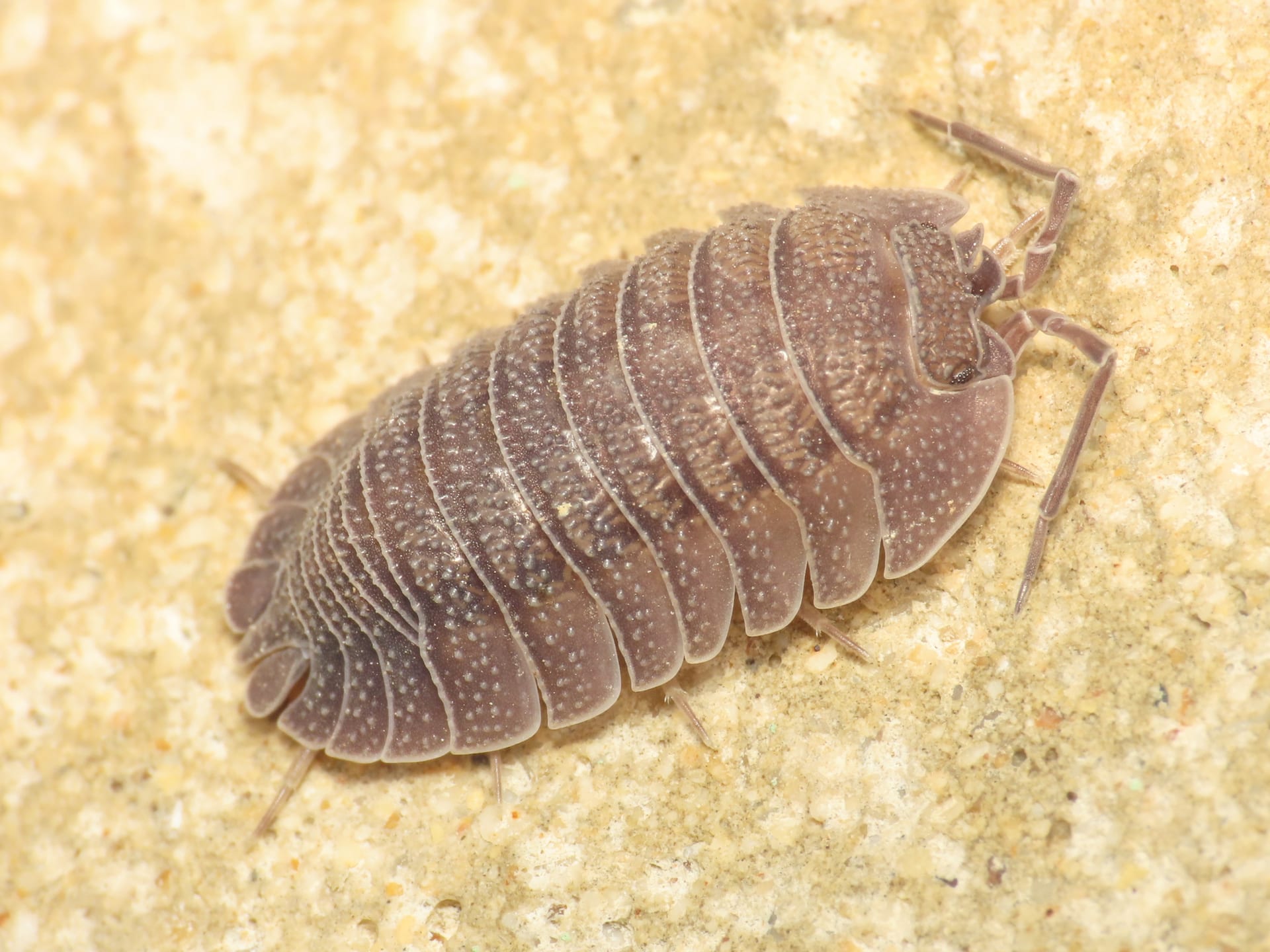
 © Emanuele Santarelli / CC BY-SA 4.0
Peraccae Isopod
The Peraccae Isopod is a large woodlouse native to southeastern Italy through the Aegean and into Turkey. Its blue-gray body is covered in coarse, raised granules that give it a rugged, almost trilobite-like texture unlike most other isopods. When threatened, it rolls into a tight, complete ball — an endearing defense that never fails to catch the eye. In the wild it gathers in groups beneath bark, and in captivity it proves hardy and breeds readily, making it a popular starting point for anyone new to keeping isopods.
View Peraccae Isopod encyclopedia →0% commission on your first sales!Register by September 30, 2026 and your first 2 sales are commission-free!
Breeder Wanted!
List on BreederDirect and sell directly to customers nationwide!
5 Transparency Standards You Can Trust
When listing Exotic Invertebrates, Breeders disclose the following. We guarantee transparency on growth stage and breeding unit.
- Real Photos
- Breeding Unit
- Generation Info
- Body Length (mm)
- Country of Origin
Browse all 249 breeds
Verified breeders wanted for Exotic Invertebrates
Breeders are signing up now ahead of launch. Subscribe to be notified when new listings go live.
Getting alerts is free with a member account. When new listings match your saved search, we'll notify you by email and in-app.
Browse other categories
Verified breeders (preview)
Are you raising exotic invertebrates?
Register as a breeder and connect with buyers directly.
Apply as a breederPeraccae Isopod key facts
- Care level
- Beginner-friendly
- Lifespan
- 2-3 years (typical for the genus)
- Size
- 17-18mm
- Temperature
- 18〜24℃
- Humidity
- 60〜75%
- Diet
- Leaf litter, rotting wood, vegetables, protein such as dried bloodworm, cuttlebone
- Temperature & Humidity
- 18-24 C and 60-75% humidity. Keep one end moist and the other dry to give a gradient.
- Enclosure
- A ventilated container with hardwood leaf litter and white-rotted wood, plenty of bark hides. It climbs, so secure the lid.
- Diet & Feeding
- Leaf litter and rotting wood always available, vegetables and protein several times a week, cuttlebone for calcium.
- Temperament & Venom
- Harmless. Peaceful and colonial.
- Notes
- Keep in groups and as a single species. Sogginess and poor ventilation can wipe out a colony.
About Peraccae Isopod
A large, hardy woodlouse from southeastern Italy and the Aegean, known for its blue-gray, trilobite-like granulated shell — an easy, beginner-friendly isopod.
7 things to know before welcoming a Peraccae Isopod
1Recreating Its Habitat
In the wild it lives along the warm Mediterranean coast from southern Italy to Turkey, so captive setups should offer moderate humidity with good airflow. Since it naturally shelters under bark and leaf litter, provide plenty of hiding material to mimic that environment.
2Rolls Into a Full Ball
When disturbed, it curls its entire body into a tight ball to protect itself. This is a natural defense that shields its soft underside from predators, so it's best handled gently and not startled unnecessarily.
3A Social, Group-Living Species
In the wild it clusters in groups beneath bark, so it tends to do better kept in numbers rather than alone. In captivity you'll often see individuals gathered together under the same hide.
4Hardy and Beginner-Friendly
This species is naturally tough and tolerates minor fluctuations in its environment, which is why it's considered beginner-friendly to keep. Consistent humidity control and feeding are all it really needs to thrive long-term.
5Easy to Breed
Under stable conditions, this isopod breeds fairly readily in captivity, and colonies often grow without much intervention. If you want to keep breeding going, make sure there's enough space and food to support a growing population.
6Adult Size
Adults reach around 1.7 to 1.8 cm in length, making this a relatively large species of woodlouse. That size also makes its granulated, trilobite-like texture easy to appreciate up close.
7Plan for Its Lifespan
As a general figure for the genus, this isopod tends to live around two to three years. Before bringing one home, it's worth confirming you can keep up the enclosure care and have the space and time for that duration.
Frequently asked questions about Peraccae Isopod
- Q.What environment does it need?
- A.Since it's native to the warm Mediterranean coast from southern Italy to Turkey, it does best with moderate humidity and good airflow. Adding bark or leaf litter as hiding material helps it feel settled.
- Q.Is it suitable for beginners?
- A.Yes, this species is considered beginner-friendly. It's naturally hardy, and keeping up with basic humidity control and feeding is generally enough to care for it well.
- Q.How big does it grow?
- A.Adults reach about 1.7 to 1.8 cm. That's on the larger side for a woodlouse, and it's a good size for observing the coarse, granulated texture on its back.
- Q.How long does it typically live?
- A.As a general figure for the genus, this isopod lives around two to three years. It's worth confirming beforehand that you can keep up its care for that length of time.
- Q.Are there any legal restrictions?
- A.This species is not subject to CITES.
Learn more about Peraccae Isopod in the encyclopedia
View Peraccae Isopod encyclopedia entry →
Care difficulty, lifespan, size and diet — all basics covered.
More in this category
Can't find the one you're looking for?
Post your wishes for free and breeders with matching animals will contact you with introductions.