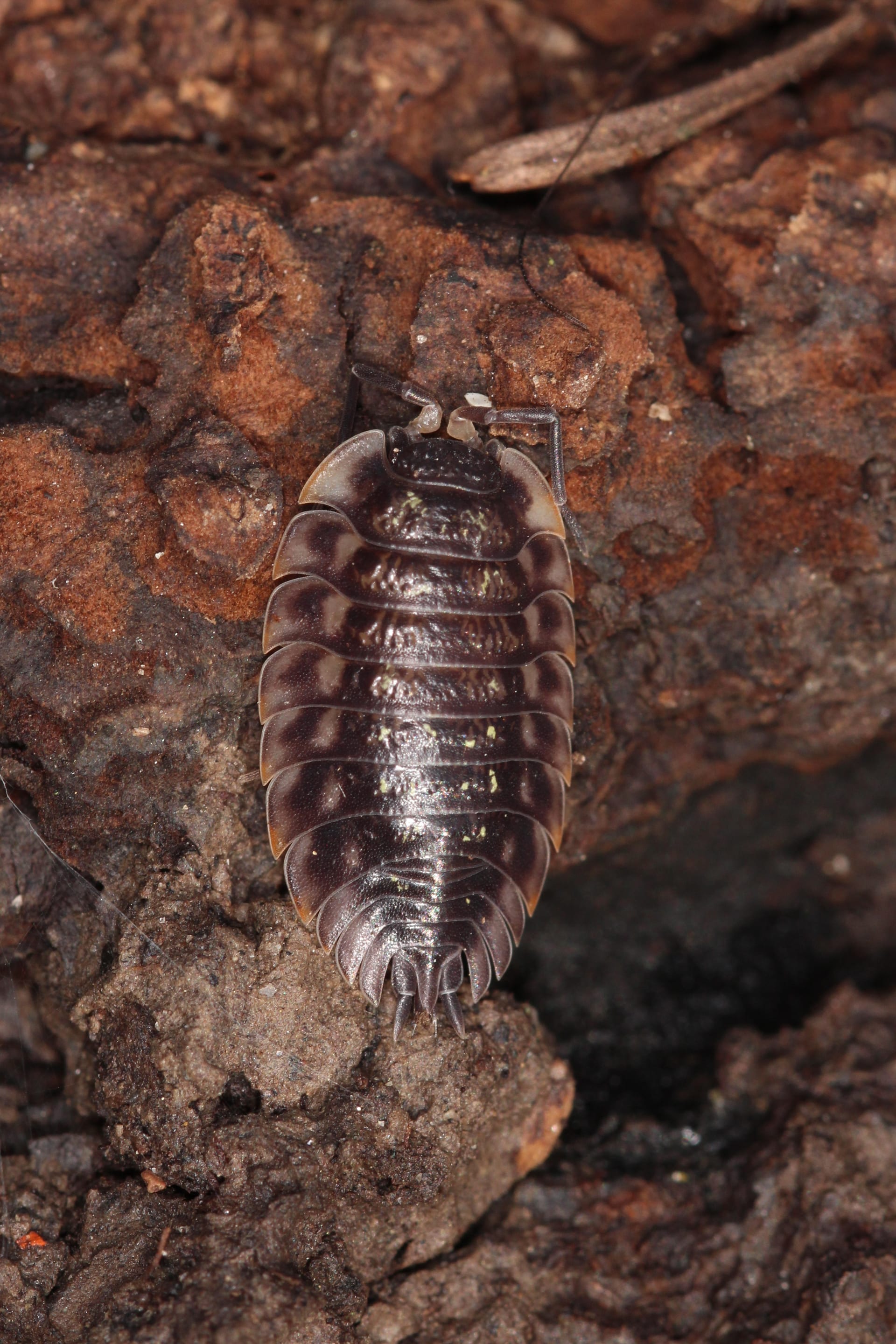
 © Holger Krisp / CC BY 3.0
Common Shiny Woodlouse
The Common Shiny Woodlouse is a glossy-bodied isopod native to Europe, commonly found beneath fallen logs and stones. Its flattened body has slightly flared side edges, and juveniles display distinctive orange markings that fade with maturity, giving keepers a visible sense of growth. As a temperate species, it needs no supplemental heating and tolerates a range of setups, making it a solid choice for anyone new to keeping isopods or other small invertebrates. Calm and non-aggressive, it also works quietly as a detritivore in bioactive vivariums.
View Common Shiny Woodlouse encyclopedia →0% commission on your first sales!Register by September 30, 2026 and your first 2 sales are commission-free!
Breeder Wanted!
List on BreederDirect and sell directly to customers nationwide!
5 Transparency Standards You Can Trust
When listing Exotic Invertebrates, Breeders disclose the following. We guarantee transparency on growth stage and breeding unit.
- Real Photos
- Breeding Unit
- Generation Info
- Body Length (mm)
- Country of Origin
Browse all 249 breeds
Verified breeders wanted for Exotic Invertebrates
Breeders are signing up now ahead of launch. Subscribe to be notified when new listings go live.
Getting alerts is free with a member account. When new listings match your saved search, we'll notify you by email and in-app.
Browse other categories
Verified breeders (preview)
Are you raising exotic invertebrates?
Register as a breeder and connect with buyers directly.
Apply as a breederCommon Shiny Woodlouse key facts
- Care level
- Beginner-friendly
- Lifespan
- 2-4 years
- Size
- Up to about 16mm
- Temperature
- Diet
- Leaf litter and rotten wood as staples with a little vegetable, permanent calcium such as cuttlebone, and occasional protein
- Temperature & Humidity
- A temperate species that lives at room temperature with no heating. Keep one end damp and the other drier, with moderate ventilation.
- Enclosure
- Flake soil and rotted wood under a thick layer of leaf litter, with bark and wood for cover. A springtail culture in the same tub keeps mould down.
- Diet & Feeding
- Leaf litter and rotten wood are the diet. Add a little vegetable and occasional protein, and keep cuttlebone in permanently.
- Temperament & Venom
- Harmless and placid. Kept in groups, it breeds steadily once settled without any coaxing.
- Notes
- It cannot conglobate, so provide plenty of cover. Colour lines such as 'Mardi Gras' and 'Orange' are selected stock of this same species and are kept exactly like the wild type.
About Common Shiny Woodlouse
A glossy European woodlouse found under logs and stones. Needs no heating and suits beginners, growing to about 16mm with a flattened body and orange-marked juveniles.
7 things to know before welcoming a Common Shiny Woodlouse
1No Heating Needed
This species is native to temperate Europe and thrives at normal room temperature without a heater. Just keep it out of excessive summer heat and humidity by placing the enclosure somewhere with good airflow.
2Humidity Matters
Since it favors damp spots like under logs and stones, part of the substrate should stay consistently moist. Splitting the enclosure into a moist zone and a drier zone lets individuals choose their preferred spot.
3Compact at 16mm
Adults reach a maximum of about 16mm, making them a compact species that takes up little space. Their small size makes it easy to keep several individuals together.
4Orange Juvenile Markings
Juveniles show distinct orange patches that fade into a calmer, glossy adult coloration as they mature. Watching this color change is one of the pleasures of keeping this species.
5A Natural Decomposer
They readily break down fallen leaves, decaying wood, and leftover food, which is why they are often added to vivariums or insect enclosures as a cleanup crew. Check compatibility before housing them with other species.
6Provide Plenty of Hides
This species prefers to shelter under stones, cork bark, or logs and spends much of its time out of sight. Arranging hides so you can peek underneath or from the side makes observation easier.
7Prep Before Arrival
Before bringing them home, set up a ventilated lid container with moisture-retentive substrate such as leaf litter or hardwood mat. Have hides and food sources like decaying wood or vegetable scraps ready too.
Frequently asked questions about Common Shiny Woodlouse
- Q.Does it need heating?
- A.No, this species is temperate and can be kept at normal room temperature without a heater. Just avoid extreme heat or cold and keep the temperature stable.
- Q.Can it be housed with other animals?
- A.It's calm, non-aggressive, and often added to vivariums as a decomposer. Avoid pairing it with small animals that might prey on it, and check compatibility beforehand.
- Q.What should I feed it?
- A.It's an omnivorous decomposer that eats decaying wood, leaf litter, and vegetable scraps. Mixing decaying wood or leaf litter into the substrate lets it forage naturally.
- Q.Will it breed in captivity?
- A.With stable humidity and enough hiding spots, breeding is achievable in captivity. Since juveniles show distinct orange markings, it's easy to spot young individuals as they appear.
- Q.How big does it get?
- A.Adults reach a maximum of about 16mm, making it a small species. Its compact size makes it easy to keep several individuals together in one enclosure.
Learn more about Common Shiny Woodlouse in the encyclopedia
View Common Shiny Woodlouse encyclopedia entry →
Care difficulty, lifespan, size and diet — all basics covered.
More in this category
Can't find the one you're looking for?
Post your wishes for free and breeders with matching animals will contact you with introductions.