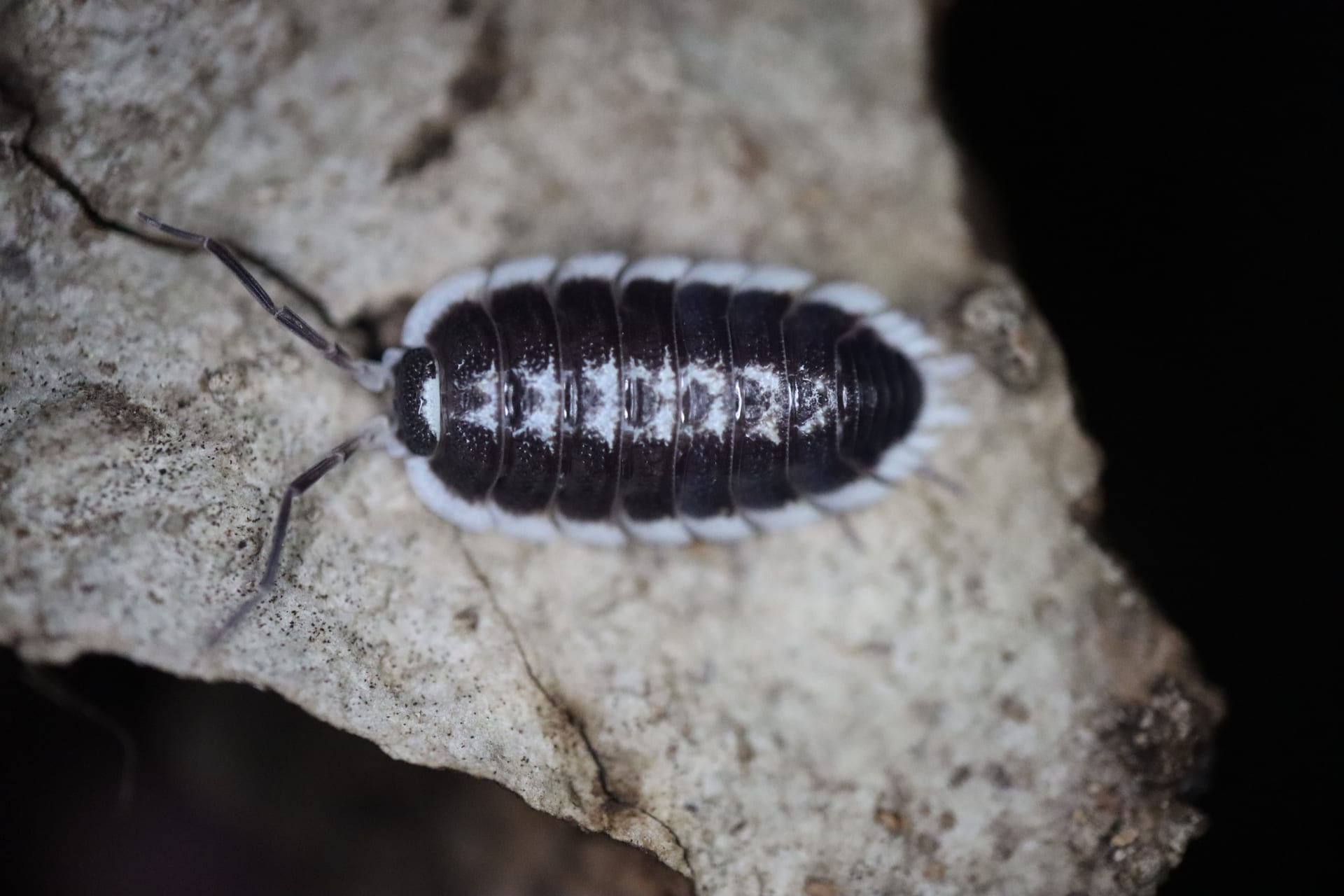
 © norman richomme / CC BY-SA 4.0
Flavomarginatus Isopod
The Flavomarginatus Isopod is a diurnal woodlouse native to the Mediterranean region, including Crete, Greece. Its near-black, dark grey body is bordered with a striking white, saw-toothed edge, complemented by a row of pale spots running down its back for a bold, high-contrast look. Unlike many isopods that stay hidden until dark, this species stays active during the day, making it easy to observe. Adults reach a compact size of about 1.8 to 2 cm, so they don't need much space. That said, it needs consistently dry, well-ventilated conditions, since excess moisture can quickly destabilize the colony, which is why it's generally recommended for keepers with some prior isopod experience.
View Flavomarginatus Isopod encyclopedia →0% commission on your first sales!Register by September 30, 2026 and your first 2 sales are commission-free!
Breeder Wanted!
List on BreederDirect and sell directly to customers nationwide!
5 Transparency Standards You Can Trust
When listing Exotic Invertebrates, Breeders disclose the following. We guarantee transparency on growth stage and breeding unit.
- Real Photos
- Breeding Unit
- Generation Info
- Body Length (mm)
- Country of Origin
Browse all 249 breeds
Verified breeders wanted for Exotic Invertebrates
Breeders are signing up now ahead of launch. Subscribe to be notified when new listings go live.
Getting alerts is free with a member account. When new listings match your saved search, we'll notify you by email and in-app.
Browse other categories
Verified breeders (preview)
Are you raising exotic invertebrates?
Register as a breeder and connect with buyers directly.
Apply as a breederAbout Flavomarginatus Isopod
A diurnal isopod from Greece with a dark grey body and striking white sawtooth edging, reaching about 1.8 to 2 cm as an adult. Here's what makes this intermediate-level species distinctive and how to keep it thriving.
7 things to know before welcoming a Flavomarginatus Isopod
1Active During the Day
Unlike many isopod species that hide until dark, the Flavomarginatus Isopod stays active throughout the day. This makes it much easier to observe and enjoy compared to more nocturnal, secretive species.
2Prefers Dry Conditions
Coming from Greece's dry climate, this isopod thrives in arid enclosure zones rather than consistently damp substrate. Keeping a generous dry area is the foundation of stable husbandry.
3Ventilation Is Essential
A stuffy, poorly ventilated enclosure can lead to colony decline. Make sure the setup includes adequate airflow so humidity doesn't build up and linger.
4Distinctive Coloration
The near-black body is outlined in a striking white, saw-toothed edge, with a row of pale spots running down the back. This high-contrast pattern makes it easy to tell apart from other isopod species.
5Compact Adult Size
Adults reach only about 1.8 to 2 cm, so they don't require a large footprint. This compact size makes them manageable even in smaller enclosures.
6Best Suited to Intermediate Keepers
Maintaining a clear dry-humid gradient takes some attention, so this species suits keepers with some prior isopod experience rather than absolute beginners.
7Set Up the Enclosure Before Arrival
Building the habitat after bringing them home can make the early settling-in period unstable. Prepare a well-ventilated enclosure with a dry zone in advance for a smoother transition.
Frequently asked questions about Flavomarginatus Isopod
- Q.Can beginners keep the Flavomarginatus Isopod?
- A.It's generally considered an intermediate-level species. Since managing dry conditions and ventilation is important, it's best approached after gaining some isopod-keeping experience.
- Q.How big does it grow?
- A.Adults reach about 1.8 to 2 cm, which is a fairly compact size among isopods.
- Q.What should I watch for with humidity?
- A.Keeping a dry zone and ensuring good ventilation is essential. A stuffy, overly humid enclosure can destabilize the colony.
- Q.Since it's diurnal, when can I observe it?
- A.While many isopods are mostly active at night, this species moves around actively during the day, making it easier to spot at any time.
- Q.Is this species subject to any international trade regulations?
- A.It falls outside the scope of CITES.
Learn more about Flavomarginatus Isopod in the encyclopedia
View Flavomarginatus Isopod encyclopedia entry →
Care difficulty, lifespan, size and diet — all basics covered.
More in this category
Can't find the one you're looking for?
Post your wishes for free and breeders with matching animals will contact you with introductions.