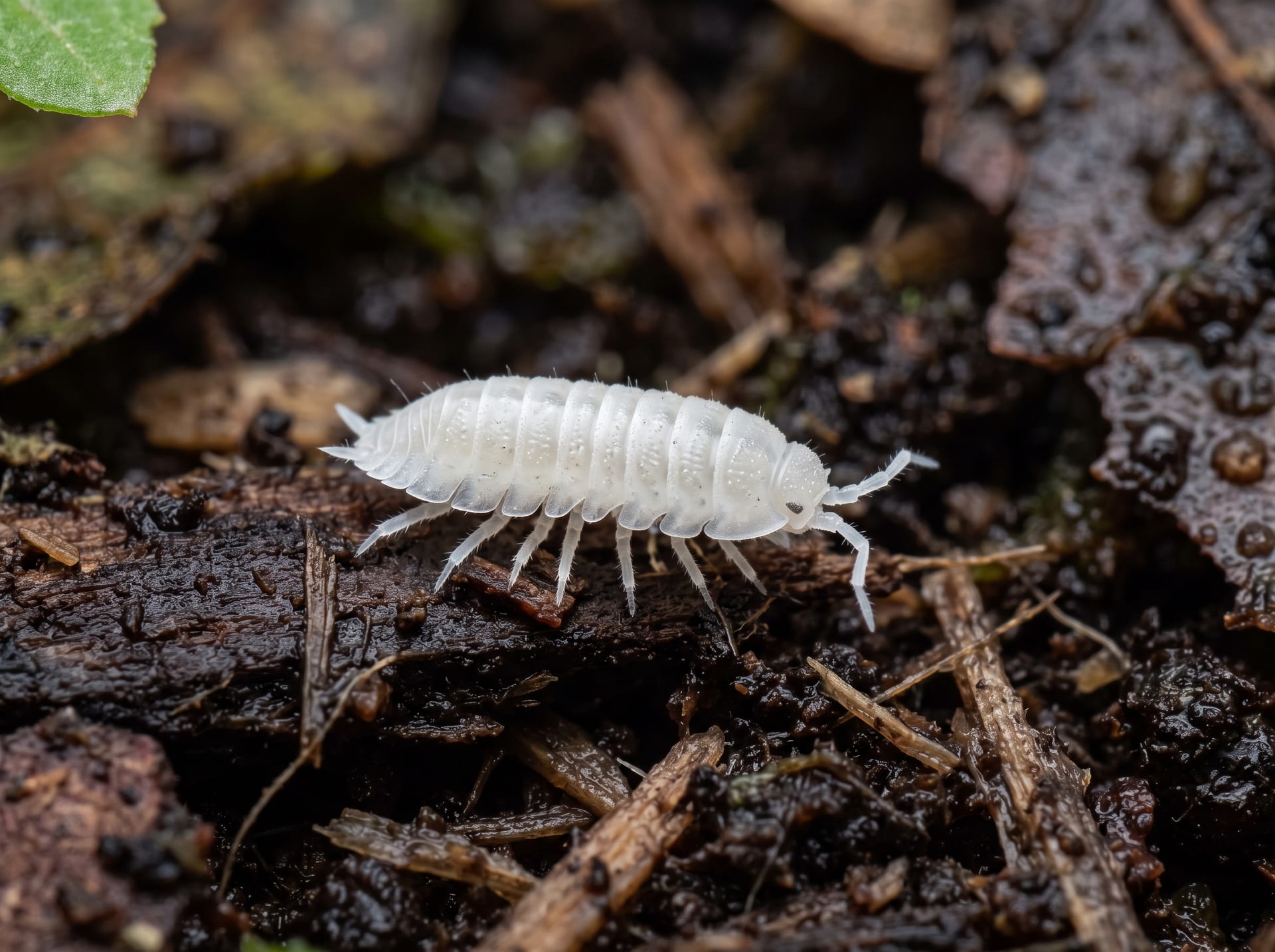
Dwarf White Isopod
The Dwarf White Isopod is a tiny, pure-white isopod that grows to only about 0.3–0.5 cm. Because it reproduces parthenogenetically, even a small starting group can build up a thriving colony, which is why it's a go-to cleanup crew for terrariums and feeder-insect cultures. As a detritivore, it burrows through substrate and feeds on decaying leaves, fungi, and leftover food, quietly recycling waste without biting or producing any venom, so it's completely harmless to keepers and tankmates alike. Rather than being a display animal in its own right, it works in the background, keeping enclosures clean alongside other species. With a beginner-friendly reputation, it's an easy entry point for anyone trying isopods or small invertebrates for the first time.
View Dwarf White Isopod encyclopedia →0% commission on your first sales!Register by September 30, 2026 and your first 2 sales are commission-free!
Breeder Wanted!
List on BreederDirect and sell directly to customers nationwide!
5 Transparency Standards You Can Trust
When listing Exotic Invertebrates, Breeders disclose the following. We guarantee transparency on growth stage and breeding unit.
- Real Photos
- Breeding Unit
- Generation Info
- Body Length (mm)
- Country of Origin
Browse all 249 breeds
Verified breeders wanted for Exotic Invertebrates
Breeders are signing up now ahead of launch. Subscribe to be notified when new listings go live.
Getting alerts is free with a member account. When new listings match your saved search, we'll notify you by email and in-app.
Browse other categories
Verified breeders (preview)
Are you raising exotic invertebrates?
Register as a breeder and connect with buyers directly.
Apply as a breederDwarf White Isopod key facts
- Care level
- Beginner-friendly
- Lifespan
- About 6 months to 1 year
- Size
- About 0.3-0.5 cm
- Temperature
- 20〜27℃
- Humidity
- 70〜90%
- Diet
- Mainly leaf litter and decaying matter, with small amounts of protein (e.g., fish food) and vegetable scraps.
- Habitat
- Use a moisture-retentive substrate and keep conditions damp.
- Temp & Humidity
- Keep 20-27C and high humidity for explosive growth.
- Feeding
- Leaf litter plus a small amount of protein.
- Notes
- Parthenogenetic and fast-multiplying, good as feeders; harmless with no venom or bite.
About Dwarf White Isopod
A tiny pure-white isopod (about 0.3–0.5 cm) that reproduces parthenogenetically and serves as a cleanup crew in terrariums and feeder cultures. Harmless and beginner-friendly, with a lifespan of roughly six months to a year.
7 things to know before welcoming a Dwarf White Isopod
1Tiny, Pure-White Build
Adults reach only about 0.3–0.5 cm and are pure white. Rather than watching one individual at a time, keepers typically enjoy seeing the colony move together across the soil and leaf litter. A magnifying glass helps for closer observation.
2Reproduces on Its Own
Females can reproduce parthenogenetically, so a small starting group can grow into a full colony within a few months. Many keepers manage the surplus by splitting off a portion into a new container or using it as feeder stock. Growth speed varies with temperature and food availability.
3Needs a Humid Terrarium
As a tropical species, it needs consistently moist substrate in a well-ventilated enclosure. Letting things dry out slows the colony down, so regular misting to maintain humidity is essential. A thick layer of coco fiber or leaf litter substrate helps them settle in.
4A Natural Cleanup Crew
As detritivores, they eat decaying leaves, fungi, and leftover food, helping break down mold and waste inside the terrarium. They don't need daily dedicated feeding — occasional dried leaves as a supplement is usually enough. This diet is exactly why they're valued as a cleanup crew.
5Nocturnal, Burrowing Habits
During the day they tend to stay hidden under soil and leaf litter, coming to the surface mostly at night or when humidity rises. They're a shy species sensitive to disturbance, so it's best to avoid digging them up frequently, which can stress the colony.
6No Bite or Venom Risk
This species doesn't bite or carry venom, and it shows essentially no aggression toward tankmates. That makes it an easy addition even in households with young children observing the terrarium.
7What to Prepare First
Before bringing them home, it helps to have a lidded container that retains humidity, a moisture-holding substrate like coco fiber, and hiding spots such as leaf litter or cork bark ready. With a lifespan of roughly six months to a year, keeping them is really about maintaining an ongoing colony across generations.
Frequently asked questions about Dwarf White Isopod
- Q.Can a single isopod start a colony?
- A.Yes — because they reproduce parthenogenetically, even a small group of females alone can build up a colony over time. You don't need to pair males and females, so starting with one container is perfectly fine.
- Q.Can they live alongside other animals?
- A.Since they don't bite, aren't venomous, and show little aggression, they mix well with many terrarium animals. That said, species that prefer drier conditions may not share the same humidity needs, so it's worth checking compatibility first.
- Q.Do they cause odor or mess?
- A.Since they consume leftover food, decaying leaves, and fungi, they actually help reduce buildup and mold rather than cause it. Keeping the substrate from becoming waterlogged makes it easy to maintain a clean terrarium overall.
- Q.What if the colony grows too large?
- A.Since they reproduce steadily on their own, splitting off part of a large colony into a separate container is a common way to manage growth. If you're also keeping a feeder culture, the surplus can be used there as well.
- Q.Any tips for keeping a colony going long-term?
- A.Individual isopods live roughly six months to a year, but because the colony reproduces continuously through parthenogenesis, it's easy to maintain an ongoing population. Keeping humidity consistent and the substrate clean is the key to long-term success.
Learn more about Dwarf White Isopod in the encyclopedia
View Dwarf White Isopod encyclopedia entry →
Care difficulty, lifespan, size and diet — all basics covered.
More in this category
Can't find the one you're looking for?
Post your wishes for free and breeders with matching animals will contact you with introductions.