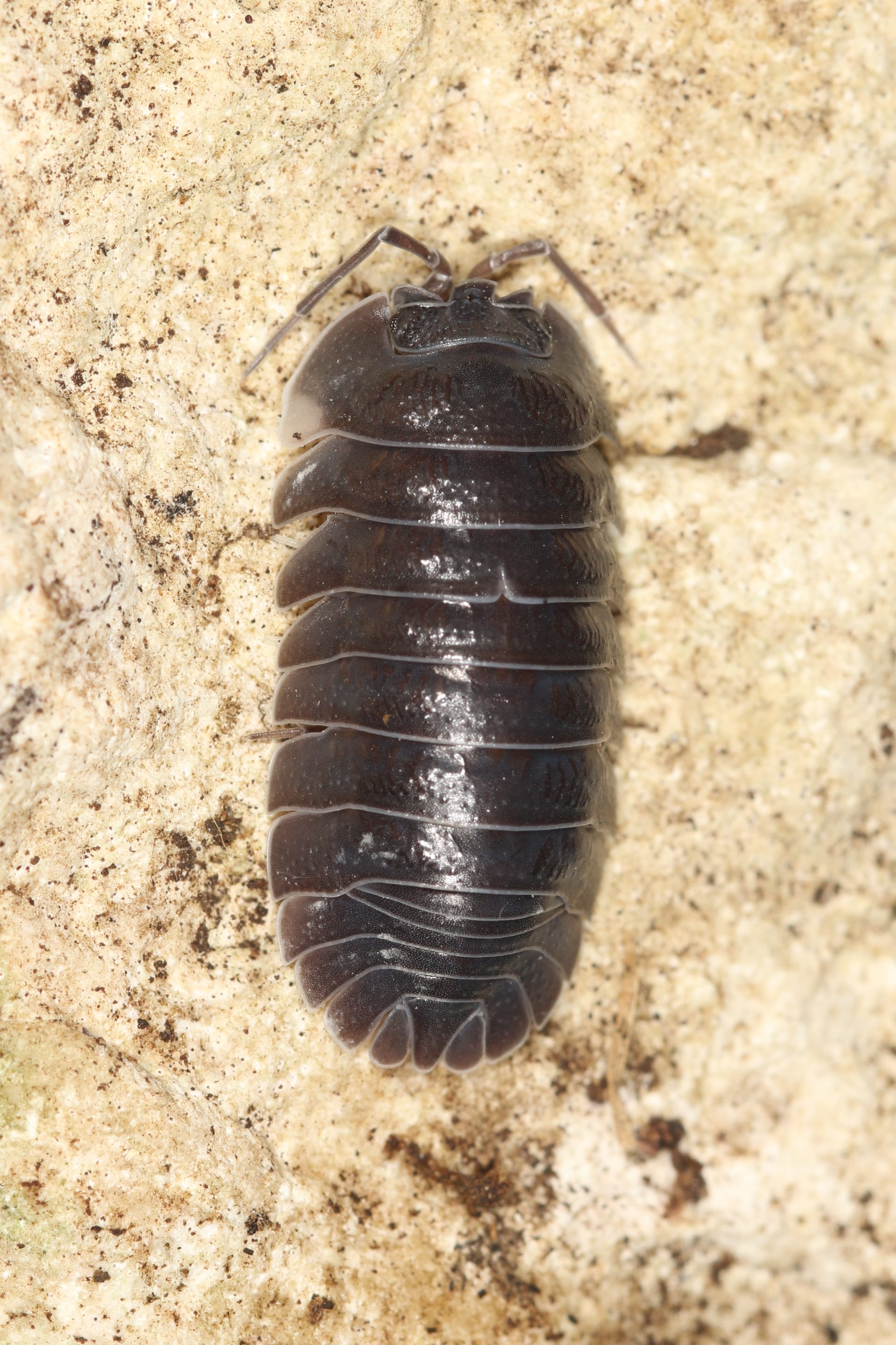
 © Holger Krisp / CC BY 4.0
Pallasii Isopod
The Pallasii Isopod is a large woodlouse native to the coastal regions stretching from the Adriatic to the Ionian Sea. It grows to roughly 2.4 cm, making it one of the more substantial isopods in the hobby. The semi-transparent orange form from Corfu Island is especially prized for its striking coloration. Calm and unassuming, these isopods spend their time tucked into soil and leaf litter in classic isopod fashion. Unlike many isopod species that favor high humidity, Pallasii prefers drier conditions, so its care routine differs slightly — but it remains considered beginner-friendly, and once established, colonies tend to grow steadily. It's a quietly captivating species to observe.
View Pallasii Isopod encyclopedia →Breeder Wanted!
List on BreederDirect and sell directly to customers nationwide!
BreederDirect's 5 Transparency Commitments
When listing Exotic Invertebrates, Breeders disclose the following. We guarantee transparency on growth stage and breeding unit.
- Real Photos
- Breeding Unit
- Generation Info
- Body Length (mm)
- Country of Origin
Browse all 286 breeds
Verified breeders wanted for Exotic Invertebrates
Breeders are signing up now ahead of launch. Subscribe to be notified when new listings go live.
Getting alerts is free with a member account. When new listings match your saved search, we'll notify you by email and in-app.
Browse other categories
Verified breeders (preview)
Are you raising exotic invertebrates?
Register as a breeder and connect with buyers directly.
Apply as a breederPallasii Isopod key facts
- Care level
- Beginner-friendly
- Lifespan
- 3-4 years
- Size
- Up to about 24mm
- Temperature
- 15〜30℃
- Humidity
- 45〜60%
- Diet
- Leaf litter and rotten wood as staples, with vegetables, fruit, moss, lichen, protein such as fish food, and a calcium source.
- Temperature & Humidity
- 15-30C and 45-60% humidity. Keep about one third damp and the rest dry.
- Enclosure
- A well-ventilated container with moss, bark or cork and leaf litter, confining moisture to one zone.
- Diet & Feeding
- Keep leaf litter and rotten wood available; add vegetables, fruit and lichen, with protein and calcium about twice a week.
- Temperament & Venom
- Harmless. Active at night and early morning, hiding by day. Keep in groups.
- Notes
- Early mortality before establishment can be higher than usual. Provide plenty of leaf litter and avoid excess moisture.
About Pallasii Isopod
A large isopod native to the Adriatic and Ionian coasts, growing to about 2.4 cm. It prefers drier conditions and is considered beginner-friendly, with the translucent orange Corfu form especially popular.
7 things to know before welcoming a Pallasii Isopod
1Prefers Drier Conditions
Unlike many isopod species that favor high humidity, the Pallasii Isopod prefers drier conditions. Set up a humidity gradient in the enclosure with both dry and moist zones.
2A Large Species Up to 2.4 cm
Adults reach up to about 2.4 cm, making this one of the larger isopod species. Give them a reasonably spacious substrate area to match their presence.
3Popular Corfu Orange Form
The Corfu Island population is known for a semi-transparent orange coloration that's especially attractive. Coloration can vary by locality, which adds to the appeal.
4Calm, Quiet Temperament
They show little aggression and tend to stay tucked away in hiding spots. This makes them well suited to being kept in groups with minimal stress.
5Breeds Steadily Once Settled
Once the environment is right and the colony has settled in, breeding tends to progress steadily. Prioritizing habitat setup over rushing results is key to long-term success.
6Beginner-Friendly Difficulty
This species is considered beginner-friendly, making it approachable even for first-time isopod keepers. Consistent basic care is enough to maintain a stable setup.
7Prepare Hides and Substrate
They avoid bright, open spaces, so provide several hides such as driftwood, leaf litter, or cork bark. Set up the enclosure environment before bringing them home.
Frequently asked questions about Pallasii Isopod
- Q.Can beginners keep the Pallasii Isopod?
- A.Yes, this species is considered beginner-friendly. As long as you understand that it prefers drier conditions, basic care is enough to get started.
- Q.How large does it grow?
- A.Adults grow to a maximum of about 2.4 cm, making them one of the larger isopod species available.
- Q.Should the enclosure be kept humid like other isopods?
- A.No, the Pallasii Isopod prefers drier conditions. Managing it the same way as humidity-loving species can cause health problems, so pay close attention to moisture levels.
- Q.What makes the Corfu Island form different?
- A.The Corfu Island form is known for its semi-transparent orange coloration and is popular for its striking appearance. Color and pattern variation by locality is part of the appeal.
- Q.Will it breed in captivity?
- A.Once the enclosure is properly set up and the colony is established, numbers tend to increase steadily. Focus on getting the habitat right rather than rushing growth.
Learn more about Pallasii Isopod in the encyclopedia
View Pallasii Isopod encyclopedia entry →
Care difficulty, lifespan, size and diet — all basics covered.
More in this category
Can't find the one you're looking for?
Post your wishes for free and breeders with matching animals will contact you with introductions.