 © Www.universoaracnido.com / CC BY-SA 2.5
Ghost ornamental
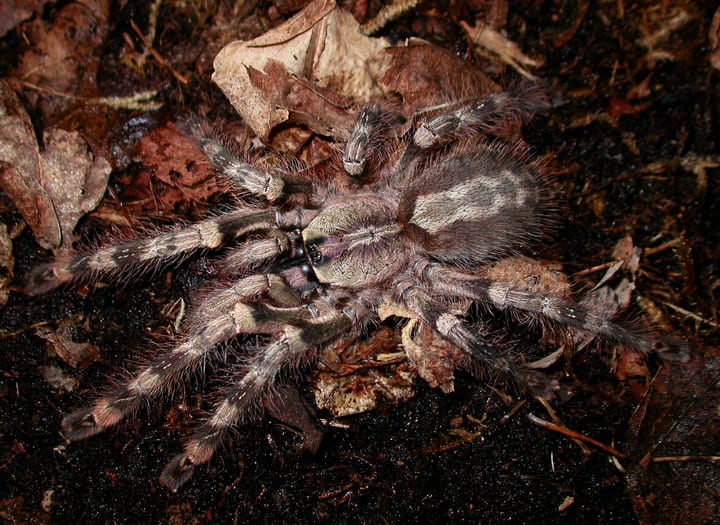
The Ghost ornamental is an arboreal Poecilotheria tarantula in calm shades of gray, brown and white. The undersides of its legs are white, and a dark triangular band on the rear of the femur on the fourth leg is a handy way to tell it apart. Adults reach a leg span of 18-20 cm and spend their time tucked into bark crevices and hollows. It is relatively calm for its genus, but it is extremely fast and will bite if cornered, so it suits experienced keepers. Females can live up to 12 years, while males live about 4 years.
View Ghost ornamental encyclopedia →0% commission on your first sales!Register by September 30, 2026 and your first 2 sales are commission-free!
Breeder Wanted!
List on BreederDirect and sell directly to customers nationwide!
5 Transparency Standards You Can Trust
When listing Exotic Invertebrates, Breeders disclose the following. We guarantee transparency on growth stage and breeding unit.
- Real Photos
- Breeding Unit
- Generation Info
- Body Length (mm)
- Country of Origin
Browse all 286 breeds
Verified breeders wanted for Exotic Invertebrates
Breeders are signing up now ahead of launch. Subscribe to be notified when new listings go live.
Getting alerts is free with a member account. When new listings match your saved search, we'll notify you by email and in-app.
Browse other categories
Verified breeders (preview)
Are you raising exotic invertebrates?
Register as a breeder and connect with buyers directly.
Apply as a breederGhost ornamental key facts
- Care level
- Advanced
- Lifespan
- Females up to 12 years / males about 4 years (care information)
- Size
- Diagonal leg span 18-20 cm (care information)
- Temperature
- 20〜24℃
- Humidity
- 65〜75%
- Diet
- Carnivorous (live insects such as crickets and roaches)
- Enclosure
- Arboreal; in the wild it lives in tree hollows and under bark. Use a tall enclosure with upright cork bark as a retreat and a permanent water dish. Keep singly.
- Temperature & Humidity
- Care information gives 20-24 C and 65-75% humidity. Mist regularly but keep the enclosure well ventilated to prevent mould.
- Diet & Feeding
- Live prey such as crickets and roaches sized to the spider; care information suggests feeding spiderlings twice a week.
- Temperament & Venom
- Relatively docile for the genus but extremely fast, and it will bite if cornered. The venom is described as medically significant, causing prolonged pain and muscle cramping, so never handle it.
- Notes
- It may bolt during maintenance, so use a lockable enclosure and locate the spider before opening it. Its taxonomy differs between sources and it is easily confused with P. striata and others, so check the origin when acquiring one, and never release captive animals.
About Ghost ornamental
Ghost ornamental: a gray, brown and white arboreal Poecilotheria tarantula with an 18-20 cm leg span. Females live up to 12 years, males about 4. Key traits and what to know before keeping one.
7 things to know before welcoming a Ghost ornamental
1Best for experienced keepers
Its care difficulty is rated for advanced keepers. It is relatively calm for its genus, but it is extremely fast and bites if cornered, so every feeding or cleaning session calls for full attention. It is safer to gain experience with other tarantulas first.
2Tall arboreal enclosure
This species lives up in the trees rather than digging down. Choose a tall enclosure and add vertical hides such as cork bark or tubes. Height and footholds matter more than floor space.
3Escape prevention
It is quick and can bolt the moment a lid is opened. Pick an enclosure with a lid that locks securely, and plan each step before you open it. Long-handled tools help you keep your distance during care.
4Venom and bite safety
The venom is regarded as potent, and a bite can cause severe pain and other effects on the body. Avoid handling it directly and use long tongs or similar tools to keep your distance. If you are ever bitten, consult a medical professional.
5Temperature and humidity
It comes from a warm climate, so choose a spot where room temperature stays stable through the seasons. Keep the water dish filled and ensure ventilation to avoid mold and stuffy air from over-wetting. A thermometer and hygrometer make changes easier to notice.
6Feeding and molting
Live feeder insects such as crickets are the staple, sized to match the spider's growth stage. Appetite and activity drop around molting, so remove uneaten prey and leave it undisturbed.
7Lifespans differ by sex
Females can live up to 12 years, while males live about 4 years. If you want a long-term companion, confirm the sex before you bring one home. Juveniles can be hard to sex, so ask the seller.
Frequently asked questions about Ghost ornamental
- Q.Can a beginner keep one?
- A.It is rated for advanced keepers and is not a good first tarantula. Although relatively calm for its genus, it is extremely fast, bites when cornered, and its venom is regarded as potent. Build experience with a more manageable species first.
- Q.How large does an adult get?
- A.Adults reach a leg span of 18-20 cm. Because it is arboreal, choose an enclosure that prioritizes height and footholds over floor space.
- Q.How long does it live?
- A.Females can live up to 12 years, and males about 4 years. Females suit anyone hoping for a long-term pet. Juveniles can be hard to sex, so check with the seller before buying.
- Q.How do I tell it from other Poecilotheria?
- A.Look for white undersides on the legs and a dark triangular band on the rear of the femur on the fourth leg. The overall coloring is a calm mix of gray, brown and white. Color varies between individuals and with molts, so treat these as guides only.
- Q.What should I ask the seller before buying?
- A.Ask about the sex, growth stage (size), and recent molting and feeding. The Ghost ornamental is listed in CITES Appendix II, so it is also worth asking about the individual's origin, including whether it was captive-bred.
Learn more about Ghost ornamental in the encyclopedia
View Ghost ornamental encyclopedia entry →
Care difficulty, lifespan, size and diet — all basics covered.
More in this category
Can't find the one you're looking for?
Post your wishes for free and breeders with matching animals will contact you with introductions.