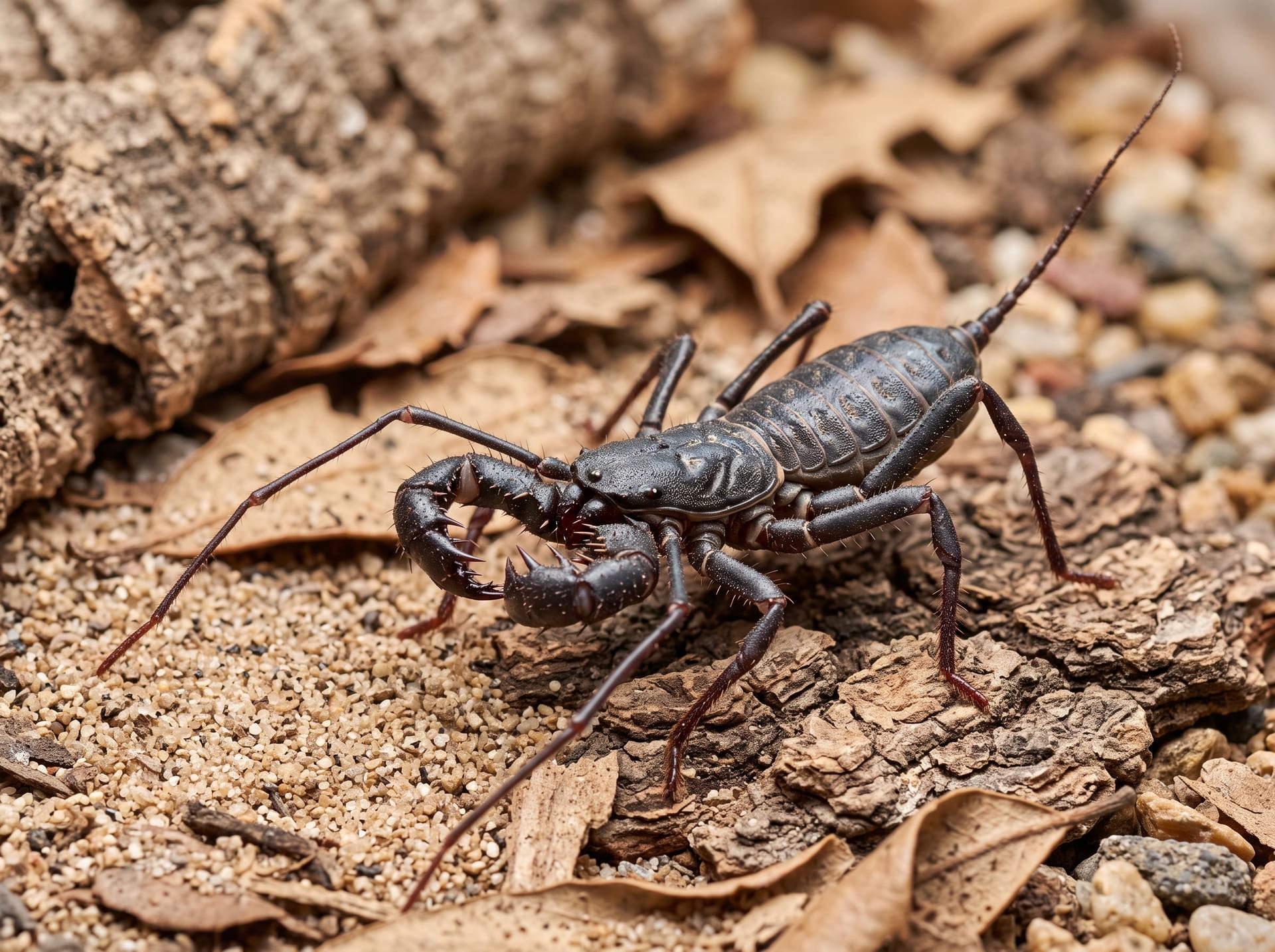
Whip Scorpion (Vinegaroon)
The whip scorpion (vinegaroon) may look like a true scorpion, but it's a venom-free arachnid relative with no stinger to worry about. Native to North and Central America, it gets its common name from the vinegar-like, acetic spray it releases from its tail when it feels threatened. Its large, pincer-like pedipalps make for a dramatic sight as it grabs prey. Nocturnal and generally calm, it spends its days tucked away out of sight and becomes active after dark. Because it naturally burrows into soil, keepers get the added enjoyment of setting up a properly deep, humid substrate — making it a popular choice for anyone curious about keeping an eye-catching but manageable invertebrate.
View Whip Scorpion (Vinegaroon) encyclopedia →0% commission on your first sales!Register by September 30, 2026 and your first 2 sales are commission-free!
Breeder Wanted!
List on BreederDirect and sell directly to customers nationwide!
5 Transparency Standards You Can Trust
When listing Exotic Invertebrates, Breeders disclose the following. We guarantee transparency on growth stage and breeding unit.
- Real Photos
- Breeding Unit
- Generation Info
- Body Length (mm)
- Country of Origin
Browse all 249 breeds
Verified breeders wanted for Exotic Invertebrates
Breeders are signing up now ahead of launch. Subscribe to be notified when new listings go live.
Getting alerts is free with a member account. When new listings match your saved search, we'll notify you by email and in-app.
Browse other categories
Verified breeders (preview)
Are you raising exotic invertebrates?
Register as a breeder and connect with buyers directly.
Apply as a breederWhip Scorpion (Vinegaroon) key facts
- Care level
- Intermediate
- Lifespan
- 5-8 years
- Size
- 40-85mm (excluding tail)
- Temperature
- 22〜28℃
- Humidity
- 60〜80%
- Diet
- Crickets, roaches, mealworms
- Enclosure
- Medium plastic case. Deep coconut fiber substrate
- Humidity
- Maintain 60-80%. Has burrowing habit
- Feeding
- 1-2 times per week. Tweezers feeding recommended
- Notes
- Acetic spray painful if in eyes. Handle carefully
About Whip Scorpion (Vinegaroon)
A non-venomous arachnid relative resembling a scorpion, native to North and Central America. It sprays an acetic, vinegar-scented liquid to defend itself, has large pincers, is suited to intermediate keepers, lives 5-8 years, and reaches 40-85mm (excluding the tail) as an adult.
7 things to know before welcoming a Whip Scorpion (Vinegaroon)
1Intermediate-Level Care
Whip scorpions aren't difficult to keep on a basic level, but maintaining proper humidity and substrate takes some know-how, which is why they're considered suited to intermediate keepers. First-time invertebrate keepers should build up some foundational knowledge before bringing one home.
2Provide Deep Burrowing Substrate
In the wild, whip scorpions burrow into the soil, so a deep layer of substrate is essential in captivity. Choose a moisture-retentive material that's easy to dig through and provides hiding spots.
3Non-Venomous but Sprays Acid
They don't have a venomous sting like true scorpions, but when threatened they can spray a vinegar-scented, acidic liquid from their tail. It can sting if it gets in your eyes or on mucous membranes, so avoid handling them near your face.
4Powerful Pincers for Hunting
Their enlarged pincer-like pedipalps let them firmly grip insect prey. They aren't fast movers, but watching them hunt has a distinctly striking, otherworldly quality.
5Nocturnal and Docile
They tend to stay hidden and still during the day, becoming active at night. Their temperament is relatively calm, and they rarely act aggressively without provocation.
6Humidity Is Key to Longevity
Whip scorpions are sensitive to dryness, so keeping the substrate consistently moist is important for their health. Both excessive dryness and excessive dampness can cause problems, so regular monitoring and adjustment are necessary.
7A 5-8 Year Commitment
Adults can live 5 to 8 years, so keeping one calls for a long-term commitment. Adult body size (excluding the tail) runs about 40-85mm, so size your enclosure accordingly.
Frequently asked questions about Whip Scorpion (Vinegaroon)
- Q.Can a whip scorpion sting or hurt you?
- A.Unlike true scorpions, it has no venomous stinger, so there's no risk of a toxic sting. That said, if it feels threatened it can spray an acetic liquid, so handle it carefully to avoid getting any in your eyes.
- Q.Is it easy to keep compared to other invertebrates?
- A.The basics of care aren't especially difficult, but maintaining proper humidity and substrate takes some specific know-how, which is why it's considered suited to intermediate keepers. If you're new to invertebrates, it's a good idea to learn the basics before bringing one home.
- Q.How big does a whip scorpion get?
- A.As an adult it reaches about 40-85mm, not counting the tail. Its well-developed pincer-like pedipalps can make it look even larger than that.
- Q.What does it eat, and what should I watch for in care?
- A.It's carnivorous, using its large pincer-like pedipalps to catch and eat live insect prey. Since it's nocturnal, it helps to plan care around the time it becomes active in the evening.
- Q.How long do whip scorpions live?
- A.They typically live around 5 to 8 years. That's relatively long for an invertebrate, so it's worth planning for a long-term commitment before bringing one home.
Learn more about Whip Scorpion (Vinegaroon) in the encyclopedia
View Whip Scorpion (Vinegaroon) encyclopedia entry →
Care difficulty, lifespan, size and diet — all basics covered.
More in this category
Can't find the one you're looking for?
Post your wishes for free and breeders with matching animals will contact you with introductions.