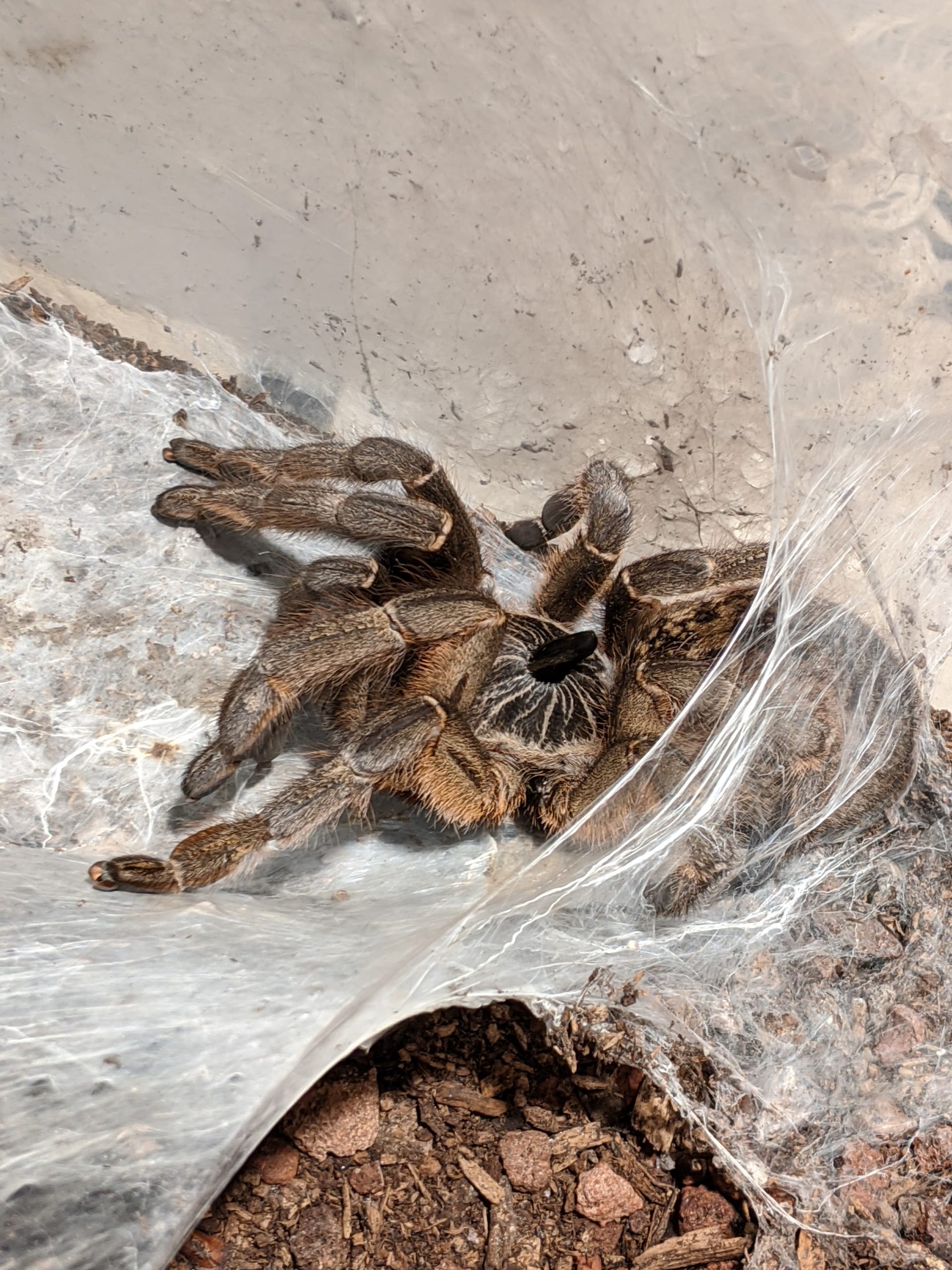
 © Jbjensen1 / CC0 1.0
Straight Horned Baboon
The Straight Horned Baboon is a fossorial tarantula native to southern Africa, instantly recognizable by the straight, horn-like projection rising from the center of its carapace — a feature found in no other tarantula. Lacking urticating hairs, it relies on speed and a defensive bite rather than irritant bristles, making it a quick, alert spider best appreciated from a respectful distance rather than handled. Its wary, skittish temperament suits keepers who enjoy observation over interaction. A deep, burrow-friendly substrate is essential, since this species spends much of its life underground and startles easily. Considered an intermediate-level tarantula, it's a striking choice for hobbyists who already have some experience under their belt.
View Straight Horned Baboon encyclopedia →0% commission on your first sales!Register by September 30, 2026 and your first 2 sales are commission-free!
Breeder Wanted!
List on BreederDirect and sell directly to customers nationwide!
5 Transparency Standards You Can Trust
When listing Exotic Invertebrates, Breeders disclose the following. We guarantee transparency on growth stage and breeding unit.
- Real Photos
- Breeding Unit
- Generation Info
- Body Length (mm)
- Country of Origin
Browse all 249 breeds
Verified breeders wanted for Exotic Invertebrates
Breeders are signing up now ahead of launch. Subscribe to be notified when new listings go live.
Getting alerts is free with a member account. When new listings match your saved search, we'll notify you by email and in-app.
Browse other categories
Verified breeders (preview)
Are you raising exotic invertebrates?
Register as a breeder and connect with buyers directly.
Apply as a breederStraight Horned Baboon key facts
- Care level
- Intermediate
- Lifespan
- Females 13-15 years, males 3-4 years
- Size
- Body about 6cm, leg span 13-16cm
- Temperature
- 22〜26℃
- Humidity
- 50〜60%
- Diet
- Live insects such as crickets and roaches
- Temperature & Humidity
- Keep at 22-26C and 50-60% humidity. It does not need tropical humidity, and excess moisture causes health problems.
- Enclosure
- As an obligate burrower, fill more than half the enclosure depth with diggable substrate. Keep a water dish and ensure good ventilation.
- Diet & Feeding
- Offer live crickets and roaches. Prey is dragged into the burrow to eat, so remove leftovers within a day.
- Temperament & Venom
- An Old World species without urticating hairs, defensive and fast. Bites are reported to cause severe pain plus muscle cramping and nausea, so it is never handled.
- Notes
- It rarely leaves the burrow by day, so viewing opportunities are limited. Digging it out to check on it causes severe stress.
About Straight Horned Baboon
Meet the Straight Horned Baboon, a fossorial African tarantula known for the straight horn on its carapace and quick, defensive movements. Explore its temperament, care basics, and what to know before bringing one home.
7 things to know before welcoming a Straight Horned Baboon
1Intermediate-Level Care
This species is considered suitable for intermediate keepers rather than absolute beginners. It helps to already be comfortable with basic tarantula care — temperature and humidity management, feeding, and reading molt signs — before bringing one home.
2A Distinctive Carapace Horn
The straight, horn-like projection rising from the center of the carapace is this species' signature feature, making it instantly recognizable. Few other tarantulas share this striking silhouette.
3No Urticating Hairs
Unlike many New World tarantulas, this species has no urticating hairs to flick in defense. Instead, it relies on speed and a defensive bite, so it's best not to provoke it.
4Deep, Burrow-Friendly Substrate
As a fossorial species, it needs substrate deep enough to fully bury itself. Provide a setup that supports digging so it can retreat and feel secure.
5Fast — Handle Setup with Care
This spider moves very quickly and can dart out unexpectedly during feeding or enclosure maintenance. Make sure the enclosure lid and locking mechanism are secure before opening it.
6Leg Span Reaches 13–16cm
Body length is a modest 6cm or so, but the leg span stretches to 13–16cm. The overall silhouette looks larger than the body size alone suggests.
7Lifespan Differs Sharply by Sex
Females typically live 13 to 15 years, while males live only 3 to 4 years. If you want a long-term companion, a female is the more common choice.
Frequently asked questions about Straight Horned Baboon
- Q.Is this tarantula suitable for beginners?
- A.It's generally considered an intermediate-level species rather than a beginner's tarantula. It helps to already be comfortable with the basics of tarantula care before adding one to your collection.
- Q.Can I handle it or interact with it directly?
- A.Handling isn't recommended, since it moves quickly and has no urticating hairs to warn you off — its main defense is a fast bite. It's best enjoyed as an animal to observe rather than touch.
- Q.What is the horn on its head for?
- A.The horn-like projection on the carapace is this tarantula's signature visual feature. Its exact function isn't clearly established, so it's best appreciated simply as a distinctive part of its appearance.
- Q.Is it true that males and females have very different lifespans?
- A.Yes — females typically live 13 to 15 years, while males live only about 3 to 4 years. If you want a long-term companion, a female is the usual choice.
- Q.How deep does the substrate need to be?
- A.Since it's a burrowing species, the substrate should be deep enough for it to bury itself completely. Choose an easily diggable substrate so it can create a secure retreat.
Learn more about Straight Horned Baboon in the encyclopedia
View Straight Horned Baboon encyclopedia entry →
Care difficulty, lifespan, size and diet — all basics covered.
More in this category
Can't find the one you're looking for?
Post your wishes for free and breeders with matching animals will contact you with introductions.