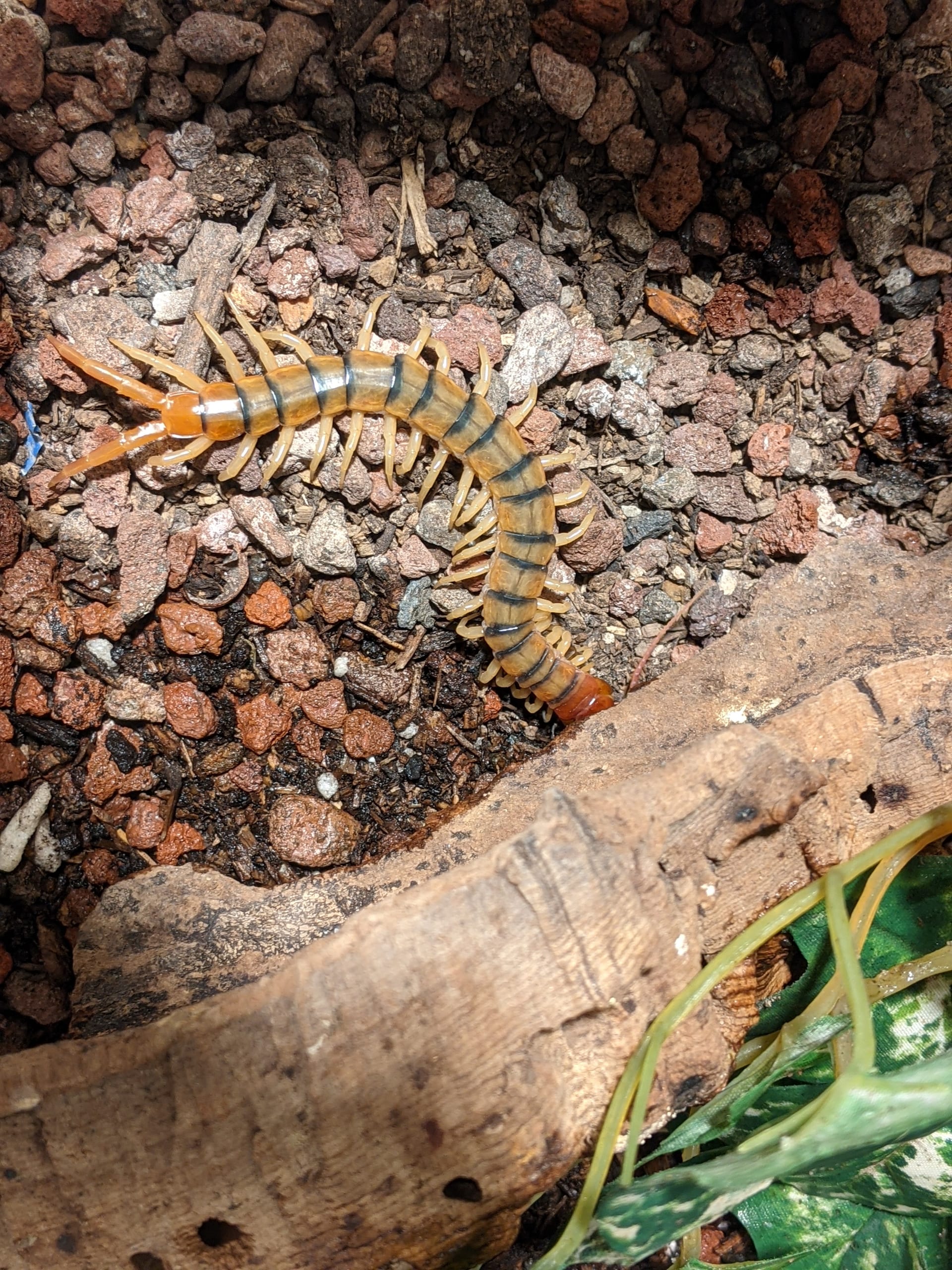
 © Jbjensen1 / CC0
Tiger Centipede
The Tiger Centipede is a mid-sized giant centipede native to the arid regions of the western United States. Its name comes from the dark bands crossing each body segment, which give it a tiger-striped appearance. Coloration varies noticeably between individuals, and blue-toned specimens are also known to appear. Its venom is considered relatively mild compared to other large centipedes, making it a common entry point into centipede keeping. With its quick movements and striking form, it's a rewarding species to observe up close.
View Tiger Centipede encyclopedia →0% commission on your first sales!Register by September 30, 2026 and your first 2 sales are commission-free!
Breeder Wanted!
List on BreederDirect and sell directly to customers nationwide!
5 Transparency Standards You Can Trust
When listing Exotic Invertebrates, Breeders disclose the following. We guarantee transparency on growth stage and breeding unit.
- Real Photos
- Breeding Unit
- Generation Info
- Body Length (mm)
- Country of Origin
Browse all 249 breeds
Verified breeders wanted for Exotic Invertebrates
Breeders are signing up now ahead of launch. Subscribe to be notified when new listings go live.
Getting alerts is free with a member account. When new listings match your saved search, we'll notify you by email and in-app.
Browse other categories
Verified breeders (preview)
Are you raising exotic invertebrates?
Register as a breeder and connect with buyers directly.
Apply as a breederAbout Tiger Centipede
A mid-sized giant centipede from the western US, known for its tiger-striped pattern and color variation. Its relatively mild venom makes it a popular starter species.
7 things to know before welcoming a Tiger Centipede
1Keep One Per Enclosure
Centipedes are territorial and prone to cannibalism, so they should always be housed individually. Never keep more than one in the same enclosure.
2Escape-Proof Housing Is a Must
These centipedes are strong and can pry open gaps to escape, so choose an enclosure with a securely locking lid. Fine-mesh ventilation also helps prevent escapes.
3Never Handle With Bare Hands
Because of its strong bite and venom, this species should not be handled with bare hands. Use tongs or similar tools whenever contact is needed.
4Keep Substrate on the Drier Side
Since this species comes from arid habitats, avoid keeping the substrate overly damp. Moistening just one area to create a humidity gradient tends to help it settle in.
5Provide Enough Depth to Burrow
This species spends much of its time burrowed underground, so provide substrate deep enough for it to dig comfortably, along with a hide.
6Feed Live Prey
As a carnivore, it typically feeds on live prey such as crickets. Remove any uneaten prey promptly to keep the enclosure clean.
7Leave It Undisturbed During Molting
Centipedes are extremely vulnerable just before and after molting. Avoid disturbing the enclosure during this period and keep the environment calm.
Frequently asked questions about Tiger Centipede
- Q.Is it safe to handle with bare hands?
- A.No, this species is venomous and should not be handled with bare hands. Use tongs or similar tools for enclosure maintenance instead.
- Q.Can multiple individuals be kept together?
- A.Multiple housing isn't recommended due to the risk of cannibalism. Each individual should be kept in its own separate enclosure.
- Q.How strong is its venom?
- A.Compared to other large centipedes, its venom is generally considered relatively mild, which is why it's often recommended as a starter species. That said, reactions can vary between individuals, so care should still be taken to avoid being bitten.
- Q.Is this species suitable for beginners?
- A.This species is generally rated as intermediate in difficulty. It's best suited to keepers who already understand the basics of centipede care, such as solitary housing, escape prevention, and tool-based handling.
- Q.What color variations exist?
- A.The species is known for the dark bands on each segment that create a tiger-striped look, with noticeable variation between individuals. Blue-toned populations originating from Southern California are also available.
Learn more about Tiger Centipede in the encyclopedia
View Tiger Centipede encyclopedia entry →
Care difficulty, lifespan, size and diet — all basics covered.
More in this category
Can't find the one you're looking for?
Post your wishes for free and breeders with matching animals will contact you with introductions.