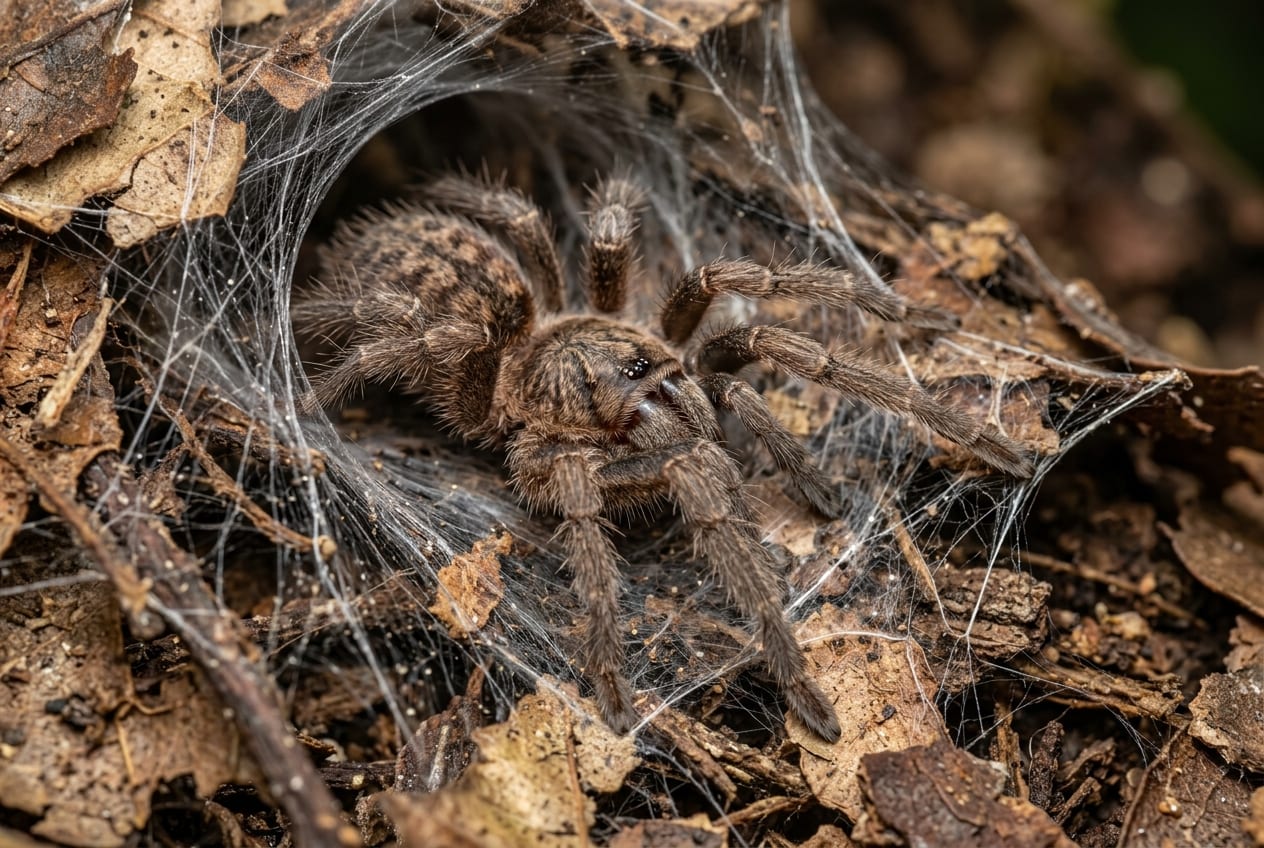
Tanzanian Chestnut Baboon
The Tanzanian Chestnut Baboon is a small tarantula native to Tanzania, with adults typically reaching a leg span of around 6cm — compact and easy to house. It moves with remarkable speed, often darting for cover the instant it's startled, yet unlike New World tarantulas it has no urticating hairs to worry about. Specialty keepers rank it among the most manageable Old World species available, making it a solid pick for anyone taking their first step into Old World tarantulas, as long as you respect its quick reflexes. As a burrowing species, it spends much of its time shaping an underground retreat, rewarding patient observers with fascinating natural behavior.
View Tanzanian Chestnut Baboon encyclopedia →0% commission on your first sales!Register by September 30, 2026 and your first 2 sales are commission-free!
Breeder Wanted!
List on BreederDirect and sell directly to customers nationwide!
5 Transparency Standards You Can Trust
When listing Exotic Invertebrates, Breeders disclose the following. We guarantee transparency on growth stage and breeding unit.
- Real Photos
- Breeding Unit
- Generation Info
- Body Length (mm)
- Country of Origin
Browse all 249 breeds
Verified breeders wanted for Exotic Invertebrates
Breeders are signing up now ahead of launch. Subscribe to be notified when new listings go live.
Getting alerts is free with a member account. When new listings match your saved search, we'll notify you by email and in-app.
Browse other categories
Verified breeders (preview)
Are you raising exotic invertebrates?
Register as a breeder and connect with buyers directly.
Apply as a breederTanzanian Chestnut Baboon key facts
- Care level
- Beginner-friendly
- Lifespan
- Females 6-8 years / males 2-3 years
- Size
- Leg span about 6cm
- Temperature
- 24〜28℃
- Humidity
- 50〜60%
- Diet
- Small crickets, fruit flies and similar prey
- Temperature & Humidity
- Aim for 24-28C and 50-60% humidity. Small enclosures dry out quickly, so never let the water dish run empty.
- Enclosure
- As a dwarf it does not need a large enclosure; use a small one with diggable substrate and a hide.
- Diet & Feeding
- Small crickets or fruit flies are enough even for adults. Do not offer oversized prey.
- Temperament & Venom
- Specialist dealers place it in the easiest suitability band, but it is very fast. Little is known about its venom. Watch for escapes when opening the enclosure.
- Notes
- Little is published beyond the original description.
About Tanzanian Chestnut Baboon
A small, fast-moving tarantula from Tanzania with no urticating hairs. At roughly 6cm leg span, it's considered one of the more manageable Old World species for beginner keepers.
7 things to know before welcoming a Tanzanian Chestnut Baboon
1Handle with Care for Speed
True to its Old World heritage, this species moves with startling speed and can dart out the moment its enclosure is opened. It's best kept as an animal to observe rather than handle.
2No Urticating Hairs
Unlike New World tarantulas, this species has no urticating hairs to flick in defense. That said, Old World species can be more defensive, so avoiding unnecessary contact is still the safest approach.
3Compact Adult Size
Adults stay compact, with a leg span of about 6cm. This small footprint makes enclosure setup and day-to-day care easier to manage than with larger tarantula species.
4Burrowing Lifestyle
This species digs and lives in burrows, so a deep substrate layer is important. Don't be surprised if it stays out of sight for long stretches — that's normal burrowing behavior.
5Feeding Basics
Feed primarily on crickets and similar insects. Because of its quick reflexes, using feeding tongs rather than bare hands during feeding is the safer habit to build.
6Leave It Alone During Molting
Like all tarantulas, it molts periodically as it grows. Its body is especially fragile just before and after a molt, so it's best to pause feeding and cleaning and simply leave it undisturbed.
7Prepare the Enclosure First
Set up a deep substrate layer, a hide, and a small water dish before bringing one home. Choose a well-ventilated enclosure with a secure lid that can handle its fast movements.
Frequently asked questions about Tanzanian Chestnut Baboon
- Q.Can beginners keep this species?
- A.Yes, it's classified as beginner-friendly in terms of care. That said, its very fast movement means it helps to be prepared for quick, sudden reactions.
- Q.Does it have urticating hairs?
- A.No, it doesn't have urticating hairs. This is a common trait among Old World tarantulas and one of the key differences from New World species.
- Q.How big does it get?
- A.It's a small tarantula, with adults reaching a leg span of roughly 6cm. You won't need a large enclosure to keep one comfortably.
- Q.Can it be housed with other spiders?
- A.No, tarantulas should be kept individually — cohabitation carries a risk of cannibalism. Provide one enclosure per spider.
- Q.Is this species subject to CITES?
- A.This species is not subject to CITES.
Learn more about Tanzanian Chestnut Baboon in the encyclopedia
View Tanzanian Chestnut Baboon encyclopedia entry →
Care difficulty, lifespan, size and diet — all basics covered.
More in this category
Can't find the one you're looking for?
Post your wishes for free and breeders with matching animals will contact you with introductions.