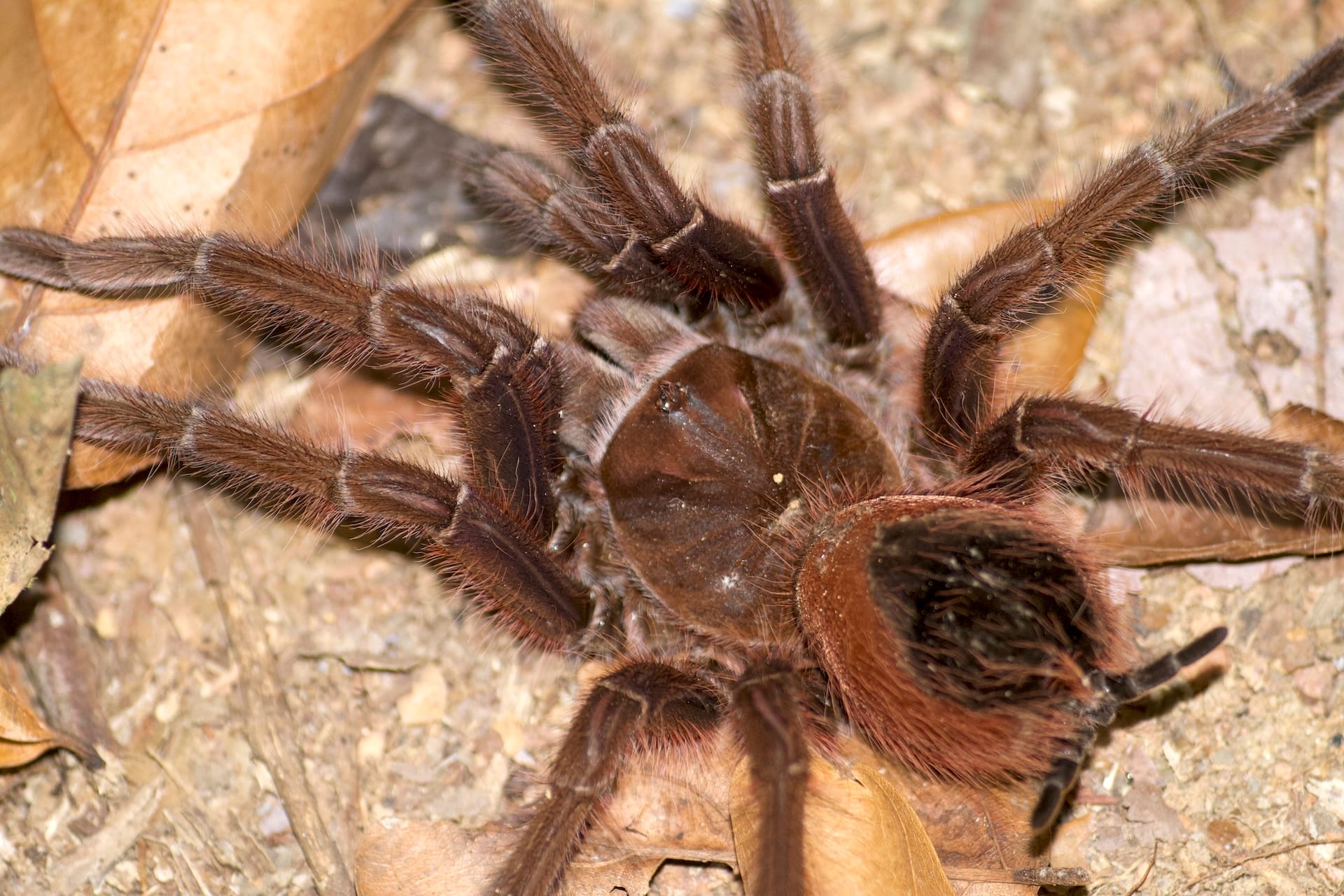
 © JR Ferrer-Paris / CC BY 4.0
Pinkfoot Goliath
The Pinkfoot Goliath is a large tarantula renowned for having one of the greatest leg spans of any species in the world. Its base coloration is a rich coffee-brown, and spiderlings display striking pink-tipped legs — a trait that fades gradually with each successive molt. As it matures, both body length and leg span grow impressively, giving it a commanding presence. That said, this species is skittish by nature and requires consistently high humidity, making attentive husbandry essential. Keepers drawn to its bold size and distinctive color transformation should be prepared for an advanced-level commitment.
View Pinkfoot Goliath encyclopedia →0% commission on your first sales!Register by September 30, 2026 and your first 2 sales are commission-free!
Breeder Wanted!
List on BreederDirect and sell directly to customers nationwide!
5 Transparency Standards You Can Trust
When listing Exotic Invertebrates, Breeders disclose the following. We guarantee transparency on growth stage and breeding unit.
- Real Photos
- Breeding Unit
- Generation Info
- Body Length (mm)
- Country of Origin
Browse all 249 breeds
Verified breeders wanted for Exotic Invertebrates
Breeders are signing up now ahead of launch. Subscribe to be notified when new listings go live.
Getting alerts is free with a member account. When new listings match your saved search, we'll notify you by email and in-app.
Browse other categories
Verified breeders (preview)
Are you raising exotic invertebrates?
Register as a breeder and connect with buyers directly.
Apply as a breederPinkfoot Goliath key facts
- Care level
- Advanced
- Lifespan
- Females 15-20 years / males 3-4 years
- Size
- Holotype female 87mm in body length with a 96mm fourth leg; the male 80mm with a fourth leg just under 100mm
- Temperature
- 23〜28℃
- Humidity
- 70〜75%
- Diet
- Live insects such as crickets, roaches and locusts
- Temperature & Humidity
- Hold 23-28C. A daytime 25-26C is ample, temperatures above 30C should be avoided and nights can sit around 23C. Keep humidity at 70-75%, which a water dish helps stabilise.
- Enclosure
- Adults need an enclosure of about 45x35x25cm with deep substrate and a retreat it can dig under. Do not make it tall: the huge abdomen is easily ruptured by a fall.
- Diet & Feeding
- Offer large live prey such as crickets, roaches and locusts. The feeding response is very strong and growth is rapid.
- Temperament & Venom
- It has urticating hairs and flicks them from the abdomen when disturbed. They irritate skin and airways strongly, so protect eyes and lungs during maintenance. The temperament is impulsive and defensive.
- Notes
- Breeding is difficult because females often eat the egg sac, which holds around 200 eggs. The key to husbandry is maintaining high humidity while keeping ventilation adequate.
About Pinkfoot Goliath
The Pinkfoot Goliath is a large tarantula with one of the world's greatest leg spans. Spiderlings have pink-tipped legs that fade with each molt. A skittish, high-humidity species suited to advanced keepers.
7 things to know before welcoming a Pinkfoot Goliath
1High Humidity Is Essential
The Pinkfoot Goliath requires consistently high humidity. Set up a reliable way to maintain enclosure humidity before bringing one home, since dry conditions can affect its health.
2Skittish, Cautious Temperament
This species is naturally nervous and reacts sensitively to noise, vibration, and changes in its surroundings. Frequent handling and excessive stimulation should be avoided in favor of quiet, hands-off observation.
3Pink Leg Tips Fade With Age
Spiderlings show pink coloring at the tips of each leg, a feature that gradually fades with successive molts. Expect its appearance to change noticeably as it matures.
4Grows Into a Large Spider
As it matures, both body length and leg span increase substantially, reaching one of the greatest leg spans recorded among tarantulas. Plan enclosure size accordingly for its adult form.
5Adult Coloration Is Coffee-Brown
Mature individuals settle into a calm, coffee-brown base coloration, quite different from the pink-tipped legs of their younger stage.
6Advanced-Level Care Required
Given its skittish temperament and demanding humidity needs, this species is best suited to keepers with prior tarantula experience and the ability to maintain consistent environmental conditions.
7Prepare the Enclosure in Advance
Have a humidity-retaining enclosure, substrate, and hide ready before arrival. Choose a quiet placement that suits its cautious nature.
Frequently asked questions about Pinkfoot Goliath
- Q.Is the Pinkfoot Goliath suitable for beginners?
- A.No, this species is considered suitable for advanced keepers. Its skittish nature and demanding humidity requirements make it best suited to those with prior tarantula-keeping experience.
- Q.Do the pink leg tips stay pink into adulthood?
- A.No, the pink coloring seen on spiderlings' leg tips gradually fades with each successive molt. Adults settle into an overall coffee-brown coloration.
- Q.How large does this species grow?
- A.Holotype records show females reaching a body length of 87mm with a fourth leg of 96mm, and males reaching 80mm with a fourth leg close to 100mm. It's known for one of the greatest leg spans among tarantulas.
- Q.What should I be especially careful about when keeping one?
- A.Since this species requires high humidity, maintaining consistent enclosure moisture is critical. Its skittish temperament also means handling and excessive stimulation should be minimized.
- Q.Are there any legal restrictions on keeping this species?
- A.No, the Pinkfoot Goliath is not subject to CITES.
Learn more about Pinkfoot Goliath in the encyclopedia
View Pinkfoot Goliath encyclopedia entry →
Care difficulty, lifespan, size and diet — all basics covered.
More in this category
Can't find the one you're looking for?
Post your wishes for free and breeders with matching animals will contact you with introductions.