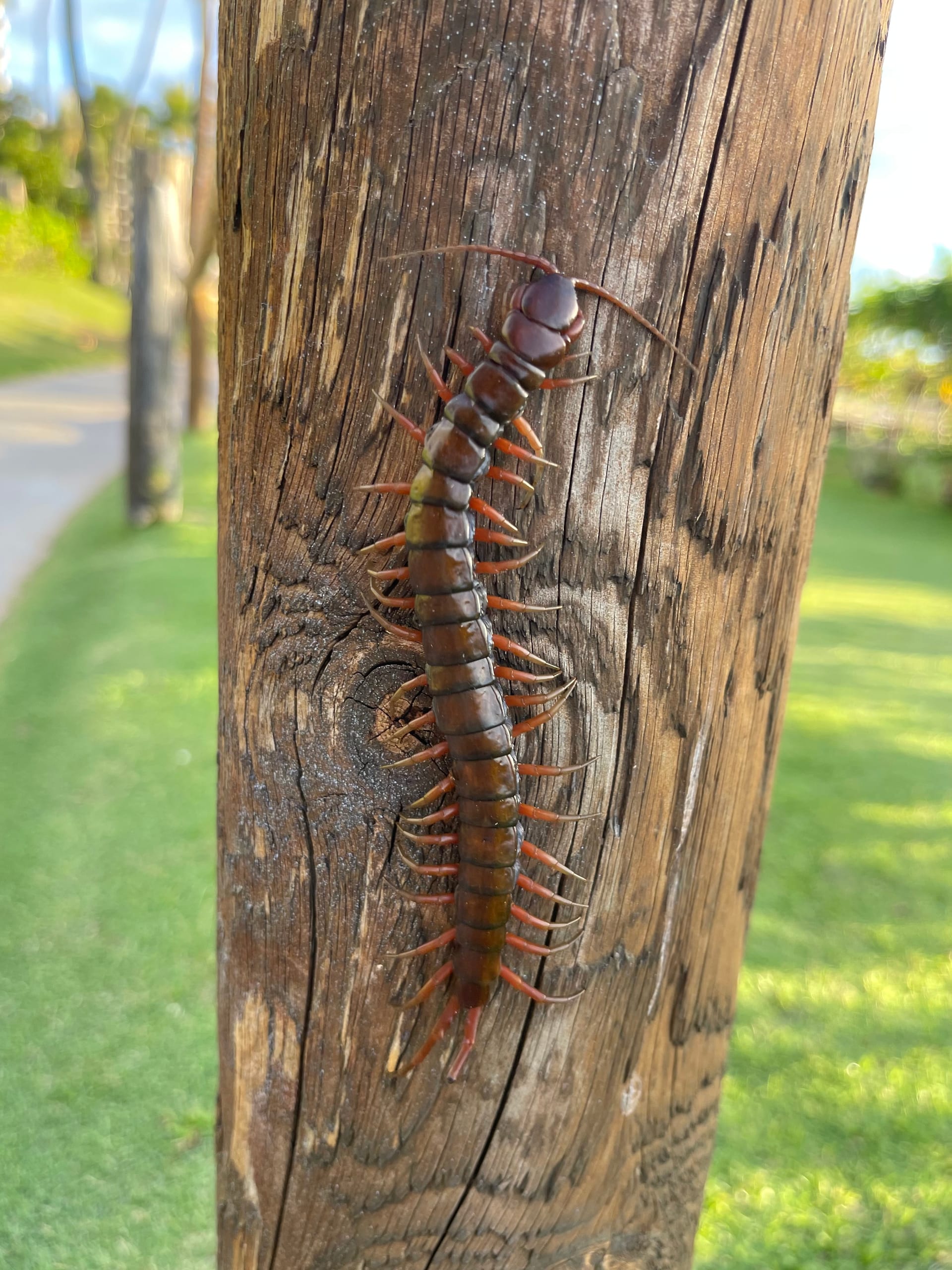
 © Richard N Horne / CC BY-SA 4.0
Subspinipes Giant Centipede
Scolopendra subspinipes is a large centipede species native to a broad range spanning Southeast Asia and islands across the Pacific and Indian Oceans. Its striking reddish-brown body paired with yellow-to-orange legs gives it an unmistakable appearance, and adults typically reach 15 to 20 cm in length. Quick, agile, and easily provoked, it strikes fast when hunting or threatened, making it a captivating subject for those interested in observing raw predatory behavior. However, its powerful venomous forcipules and defensive temperament mean it should never be handled bare-handed. Keeping this species safely requires solid knowledge and a calm, careful approach, which is why it's generally recommended for experienced keepers rather than beginners. For hobbyists drawn to bold looks and wild, untamed behavior, it's a rewarding species to observe.
View Subspinipes Giant Centipede encyclopedia →0% commission on your first sales!Register by September 30, 2026 and your first 2 sales are commission-free!
Breeder Wanted!
List on BreederDirect and sell directly to customers nationwide!
5 Transparency Standards You Can Trust
When listing Exotic Invertebrates, Breeders disclose the following. We guarantee transparency on growth stage and breeding unit.
- Real Photos
- Breeding Unit
- Generation Info
- Body Length (mm)
- Country of Origin
Browse all 249 breeds
Verified breeders wanted for Exotic Invertebrates
Breeders are signing up now ahead of launch. Subscribe to be notified when new listings go live.
Getting alerts is free with a member account. When new listings match your saved search, we'll notify you by email and in-app.
Browse other categories
Verified breeders (preview)
Are you raising exotic invertebrates?
Register as a breeder and connect with buyers directly.
Apply as a breederSubspinipes Giant Centipede key facts
- Care level
- Advanced
- Lifespan
- 6-9 years
- Size
- 15-20cm
- Temperature
- 23〜29℃
- Humidity
- 60〜80%
- Diet
- Crickets, dubia and red runner roaches
- Temperature & Humidity
- 23-29 C with 26 C as the base. Keep substrate moist for 60-80% humidity; never let it dry out.
- Enclosure
- A plastic enclosure at least 1.5x the body length in height with a secure lid. 5-10 cm of coco fibre substrate, a hide and a shallow water dish.
- Diet & Feeding
- Crickets, dubia or red runner roaches once or twice a week. Remove leftovers, which rot quickly.
- Temperament & Venom
- Aggressive and fast. Venom of large Scolopendra is potent, causing severe pain and swelling. Never handle.
- Notes
- Cannibalistic even within the species; house singly. Often confused in trade with S. mutilans and S. dehaani.
About Subspinipes Giant Centipede
A large centipede native to Southeast Asia and Pacific/Indian Ocean islands, reaching 15-20cm with striking reddish-brown coloring. Venomous and recommended for experienced keepers only.
7 things to know before welcoming a Subspinipes Giant Centipede
1Understand Its Potent Venom
Scolopendra subspinipes has potent venomous forcipules, and a bite can cause significant pain and swelling. Avoid handling it with bare hands, and get into the habit of using dedicated tools for all maintenance tasks.
2An Aggressive Temperament
This species is quick to show defensive or aggressive behavior, often bolting or striking when startled. Always check its exact position before opening the enclosure to prevent escapes or accidental contact.
3Deep Substrate and Hiding Spots
This centipede spends much of its time hidden in burrows or under cover, so provide substrate deep enough to dig into along with hides like cork bark or shelters. A secure hiding environment helps reduce stress.
4Humidity Is Key
Since its native range is largely hot and humid, keep the substrate from drying out to support its health, while also using a well-ventilated enclosure to avoid excess moisture buildup.
5Escape-Proof the Enclosure
Its long, powerful body makes it adept at squeezing through small gaps. Choose an enclosure with a secure locking lid and fine-mesh ventilation to prevent escapes.
6Keep Individually
Because it's prone to cannibalism, avoid housing multiple individuals together — keep one per enclosure as standard practice. Check on its condition regularly, especially after feeding.
7Preparation Before Bringing One Home
Before bringing one home, prepare dedicated handling tools (like long tongs or forceps) and a suitable enclosure, and research what to do in case of a bite beforehand for peace of mind. Make sure you're equipped with both knowledge and supplies first.
Frequently asked questions about Subspinipes Giant Centipede
- Q.How dangerous is a bite from this species?
- A.This species has potent venomous forcipules, and a bite can cause significant pain and swelling. If symptoms are severe or you notice unusual physical reactions, seek medical attention promptly.
- Q.Can beginners keep this species?
- A.This species is considered suitable for experienced keepers only. Its strong venom and aggressive temperament make it better suited to hobbyists already comfortable handling defensive invertebrates.
- Q.How large does it grow?
- A.Adults are a large centipede species reaching roughly 15 to 20cm in length, though individual size can vary somewhat.
- Q.Is this species subject to any regulations?
- A.This species is not listed under CITES, so there are no international trade regulatory concerns associated with it.
- Q.Is it okay to keep multiple individuals together?
- A.Housing multiple individuals together is not recommended due to the risk of cannibalism. The standard approach is one individual per enclosure.
Learn more about Subspinipes Giant Centipede in the encyclopedia
View Subspinipes Giant Centipede encyclopedia entry →
Care difficulty, lifespan, size and diet — all basics covered.
More in this category
Can't find the one you're looking for?
Post your wishes for free and breeders with matching animals will contact you with introductions.