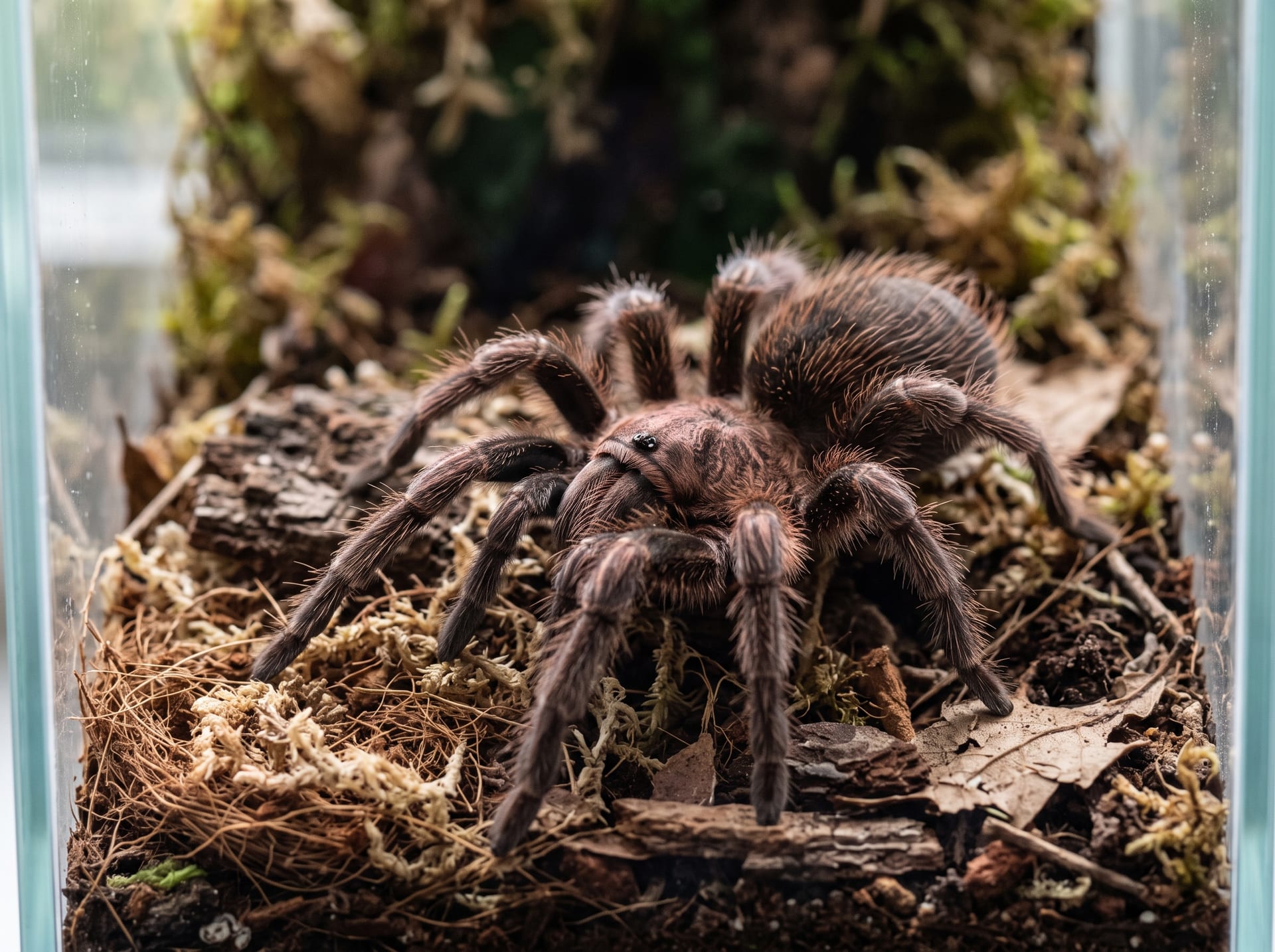
Chilean Rose Tarantula
The Chilean rose tarantula is a ground-dwelling species from Chile, known for its pale pinkish coloring. Hardy in dry conditions and famously long-lived, it's one of the oldest and most trusted beginner species in the hobby. Its movements tend to be slow and deliberate, making it easy to observe, and many individuals have a calm temperament, which is why it's rated as beginner-friendly. Adults reach a leg span of about 11 to 13 cm, and lifespans vary widely by sex — females can live 15 to 20 years, while males typically live 4 to 5 years. For anyone considering their first tarantula, it's a species worth getting to know.
View Chilean Rose Tarantula encyclopedia →0% commission on your first sales!Register by September 30, 2026 and your first 2 sales are commission-free!
Breeder Wanted!
List on BreederDirect and sell directly to customers nationwide!
5 Transparency Standards You Can Trust
When listing Exotic Invertebrates, Breeders disclose the following. We guarantee transparency on growth stage and breeding unit.
- Real Photos
- Breeding Unit
- Generation Info
- Body Length (mm)
- Country of Origin
Browse all 249 breeds
Verified breeders wanted for Exotic Invertebrates
Breeders are signing up now ahead of launch. Subscribe to be notified when new listings go live.
Getting alerts is free with a member account. When new listings match your saved search, we'll notify you by email and in-app.
Browse other categories
Verified breeders (preview)
Are you raising exotic invertebrates?
Register as a breeder and connect with buyers directly.
Apply as a breederChilean Rose Tarantula key facts
- Care level
- Beginner-friendly
- Lifespan
- Female 15-20 years / Male 4-5 years
- Size
- Leg span 11-13 cm
- Temperature
- 22〜28℃
- Humidity
- 50〜60%
- Diet
- Live insects such as crickets and roaches, offered roughly weekly.
- Habitat
- Simple dry terrestrial setup with substrate, a hide and water dish.
- Temp & Humidity
- 22-28°C, 50-60% humidity; tolerates dryness and dislikes wet conditions.
- Feeding
- Long fasting spells are normal; just keep water available.
- Caution
- Has urticating hairs but is generally calm; venom is mild, bite like a bee sting.
About Chilean Rose Tarantula
A guide to the Chilean rose tarantula, a hardy, long-lived ground-dwelling species from Chile and a classic beginner choice — covering temperament, care basics, and common questions.
7 things to know before welcoming a Chilean Rose Tarantula
1A Dry, Arid-Style Setup
Because this species comes from Chile's dry climate, keep the substrate on the drier side and avoid excess humidity. Always provide a water dish, but a consistently damp enclosure can lead to health problems.
2A Calm Temperament
Chilean rose tarantulas are generally slow-moving and even-tempered, though they may kick urticating hairs when startled rather than bite. Individual personalities vary, so it's best to let a new tarantula settle in before handling it.
3Ground-Dwelling Housing Needs
As a terrestrial species, it spends its time on the ground rather than climbing, so floor space matters more than height in the enclosure. Adding a hide gives it a secure spot to retreat to.
4A Long-Term Commitment
Lifespan differs sharply by sex: females typically live 15 to 20 years, while males live only 4 to 5 years. Bringing home a female in particular means planning for a pet that could be with you for decades.
5Changes Around Molting
Like all tarantulas, this species grows by molting periodically, and it often becomes sluggish and stops eating beforehand. Right after a molt its body is soft and vulnerable, so it's best left undisturbed for a while.
6Feeding Routine
As an insectivore, feeding frequency should be adjusted to its age and condition. Uneaten prey left in the enclosure can stress the tarantula, so remove it if it goes uneaten for a while.
7What to Prepare Before Bringing One Home
Have an enclosure, dry-style substrate, water dish, and hide ready in advance to recreate its native dry conditions. Since adults reach a leg span of about 11 to 13 cm, choose an enclosure with enough room for that eventual size.
Frequently asked questions about Chilean Rose Tarantula
- Q.Is this a good species for beginners?
- A.Yes, the Chilean rose tarantula is generally rated as beginner-friendly. Its calm demeanor and tolerance for dry conditions have made it a long-standing entry point into the hobby.
- Q.How big does it get?
- A.Adults reach a leg span of roughly 11 to 13 cm. There's some individual variation, but it stays within this mid-sized range.
- Q.How different is the lifespan between males and females?
- A.There's a big gap by sex: females typically live 15 to 20 years, while males live only 4 to 5 years. It's worth keeping that long-term commitment in mind, especially when considering a female.
- Q.Is its temperament aggressive?
- A.It's generally described as calm and not prone to biting defensively. It may kick urticating hairs when startled, so it's best approached with slow, gentle movements.
- Q.Can it be kept in a humid enclosure?
- A.Since it comes from Chile's dry climate, a humid enclosure is not suitable and can lead to health issues. Keep the substrate on the dry side while always providing a water dish.
Learn more about Chilean Rose Tarantula in the encyclopedia
View Chilean Rose Tarantula encyclopedia entry →
Care difficulty, lifespan, size and diet — all basics covered.
More in this category
Can't find the one you're looking for?
Post your wishes for free and breeders with matching animals will contact you with introductions.