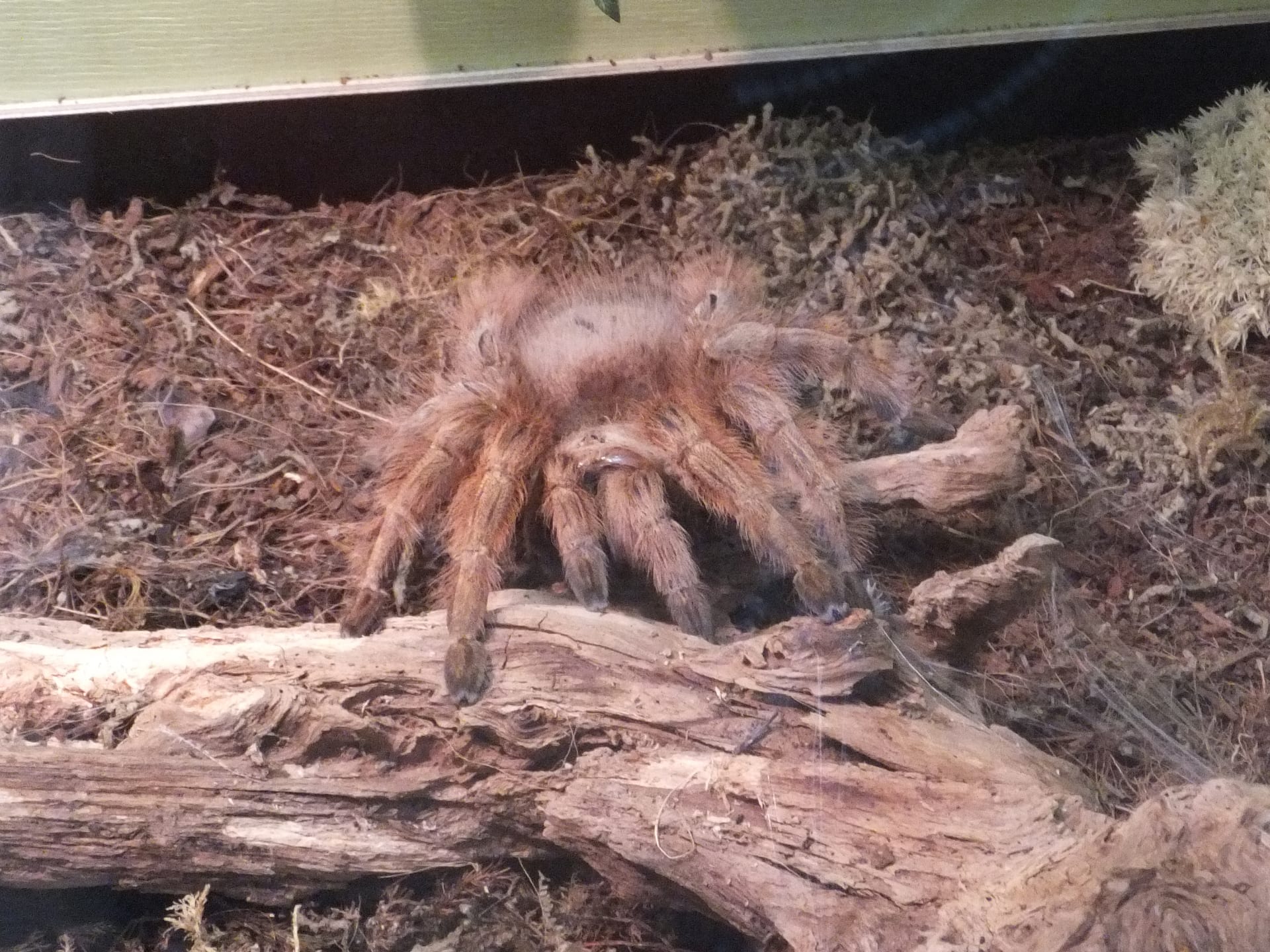
 © Syrio / CC BY-SA 4.0
Brazilian Giant Blonde
The Brazilian Giant Blonde is a striking large ground-dwelling tarantula, its brown carapace covered in long, salmon-pink hairs. Native to the forest floor of the humid Amazon in Brazil, it grows quickly, making its development easy to watch over time. Juveniles tend to be relatively docile, but adults often become more defensive, so this is a species best kept mainly for observation. Its bold coloring and steady growth make it an appealing choice for intermediate and more experienced keepers.
View Brazilian Giant Blonde encyclopedia →Breeder Wanted!
List on BreederDirect and sell directly to customers nationwide!
BreederDirect's 5 Transparency Commitments
When listing Exotic Invertebrates, Breeders disclose the following. We guarantee transparency on growth stage and breeding unit.
- Real Photos
- Breeding Unit
- Generation Info
- Body Length (mm)
- Country of Origin
Browse all 286 breeds
Verified breeders wanted for Exotic Invertebrates
Breeders are signing up now ahead of launch. Subscribe to be notified when new listings go live.
Getting alerts is free with a member account. When new listings match your saved search, we'll notify you by email and in-app.
Browse other categories
Verified breeders (preview)
Are you raising exotic invertebrates?
Register as a breeder and connect with buyers directly.
Apply as a breederBrazilian Giant Blonde key facts
- Care level
- Intermediate
- Lifespan
- Females 15-20 years in captivity; males about one year after their final moult
- Size
- Body 7cm to over 8cm (female) and 5-6cm (male)
- Temperature
- 25〜29℃
- Humidity
- 75〜80%
- Diet
- Live insects such as crickets and roaches
- Temperature & Humidity
- Aim for 25-29 C and 75-80 percent humidity, keeping the substrate constantly damp; it tolerates temporary drying fairly well. Maintain ventilation.
- Enclosure
- It is terrestrial; adults are recommended an enclosure of at least 30 by 30 by 20cm. Provide deep substrate, a hide and a water dish.
- Diet & Feeding
- Offer live crickets or roaches. Growth is fast, so feed spiderlings more frequently.
- Temperament & Venom
- Juveniles are fairly docile but become feisty as they grow. The venom is considered weak, but it has urticating hairs and is not a species to handle.
- Notes
- Females live 15-20 years in captivity and mature in about three years, while males die roughly a year after their final moult. Breeding is relatively easy and yields many spiderlings.
About Brazilian Giant Blonde
A large ground-dwelling tarantula with striking salmon-pink hairs. Fast-growing and eye-catching, but adults can be defensive — best suited to intermediate keepers.
7 things to know before welcoming a Brazilian Giant Blonde
1Provide ample floor space
As a ground-dwelling species, prioritize floor space over height when setting up the enclosure. Provide a shelter to burrow into and suitable substrate so it can settle comfortably.
2Adults can become defensive
Juveniles are often docile, but temperament tends to become more defensive with age. Avoid handling and use tools to maintain distance during tank maintenance.
3Humidity management matters
Originating from the humid Amazon forest floor, it prefers an environment that doesn't dry out too much. Keep part of the substrate slightly moist while ensuring enough ventilation to avoid excess humidity buildup.
4Fast growth rate
This species is known for fast growth, so keepers can enjoy noticeable changes in size with each molt. Enclosure and water dish sizes may need adjusting as it grows.
5Lifespan differs by sex
Females can live 15 to 20 years in captivity, making this a long-lived species, while males typically live only about a year after their final molt. Those hoping for a long-term companion generally choose a female.
6Avoid disturbance around molting
Before molting, signs like reduced appetite or sluggish movement may appear. During this period, avoid feeding or rearranging the enclosure and keep the environment quiet.
7Prepare equipment before arrival
Set up an enclosure, substrate, shelter, and water dish sized appropriately for the animal before bringing it home. As this species suits intermediate keepers, having basic knowledge of solitary tarantula care will help.
Frequently asked questions about Brazilian Giant Blonde
- Q.Can beginners keep this species?
- A.This species is considered suitable for intermediate keepers. Since adults tend to become more defensive, it's best to gain some tarantula-keeping experience before bringing one home.
- Q.Can it be handled?
- A.Juveniles are relatively docile, but adults tend to become defensive, so handling is not recommended. For routine care, using tools rather than direct contact is the safer approach.
- Q.How large does it grow?
- A.Adults reach a body length of about 7–8cm or more for females and 5–6cm for males. Because growth is fast, size changes are easy to notice with each molt.
- Q.What's the difference between males and females?
- A.Females are somewhat larger and long-lived, reaching 15 to 20 years in captivity. Males are smaller and typically live only about a year after their final molt.
- Q.Are there legal restrictions on keeping it?
- A.This species is not listed under CITES.
Learn more about Brazilian Giant Blonde in the encyclopedia
View Brazilian Giant Blonde encyclopedia entry →
Care difficulty, lifespan, size and diet — all basics covered.
More in this category
Can't find the one you're looking for?
Post your wishes for free and breeders with matching animals will contact you with introductions.