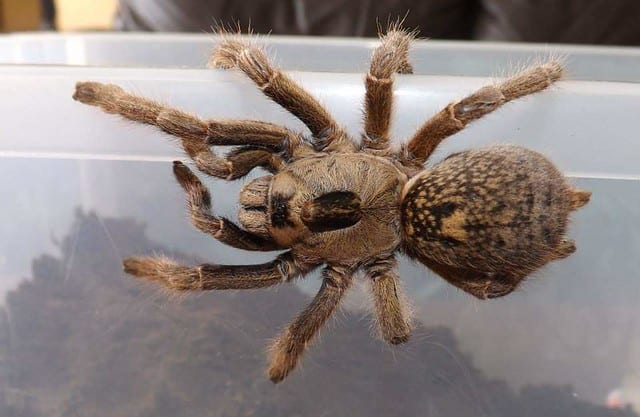
 © Daveyp1970 / CC BY-SA 4.0
Greater horned baboon tarantula
The greater horned baboon tarantula is a burrowing baboon tarantula from southern Africa, recognizable by the large horn-like projection on its carapace. Adults reach a leg span of up to about 12 cm. It is very fast and aggressive, and its difficulty level is rated advanced. Reference material on its lifespan is limited, so no firm figure can be given. Closely related species may be mixed in among traded animals, so it is worth confirming identification before you commit. It suits keepers who enjoy watching a burrow-dwelling spider rather than handling it.
View Greater horned baboon tarantula encyclopedia →0% commission on your first sales!Register by September 30, 2026 and your first 2 sales are commission-free!
Breeder Wanted!
List on BreederDirect and sell directly to customers nationwide!
5 Transparency Standards You Can Trust
When listing Exotic Invertebrates, Breeders disclose the following. We guarantee transparency on growth stage and breeding unit.
- Real Photos
- Breeding Unit
- Generation Info
- Body Length (mm)
- Country of Origin
Browse all 286 breeds
Verified breeders wanted for Exotic Invertebrates
Breeders are signing up now ahead of launch. Subscribe to be notified when new listings go live.
Getting alerts is free with a member account. When new listings match your saved search, we'll notify you by email and in-app.
Browse other categories
Verified breeders (preview)
Are you raising exotic invertebrates?
Register as a breeder and connect with buyers directly.
Apply as a breederGreater horned baboon tarantula key facts
- Care level
- Advanced
- Lifespan
- Little data
- Size
- Leg span up to about 12 cm
- Diet
- Carnivorous (live insects such as crickets and roaches)
- Enclosure
- It prefers to burrow, so provide deep substrate for digging, plus bark or twigs to anchor silk around the burrow entrance. Keep singly.
- Temperature & Humidity
- Species data are scarce. Care information for the congener C. sanderi gives 21-26 C and 50-60% humidity with good ventilation.
- Diet & Feeding
- Live prey such as crickets and roaches sized to the spider. If it stays in its burrow, place prey near the entrance.
- Temperament & Venom
- Extremely fast and aggressive. The congener C. sanderi is said to lack urticating hairs and to defend itself with fangs and venom; bites in the genus cause strong pain, muscle cramping, nausea and headaches, so never handle it.
- Notes
- Stock sold as this species may include C. sanderi or hybrids, so check the origin when buying. Use a lockable lid so it cannot bolt during maintenance, and never release captive animals.
About Greater horned baboon tarantula
The greater horned baboon tarantula is a burrowing southern African species with a large horn on its carapace and a leg span of up to about 12 cm. Very fast and aggressive, it is best suited to advanced keepers.
7 things to know before welcoming a Greater horned baboon tarantula
1Why It Is Advanced-Level
Its difficulty level is rated advanced. It is fast and aggressive, and reference material on basics such as lifespan is limited, so a careful decision is needed. It is best considered after you have gained experience with other tarantulas.
2Fast and Aggressive
This species is known for being very fast and aggressive. It tends to react defensively when disturbed, so keep work inside the enclosure to a minimum and do it calmly. It is easier to live with if you treat it as a species to watch rather than to touch.
3A Burrowing Lifestyle
Because it lives in burrows, provide substrate deep enough for it to dig. Placing a shelter or a piece of bark as a starting point for its burrow helps create a setup where it can settle in. Ensure good ventilation and balance dry and damp areas rather than keeping everything wet.
4Escape Prevention
Because it moves so quickly, the moment you open the lid is when escapes are most likely. Choose a container that closes securely and plan your cleaning and feeding steps in advance. Avoid working with bare hands and use long tongs or similar tools.
5Look-Alike Species
Closely related species may be mixed in among traded animals. The horn-like projection on the carapace is a distinctive feature, but appearance alone can be hard to judge. Ask the seller about the origin, background, and the basis for the species identification.
6Care Around Molting
Before a molt, it may eat less and stay hidden in the substrate. During and just after a molt its body is soft and easily injured, so leave it undisturbed. Remove any uneaten live prey promptly.
7Feeding and Daily Checks
Its diet is mainly insects, and uneaten food should be removed because it can make the enclosure unsanitary. Keep the water dish clean and watch how it behaves when it comes out of its burrow to keep an eye on its condition.
Frequently asked questions about Greater horned baboon tarantula
- Q.Can a beginner keep this species?
- A.Its difficulty level is rated advanced, so it is hard to recommend as a first tarantula. Because it is very fast and aggressive, it is safer to consider it after gaining experience with other tarantulas.
- Q.How large does it get?
- A.Leg span reaches up to about 12 cm. Individuals vary, so treat this figure as an upper guide.
- Q.How long does it live?
- A.Reference material on lifespan is limited, so no clear figure is known. If this matters to you, ask the seller about any records from captive keeping.
- Q.Can I handle it?
- A.It is not recommended. It is very fast and aggressive, so it is best treated as a display animal. If you are bitten, consult a medical professional depending on your symptoms.
- Q.Could a related species be mixed in?
- A.Closely related species may be mixed in among traded animals. The horn-like projection on the carapace is a distinctive feature, but if you want certainty, ask the seller for the basis of the identification and the origin.
Learn more about Greater horned baboon tarantula in the encyclopedia
View Greater horned baboon tarantula encyclopedia entry →
Care difficulty, lifespan, size and diet — all basics covered.
More in this category
Can't find the one you're looking for?
Post your wishes for free and breeders with matching animals will contact you with introductions.