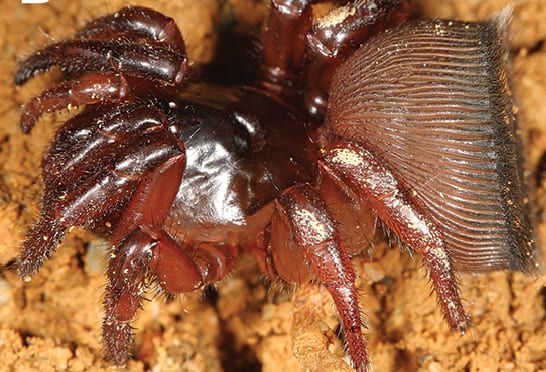
 © Xu X, Xu C, Li F, Pham DS, Li D (2017) ZooKeys 643: 75-85 / CC BY 4.0
Chinese Hourglass Trapdoor Spider
The Chinese Hourglass Trapdoor Spider is a burrowing spider native to China, named for the hardened, coin-like disc that caps the rear of its abdomen. When threatened inside its deep vertical burrow, it swings this disc around to seal the entrance like a trapdoor, an unusual defense rarely seen in more active species. Content to spend most of its life out of sight underground, it offers a quieter, more observational side of invertebrate keeping. Field sightings remain scarce, and captive care calls for an experienced keeper.
View Chinese Hourglass Trapdoor Spider encyclopedia →0% commission on your first sales!Register by September 30, 2026 and your first 2 sales are commission-free!
Breeder Wanted!
List on BreederDirect and sell directly to customers nationwide!
5 Transparency Standards You Can Trust
When listing Exotic Invertebrates, Breeders disclose the following. We guarantee transparency on growth stage and breeding unit.
- Real Photos
- Breeding Unit
- Generation Info
- Body Length (mm)
- Country of Origin
Browse all 249 breeds
Verified breeders wanted for Exotic Invertebrates
Breeders are signing up now ahead of launch. Subscribe to be notified when new listings go live.
Getting alerts is free with a member account. When new listings match your saved search, we'll notify you by email and in-app.
Browse other categories
Verified breeders (preview)
Are you raising exotic invertebrates?
Register as a breeder and connect with buyers directly.
Apply as a breederAbout Chinese Hourglass Trapdoor Spider
Learn about the Chinese Hourglass Trapdoor Spider, a Chinese burrowing species known for sealing its burrow with a coin-like disc. Key facts and care basics for prospective keepers.
7 things to know before welcoming a Chinese Hourglass Trapdoor Spider
1Deep Vertical Burrower
In the wild, this species digs a deep vertical burrow underground and spends most of its life below the surface. Captive enclosures need a substantial depth of substrate so the spider can dig naturally. A shallow setup can add unnecessary stress.
2A Trapdoor-Like Disc
The hardened disc at the tip of the abdomen is a distinctive trapdoor-like structure. When the spider senses danger, it swings this disc around to seal the burrow entrance and keep predators out. Because it relies on staying hidden rather than confrontation, avoid startling or disturbing it unnecessarily.
3Advanced-Level Care
This species is considered suitable for advanced keepers. If you're not yet familiar with trapdoor spider husbandry or burrow-based setups, it's worth building experience with more forgiving species first.
4Adult Size at a Glance
Adults reach a body length of around 2.8 cm, with larger individuals exceeding 3 cm. That's a relatively compact size among exotic invertebrates, so the enclosure footprint stays manageable.
5Quiet, Rarely Seen
This spider spends most of its time deep in its burrow and is rarely seen moving around. Keepers hoping for constant activity may find it understated, but it rewards a slower, more observational style of keeping.
6Rare in the Wild
Field records for this species remain scarce, and aspects of its natural history are still not well understood. Because captive-care knowledge is similarly limited, it pays to research carefully and adjust your approach as you learn.
7Prepare the Setup First
Before bringing one home, set up deep, diggable substrate, appropriate humidity, and hiding spots in advance. As a burrowing species, ventilation and the balance between moisture and dryness both need careful attention.
Frequently asked questions about Chinese Hourglass Trapdoor Spider
- Q.How big does this species get?
- A.Adults typically have a body length of about 2.8 cm, with larger individuals exceeding 3 cm. That makes it a relatively compact species among exotic invertebrates.
- Q.Is this species suitable for beginners?
- A.This species is generally considered suitable for advanced keepers. If you're not yet familiar with trapdoor spider husbandry and burrow-based setups, it's best to gain experience before taking one on.
- Q.Will I often see it moving around?
- A.It spends most of its time deep inside its burrow and isn't a species you'll frequently see moving about. It suits a slower, more observational style of keeping.
- Q.What is the disc-like structure on its abdomen for?
- A.The hardened disc at the rear of the abdomen is used to seal the burrow entrance when the spider senses danger. It's a unique defense mechanism that helps keep predators out.
- Q.Is this species listed under CITES?
- A.No, the Chinese Hourglass Trapdoor Spider is not listed under CITES.
Learn more about Chinese Hourglass Trapdoor Spider in the encyclopedia
View Chinese Hourglass Trapdoor Spider encyclopedia entry →
Care difficulty, lifespan, size and diet — all basics covered.
More in this category
Can't find the one you're looking for?
Post your wishes for free and breeders with matching animals will contact you with introductions.