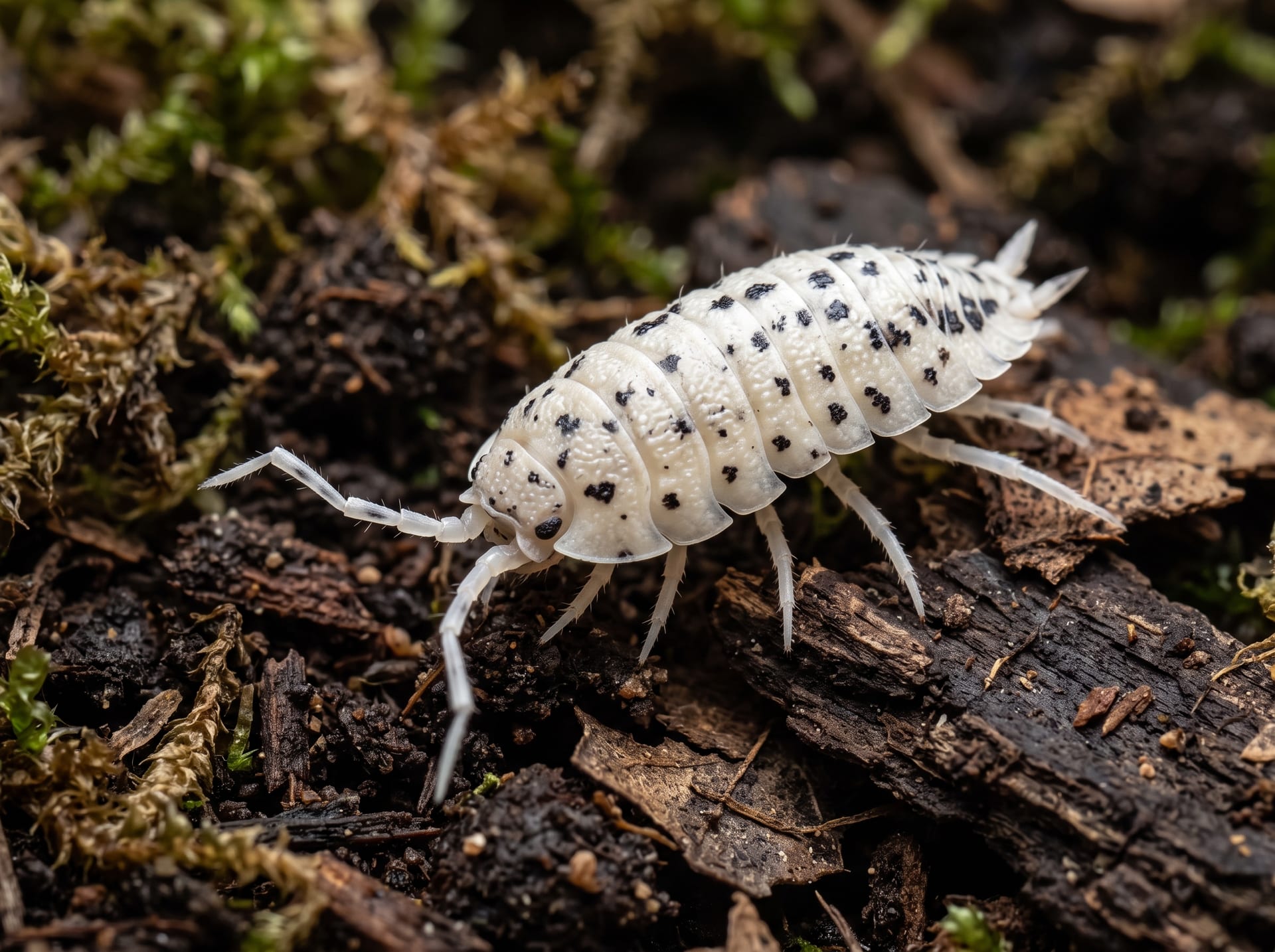
Dalmatian Isopod
The Dalmatian Isopod is a striking black-and-white morph of Porcellio scaber, named for its dog-like spotted pattern. Hardy and quick to reproduce, it's a favorite starter species for anyone new to keeping invertebrates. As a detritivore, it feeds on decaying leaves and wood, doing double duty as a natural cleanup crew — with no bite and no venom to worry about. Calm and unhurried, these isopods stay tucked away during the day and become active at night, so a layer of leaf litter or bark gives them cover to feel secure. Easy to watch, easy to care for, and easy to breed, it's an excellent entry point into isopod keeping.
View Dalmatian Isopod encyclopedia →0% commission on your first sales!Register by September 30, 2026 and your first 2 sales are commission-free!
Breeder Wanted!
List on BreederDirect and sell directly to customers nationwide!
5 Transparency Standards You Can Trust
When listing Exotic Invertebrates, Breeders disclose the following. We guarantee transparency on growth stage and breeding unit.
- Real Photos
- Breeding Unit
- Generation Info
- Body Length (mm)
- Country of Origin
Browse all 249 breeds
Verified breeders wanted for Exotic Invertebrates
Breeders are signing up now ahead of launch. Subscribe to be notified when new listings go live.
Getting alerts is free with a member account. When new listings match your saved search, we'll notify you by email and in-app.
Browse other categories
Verified breeders (preview)
Are you raising exotic invertebrates?
Register as a breeder and connect with buyers directly.
Apply as a breederDalmatian Isopod key facts
- Care level
- Beginner-friendly
- Lifespan
- About 1.5-3 years
- Size
- About 1.5-1.8 cm
- Temperature
- 18〜26℃
- Humidity
- 55〜75%
- Diet
- Mostly leaf litter and rotten wood, supplemented with vegetable scraps, protein, and calcium.
- Habitat
- A ventilated tub with leaf litter, wood, and hides.
- Temp & Humidity
- Tolerates 18-26C; keep one side moist for a gradient.
- Feeding
- Leaf litter plus small amounts of protein and calcium.
- Notes
- Very hardy and prolific; harmless with no venom or bite.
About Dalmatian Isopod
A hardy, easy-to-breed morph of Porcellio scaber known for its black-and-white Dalmatian-like pattern — a beginner-friendly isopod that also doubles as a cleanup crew.
7 things to know before welcoming a Dalmatian Isopod
1Habitat & Humidity
Dalmatian Isopods thrive in humid conditions, so use a well-ventilated enclosure with moisture-retentive substrate. Mist the setup regularly, since excessive dryness slows their activity.
2Calm, Easygoing Nature
They're non-aggressive and rarely clash with tankmates or other isopods. When disturbed, they roll into a ball for protection, making them low-stress pets to keep.
3No Bite, No Venom
As detritivores, they don't bite and carry no venom, so they're safe to handle with bare hands. That makes them a great species for observing alongside kids.
4Hidden by Day, Active at Night
They tuck themselves under leaf litter or bark during the day and become active after dark. Not seeing them during daylight is normal — they're just hiding, not missing.
5Diet of Leaf Litter & Wood
They feed on decaying leaves, rotting wood, and vegetable scraps, so feeding is low-maintenance. They also help clean up leftover food and mold in the enclosure.
6Easy to Breed
Given suitable conditions, they reproduce readily in captivity, which many keepers find rewarding to watch. Keep an eye on population size relative to your enclosure space.
7Before You Bring One Home
Prepare a ventilated enclosure, moisture-retentive substrate, and hiding spots like leaf litter or bark before your isopods arrive. With a lifespan of about 1.5–3 years and an adult size of roughly 1.5–1.8 cm, they're easy to house even in a small space.
Frequently asked questions about Dalmatian Isopod
- Q.Is this species suitable for beginners?
- A.Yes, it's considered beginner-friendly thanks to its hardiness and adaptability. As long as basic humidity levels are maintained, it's generally trouble-free to keep.
- Q.Can it be housed with other animals?
- A.Its calm, non-aggressive temperament makes it easy to house alongside many other species. That said, check compatibility first, since some tankmates may prey on isopods.
- Q.How large do they grow?
- A.Adults reach roughly 1.5 to 1.8 cm in length. That's a relatively easy size to observe compared to many other isopods.
- Q.What is their lifespan?
- A.Under captive care, they typically live around 1.5 to 3 years. The exact lifespan can vary somewhat depending on the individual and its environment.
- Q.Are there any legal regulations to know about?
- A.The Dalmatian Isopod is not subject to CITES.
Learn more about Dalmatian Isopod in the encyclopedia
View Dalmatian Isopod encyclopedia entry →
Care difficulty, lifespan, size and diet — all basics covered.
More in this category
Can't find the one you're looking for?
Post your wishes for free and breeders with matching animals will contact you with introductions.