 © Hectonichus / CC BY-SA 3.0
Asian Black Forest Scorpion
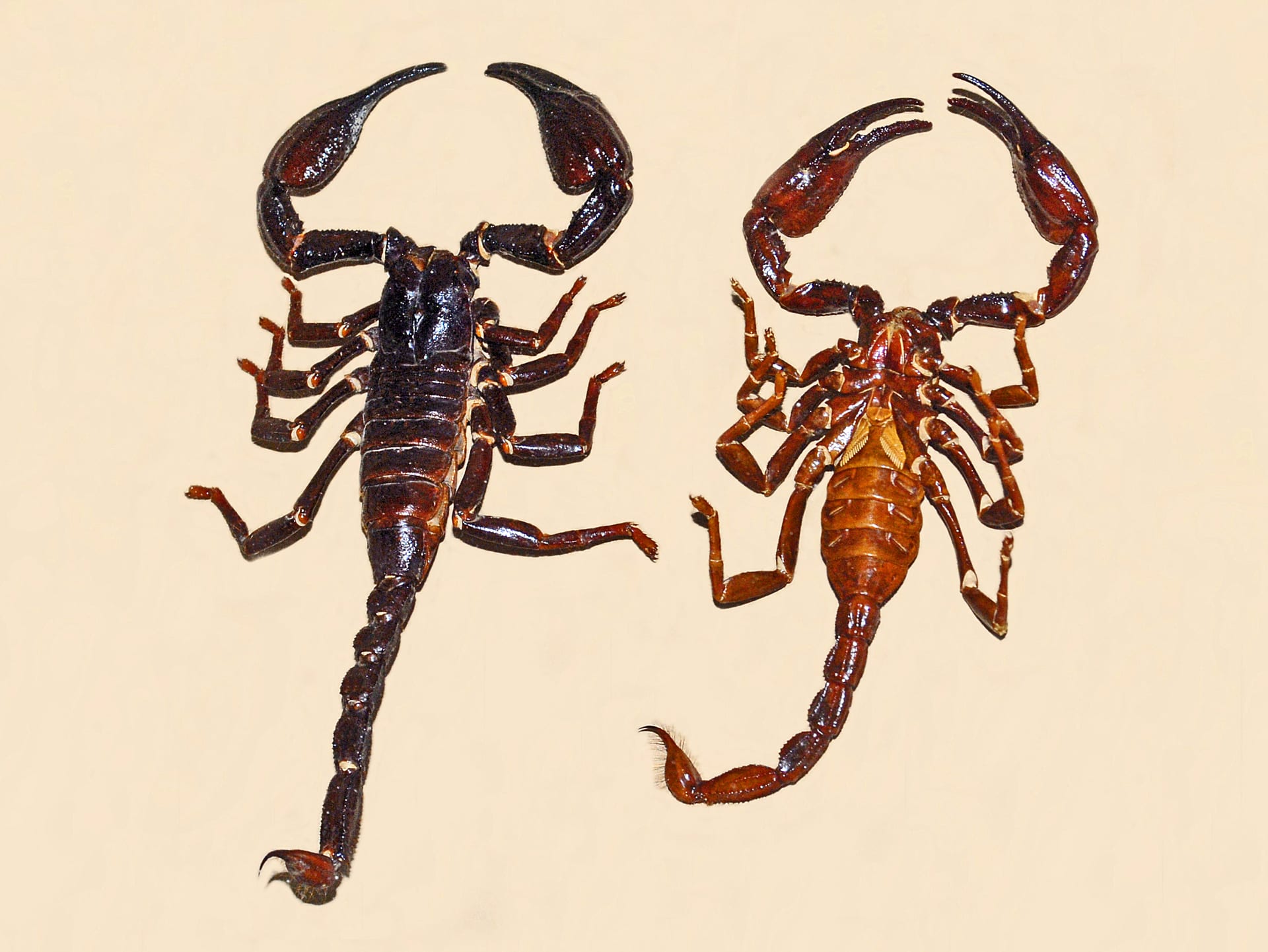
The Asian Black Forest Scorpion is a large, glossy jet-black scorpion native to the humid rainforest floors of Southeast Asia. Reaching a total length of 10 to 12 cm, it has an imposing presence, yet moves at a fairly unhurried pace and spends its daylight hours tucked away in hiding spots, becoming active mainly at night. It's a live-bearing species, and unlike many scorpions that are best kept alone, this one is often described as tolerant of being housed in small groups within the same enclosure. Its deep black coloring and substantial build make it a striking choice for both newcomers to invertebrate keeping and seasoned enthusiasts alike.
View Asian Black Forest Scorpion encyclopedia →0% commission on your first sales!Register by September 30, 2026 and your first 2 sales are commission-free!
Breeder Wanted!
List on BreederDirect and sell directly to customers nationwide!
5 Transparency Standards You Can Trust
When listing Exotic Invertebrates, Breeders disclose the following. We guarantee transparency on growth stage and breeding unit.
- Real Photos
- Breeding Unit
- Generation Info
- Body Length (mm)
- Country of Origin
Browse all 249 breeds
Verified breeders wanted for Exotic Invertebrates
Breeders are signing up now ahead of launch. Subscribe to be notified when new listings go live.
Getting alerts is free with a member account. When new listings match your saved search, we'll notify you by email and in-app.
Browse other categories
Verified breeders (preview)
Are you raising exotic invertebrates?
Register as a breeder and connect with buyers directly.
Apply as a breederAsian Black Forest Scorpion key facts
- Care level
- Intermediate
- Lifespan
- 7-10 years
- Size
- 10-12cm in total length
- Temperature
- Humidity
- 80%
- Diet
- Live insects such as crickets
- Temperature & Humidity
- Create a gradient with a warm end around 30 C and the other end at room temperature. Aim for 80% or more humidity by limiting ventilation and misting daily.
- Enclosure
- Use deep coco fibre or peat with a cork hide per animal and a shallow water dish they cannot drown in. Fix the heat mat to the side.
- Diet & Feeding
- Offer live prey such as crickets once a week, one or two per scorpion, and remove any that are still uneaten the next day.
- Temperament & Venom
- The venom is weak and no human deaths are known. The species is relatively docile, though individuals vary and some are aggressive.
- Notes
- Group keeping is possible in this genus, but cannibalism follows shortage of food or crowding. Isolate freshly moulted animals until they harden.
About Asian Black Forest Scorpion
A guide to the Asian Black Forest Scorpion, a jet-black 10-12 cm species from Southeast Asia: key traits, care basics, and answers to common questions for intermediate keepers.
7 things to know before welcoming a Asian Black Forest Scorpion
1Humidity Is Key
Coming from tropical rainforest floors, this species needs consistently moist substrate. Letting the enclosure dry out can lead to failed molts and poor health, so mist regularly and use a substrate that holds moisture well.
2Nocturnal and Reclusive
During the day it hides in the substrate or under cover and barely moves. Not seeing it doesn't mean something is wrong — provide several hiding spots, like cork bark or driftwood, so it feels secure.
3Fairly Calm Temperament
Despite its imposing size, this species is generally considered calmer than many other scorpions. That said, it still carries a venomous sting, so avoid handling it with bare hands.
4Group Housing Is an Option
Unlike most scorpions, which are typically kept alone, this species is often described as tolerant of being housed with others in the same enclosure. Still, provide multiple hiding spots and feeding areas so individuals aren't forced into close, constant contact.
5Gives Birth to Live Young
This species is viviparous, giving birth to young rather than laying eggs. As with scorpions generally, the mother carries the newborns on her back for a period afterward, so it's best to keep the enclosure undisturbed during this time.
6Feed After Dark
Being nocturnal, it feeds most readily on live prey like crickets offered in the evening or after lights-out. Remove any uneaten food by the next day to prevent mold and bacteria from building up.
7Set Up Before You Bring One Home
Prepare the enclosure in advance with moisture-retentive substrate, hiding spots, and a shallow water dish before bringing your scorpion home, to minimize stress after transport. Since it can grow to 10-12 cm, choose an enclosure with enough room to accommodate its full adult size.
Frequently asked questions about Asian Black Forest Scorpion
- Q.Is its venom dangerous to humans?
- A.Like all scorpions, it has a venomous sting, but it's generally considered calmer than many other species. A sting can still cause pain and swelling, though, so always handle it with tongs rather than bare hands.
- Q.Can multiple scorpions be kept together?
- A.This species is often described as tolerant of being housed with others in the same enclosure, unlike most scorpions kept solo. Even so, provide multiple hiding spots and feeding areas so the animals aren't forced into constant close contact.
- Q.How big does it get?
- A.Adults reach a total length of about 10 to 12 cm. That makes it one of the larger, more striking species among exotic invertebrates.
- Q.Is it normal for it to stay still all day?
- A.Yes — this is a nocturnal species that typically hides in the substrate or under cover during the day and barely moves. Not seeing much activity doesn't mean something is wrong; just make sure hiding spots are available and let it be.
- Q.Is this a good species for beginners?
- A.It's generally rated as suited to intermediate keepers, since it requires some understanding of humidity management and nocturnal behavior. It's a good idea to gain some basic scorpion-keeping experience before taking one on.
Learn more about Asian Black Forest Scorpion in the encyclopedia
View Asian Black Forest Scorpion encyclopedia entry →
Care difficulty, lifespan, size and diet — all basics covered.
More in this category
Can't find the one you're looking for?
Post your wishes for free and breeders with matching animals will contact you with introductions.