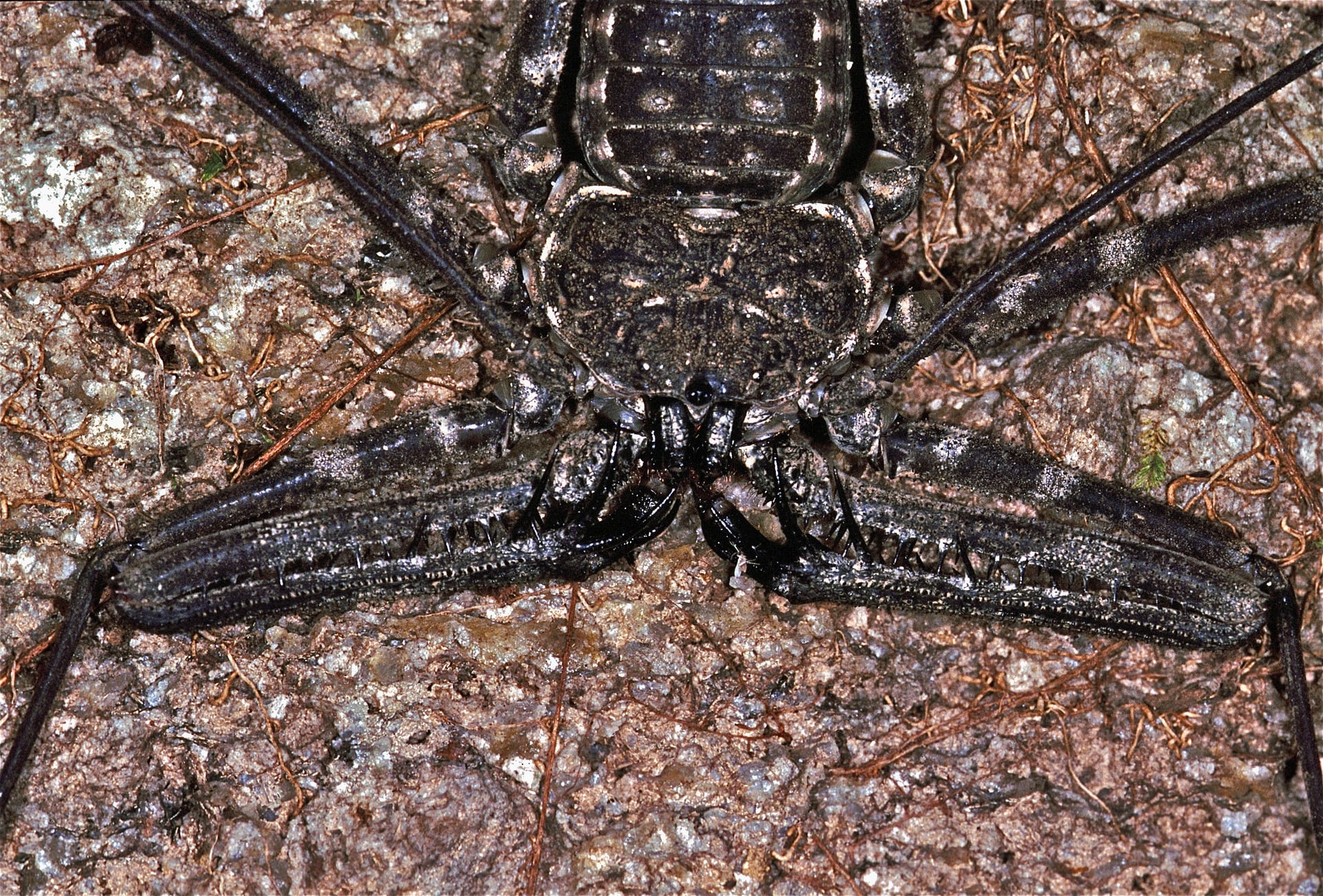
 © Bernard DUPONT / CC BY-SA 2.0
Damon medius Whip Spider
Damon medius is a species of whip spider (Amblypygi) native to the tropical rainforests of West Africa. Its most striking feature is a flattened body paired with an extremely long, whip-like pair of front legs, which it uses almost like antennae to feel out its surroundings as it moves in a slow, sideways shuffle. That flattened shape lets it wedge itself into narrow gaps in bark, so an enclosure furnished with cork bark makes for great viewing. Despite its dramatic look, this is a venom-free species with a calm temperament, and given enough space, it can even be kept in small groups. Watching one emerge from hiding at night to move quietly across its enclosure has a quiet, otherworldly charm that few other invertebrates can match.
View Damon medius Whip Spider encyclopedia →0% commission on your first sales!Register by September 30, 2026 and your first 2 sales are commission-free!
Breeder Wanted!
List on BreederDirect and sell directly to customers nationwide!
5 Transparency Standards You Can Trust
When listing Exotic Invertebrates, Breeders disclose the following. We guarantee transparency on growth stage and breeding unit.
- Real Photos
- Breeding Unit
- Generation Info
- Body Length (mm)
- Country of Origin
Browse all 249 breeds
Verified breeders wanted for Exotic Invertebrates
Breeders are signing up now ahead of launch. Subscribe to be notified when new listings go live.
Getting alerts is free with a member account. When new listings match your saved search, we'll notify you by email and in-app.
Browse other categories
Verified breeders (preview)
Are you raising exotic invertebrates?
Register as a breeder and connect with buyers directly.
Apply as a breederDamon medius Whip Spider key facts
- Care level
- Intermediate
- Lifespan
- 5-7 years
- Size
- Body 3-4cm, with much longer antenniform first legs
- Temperature
- 23〜26℃
- Humidity
- 75〜85%
- Diet
- Small insects such as crickets and red runner roaches
- Temperature & Humidity
- 23-26 C and 75-85% humidity. Mist regularly to keep humidity up, but ventilate so the enclosure does not become stagnant.
- Enclosure
- A tall enclosure from 30 x 30 x 40cm. Stand cork panels and bark to create many vertical retreats, over damp humus or coconut fibre substrate.
- Diet & Feeding
- It ambushes small insects such as crickets and red runner roaches. Remove uneaten prey.
- Temperament & Venom
- Amblypygids have neither venom nor silk glands and cannot injure people. The species is extremely shy and nocturnal, so it stays hidden in the light.
- Notes
- Communal housing works with enough space and retreats. Without a surface to hang from, moults fail.
About Damon medius Whip Spider
Damon medius is a West African rainforest whip spider with a flattened body and long whip-like front legs. Venom-free and docile; suited to intermediate keepers, with room for a small group.
7 things to know before welcoming a Damon medius Whip Spider
1Vertical Setup & Hides
Thanks to its flattened body, this species likes to wedge itself into tight hiding spots, so cork bark or driftwood makes an ideal hide. Set up the enclosure with more height than floor space, since a vertical layout suits its natural behavior better.
2Humidity Meets Airflow
As a rainforest species, it needs consistently high humidity, which you can maintain by keeping the substrate moist. At the same time, stagnant air invites mold and pests, so make sure the enclosure also has good ventilation.
3Handle Molts Gently
Like other invertebrates, it molts periodically as it grows. During and right after a molt its body is extremely soft and vulnerable, so it's best to leave it undisturbed in a quiet spot until it hardens.
4Avoid Direct Handling
It isn't venomous, but its body and legs are quite delicate, and a startled individual may drop a leg to escape. Enjoy watching it rather than handling it, and if you ever need to move it, do so as gently as possible.
5A Nocturnal Species
This species is mostly still and hidden during the day, becoming active mainly after dark. Avoid disturbing it during daylight hours and let it keep its natural rhythm.
6Venom-Free & Docile
Damon medius has no venom glands and a generally calm temperament. Given enough space, it can even be kept in small groups rather than strictly alone.
7Feeding Live Insects
It's a predator that catches and eats insects such as crickets. Offer live prey sized appropriately for the individual, and avoid leaving uneaten prey in the enclosure.
Frequently asked questions about Damon medius Whip Spider
- Q.Is it venomous or dangerous to keep?
- A.Damon medius has no venom glands, so it poses no venomous threat. It's generally calm, though a startled individual may drop a leg in self-defense, so it should still be handled gently.
- Q.Is this species suitable for beginners?
- A.It's generally considered an intermediate-level species. Because humidity management requires some care, prior experience with invertebrates or other exotic pets is helpful before starting.
- Q.Can multiple individuals be kept together?
- A.Since it's non-venomous and generally calm, a group can be kept together if the enclosure is spacious enough. Just be sure to provide enough hiding spots for the number of individuals.
- Q.How big does it get?
- A.Body length is roughly 3 to 4 cm. Its whip-like front legs, used almost like antennae, extend well beyond that, giving it a larger presence than the body size alone suggests.
- Q.Is it okay to handle it directly?
- A.It isn't venomous. That said, its body and legs are delicate, and it may drop a leg if startled, so it's best to simply observe it rather than handle it by hand.
Learn more about Damon medius Whip Spider in the encyclopedia
View Damon medius Whip Spider encyclopedia entry →
Care difficulty, lifespan, size and diet — all basics covered.
More in this category
Can't find the one you're looking for?
Post your wishes for free and breeders with matching animals will contact you with introductions.