 © Fungus Guy / CC BY-SA 4.0
Guatemalan Tiger Rump
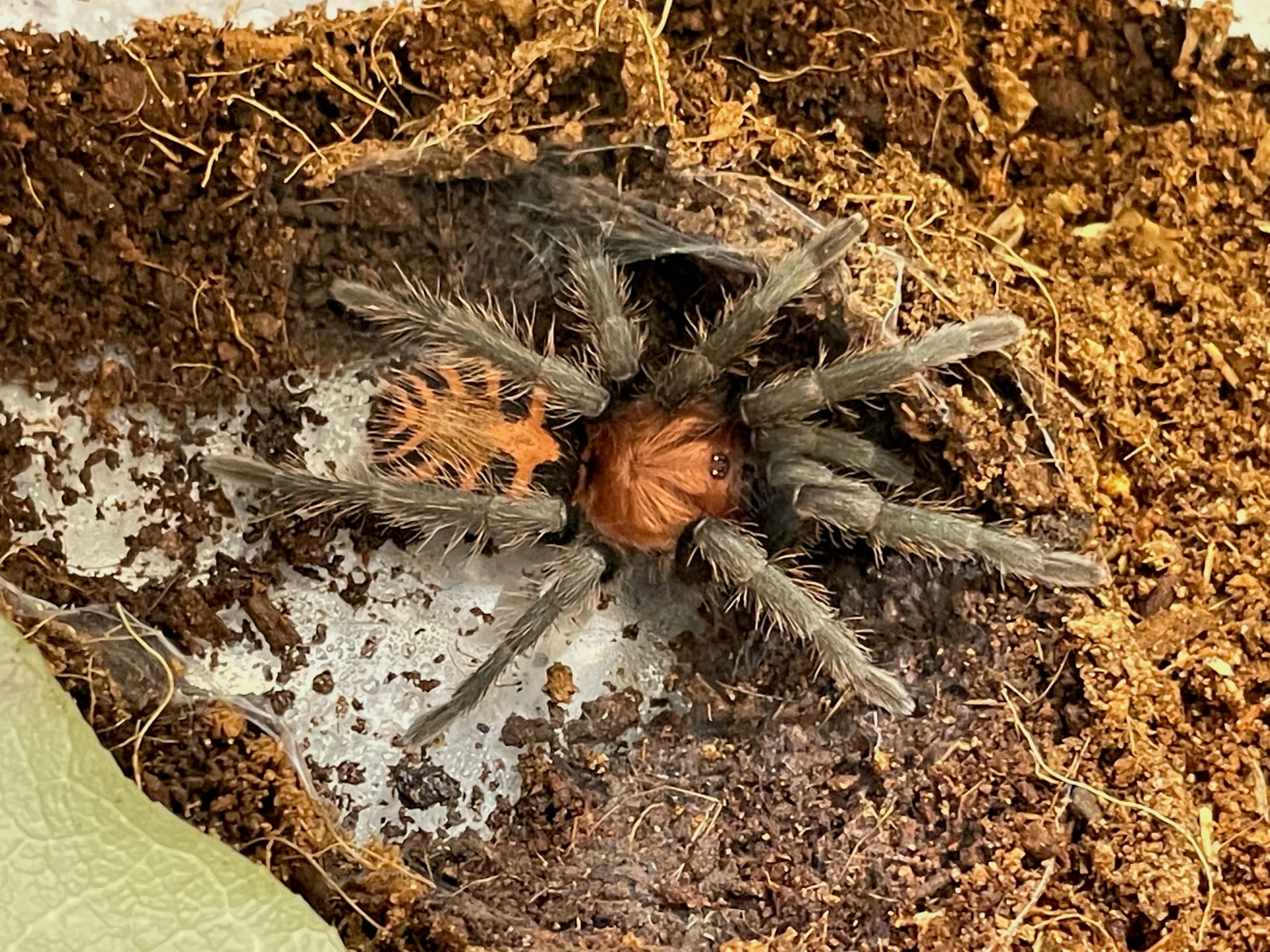
The Guatemalan Tiger Rump is a ground-dwelling tarantula from Central America, known for its coppery carapace, black legs, and tiger-like orange-striped abdomen. That striking pattern gives the species its name, and it also grows noticeably faster than many other terrestrial tarantulas, so keepers get to watch it change quickly. Rather than digging deep burrows, it builds a home base by weaving thick silk around a hide, and it's fun to catch glimpses of it peeking out from behind the webbing. It can move surprisingly quickly at times, but overall it has a fairly calm temperament, making it a rewarding species for keepers who enjoy observing behavior closely.
View Guatemalan Tiger Rump encyclopedia →0% commission on your first sales!Register by September 30, 2026 and your first 2 sales are commission-free!
Breeder Wanted!
List on BreederDirect and sell directly to customers nationwide!
5 Transparency Standards You Can Trust
When listing Exotic Invertebrates, Breeders disclose the following. We guarantee transparency on growth stage and breeding unit.
- Real Photos
- Breeding Unit
- Generation Info
- Body Length (mm)
- Country of Origin
Browse all 249 breeds
Verified breeders wanted for Exotic Invertebrates
Breeders are signing up now ahead of launch. Subscribe to be notified when new listings go live.
Getting alerts is free with a member account. When new listings match your saved search, we'll notify you by email and in-app.
Browse other categories
Verified breeders (preview)
Are you raising exotic invertebrates?
Register as a breeder and connect with buyers directly.
Apply as a breederGuatemalan Tiger Rump key facts
- Care level
- Intermediate
- Lifespan
- Females 8-11 years, males 2-4 years
- Size
- 10-12cm leg span (body about 5cm)
- Temperature
- 22〜28℃
- Humidity
- 60〜65%
- Diet
- Live insects such as crickets and roaches
- Temperature & Humidity
- It keeps well at 22-28 C and does best at 23-25 C. Aim for around 60-65% humidity with a permanent water dish and one damp corner of substrate.
- Enclosure
- Not a deep burrower: 5-8 cm of substrate plus a plant pot or cork bark hide is enough. It webs heavily around the hide, so leave that webbing intact.
- Diet & Feeding
- It feeds eagerly on crickets and roaches. The appetite is strong, so avoid overfeeding and space out meals while the abdomen is plump.
- Temperament & Venom
- Not defensive but skittish and fast, bolting when startled. It has Type III urticating hairs but seldom kicks them, and the venom is considered mild.
- Notes
- Its speed and escape risk are the main concerns, so keep the lid secure. It is still sold as Cyclosternum fasciatum, so identification is not always reliable.
About Guatemalan Tiger Rump
A ground-dwelling tarantula from Guatemala with a coppery carapace and tiger-striped orange-and-black abdomen. Growing to a 10-12cm legspan, it webs heavily around its hide and suits intermediate keepers.
7 things to know before welcoming a Guatemalan Tiger Rump
1Fast growth rate
Compared with many other terrestrial tarantulas, this species grows quickly, so keepers notice size and color changes with each molt. That makes it appealing if you enjoy watching a spider develop, but it also means the enclosure needs to be upgraded more often.
2Heavy webbing habit
Instead of digging a deep burrow, it builds its home by spinning thick silk around a hide placed on the substrate. When rearranging décor or cleaning the enclosure, work carefully from outside the webbing so you don't tear down its retreat.
3Provide a solid hide
Always include a shelter, piece of driftwood, or cork bark it can hide inside. A stable hide gives it a solid base to web around and helps keep stress levels low.
4Can move quickly
Although it's a terrestrial species, it can move quite fast at times and may dash out unexpectedly when the enclosure is opened. A secure lid and a consistent routine for opening the cage help prevent escapes.
5Temperature and humidity
Coming from Central America, it does best when extremes of dryness or dampness are avoided, so balance substrate moisture with good ventilation. Change conditions gradually, since sudden shifts can cause stress or molting problems.
6Lifespan differs by sex
Lifespan varies considerably between sexes, with females generally living much longer than males. If you're hoping for a long-term companion, it's worth keeping this difference in mind from the start.
7Before you bring one home
Since this species is generally considered suitable for intermediate keepers, having some prior tarantula-keeping experience helps things go smoothly. It's best to set up the enclosure, hide, and temperature/humidity controls before bringing one home.
Frequently asked questions about Guatemalan Tiger Rump
- Q.Is this species suitable for beginners?
- A.It's generally considered a species for intermediate keepers, so some prior experience with tarantula care, like temperature and humidity management, is reassuring. Care itself isn't especially difficult, but learning its habits beforehand helps things go smoothly.
- Q.How big does it get as an adult?
- A.As an adult, it reaches a legspan of about 10-12cm with a body length of around 5cm. Among terrestrial species, it tends to grow relatively quickly.
- Q.How long can it live in captivity?
- A.Lifespan is typically around 8-11 years for females and 2-4 years for males, so it varies a lot by sex. If you're considering long-term care, it helps to keep this difference in mind.
- Q.Does it dig burrows?
- A.It's not a deep burrower; instead, it spins thick webbing around its hide to build a home. When setting up the enclosure, place the hide with the expectation that webbing will form around it.
- Q.Is it subject to any regulations?
- A.This species is not subject to CITES.
Learn more about Guatemalan Tiger Rump in the encyclopedia
View Guatemalan Tiger Rump encyclopedia entry →
Care difficulty, lifespan, size and diet — all basics covered.
More in this category
Can't find the one you're looking for?
Post your wishes for free and breeders with matching animals will contact you with introductions.