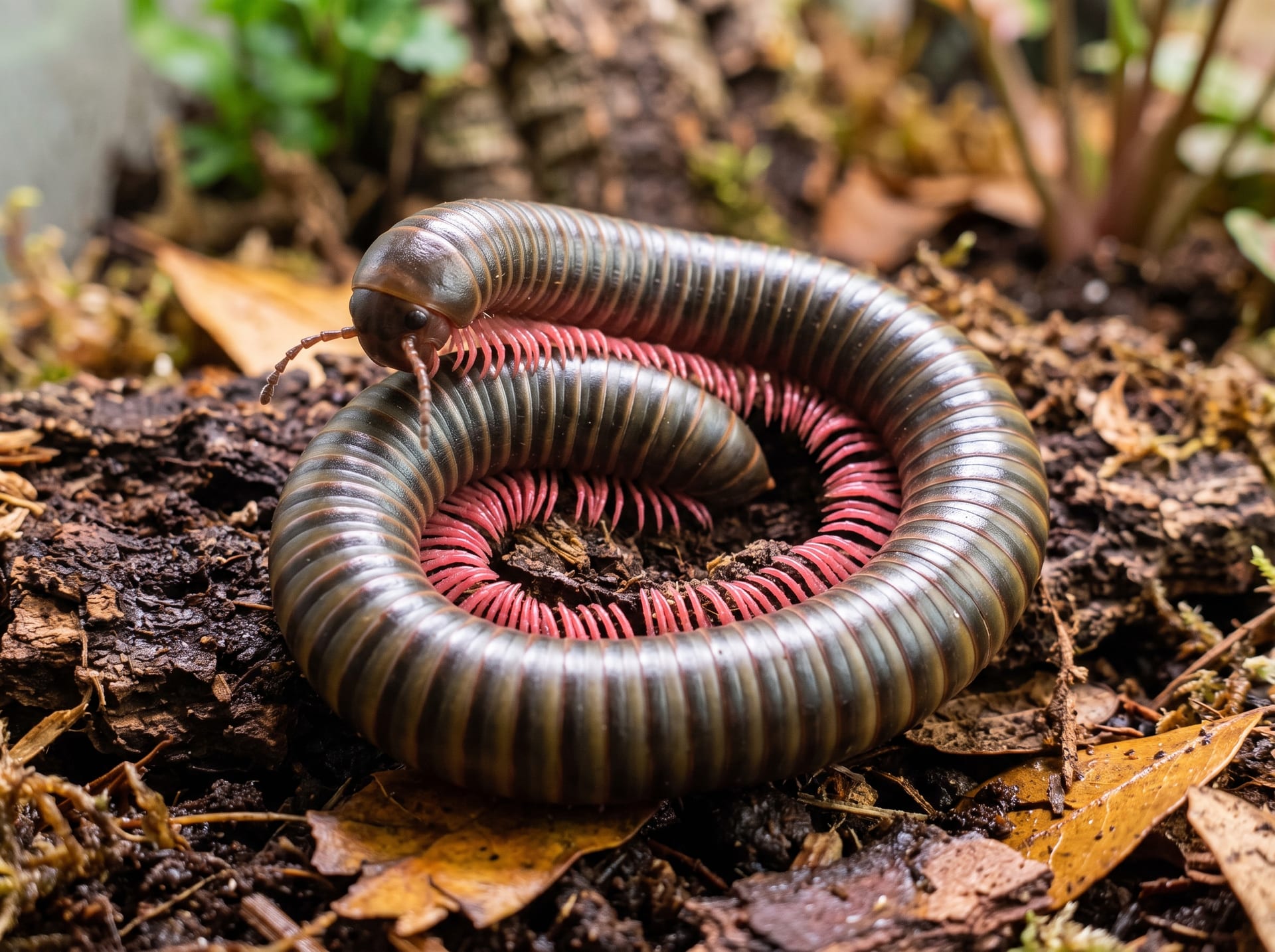
Pink Foot Millipede
The Pink Foot Millipede is a large millipede species native to West and Central Africa, easily recognized by its dark body and pale pink-to-reddish legs. As it matures, its body grows remarkably long, and despite its imposing look, it's a lively, active species with a hearty appetite that makes it fun to watch at feeding time. Because it needs stable high heat and high humidity to thrive, it's best suited to keepers with some prior experience in temperature and humidity management. Hardy and generally calm when handled, it makes a great long-term companion species.
View Pink Foot Millipede encyclopedia →0% commission on your first sales!Register by September 30, 2026 and your first 2 sales are commission-free!
Breeder Wanted!
List on BreederDirect and sell directly to customers nationwide!
5 Transparency Standards You Can Trust
When listing Exotic Invertebrates, Breeders disclose the following. We guarantee transparency on growth stage and breeding unit.
- Real Photos
- Breeding Unit
- Generation Info
- Body Length (mm)
- Country of Origin
Browse all 249 breeds
Verified breeders wanted for Exotic Invertebrates
Breeders are signing up now ahead of launch. Subscribe to be notified when new listings go live.
Getting alerts is free with a member account. When new listings match your saved search, we'll notify you by email and in-app.
Browse other categories
Verified breeders (preview)
Are you raising exotic invertebrates?
Register as a breeder and connect with buyers directly.
Apply as a breederPink Foot Millipede key facts
- Care level
- Intermediate
- Lifespan
- About 5-7 years
- Size
- About 12-16 cm
- Temperature
- 24〜28℃
- Humidity
- 75〜90%
- Diet
- Mainly decaying hardwood litter and rotten wood, with generous vegetables, fruit and calcium.
- Habitat
- Because of its size, provide a large, deep bed of leaf litter and rotten wood for burrowing.
- Temp & Humidity
- Keep 24-28°C and 75-90% humidity; this tropical species needs warmth and moisture and is sensitive to drying out.
- Feeding
- A hearty feeder; litter and wood as staple with plenty of vegetables and fruit, plus calcium.
- Caution
- Non-venomous and does not bite, but its benzoquinone secretion can stain and irritate skin and eyes; wash hands after handling.
About Pink Foot Millipede
A large millipede from West and Central Africa with a dark body and pink-tinted legs. Active and voracious with an appetite to match, it needs stable heat and humidity — best suited to intermediate keepers.
7 things to know before welcoming a Pink Foot Millipede
1Stable Heat and Humidity
Keeping temperature and humidity consistently high is the single most important part of caring for a Pink Foot Millipede. If the enclosure dries out, it can quickly affect their health, so keep the substrate moist and mist regularly.
2Grows Quite Large
Adults typically reach about 12 to 16 cm in length, making this one of the larger millipede species. It's a good idea to set up a roomy, appropriately sized enclosure ahead of time to accommodate their growth.
3An Active Personality
Unlike the still, quiet image many people have of millipedes, this species is notably active and moves around a lot. They often react quickly to the scent of food, making them fun to observe day to day.
4A Hearty Appetite
Pink Foot Millipedes have a voracious appetite and readily eat vegetable scraps and rotting wood. Leftover food can encourage mold or spoil the enclosure, so remove uneaten food regularly to keep things clean.
5Handle With Care During Molts
Like all millipedes, this species grows by molting repeatedly, and it's especially vulnerable right before and after each molt. Avoid digging them up or touching them during this time — if one burrows and goes still, it's best to leave it undisturbed.
6A Five to Seven Year Commitment
With a lifespan of roughly five to seven years, this species is a long-term companion compared to many other invertebrates. It's worth thinking of bringing one home as a multi-year commitment rather than a passing interest.
7Supplies to Prepare
Before bringing one home, it helps to have moisture-retentive substrate, a thermometer/hygrometer, a mister, and a suitably sized enclosure ready. Setting up a layout that holds heat and humidity well in advance means your millipede can settle in comfortably from day one.
Frequently asked questions about Pink Foot Millipede
- Q.Is the Pink Foot Millipede good for beginners?
- A.This species is generally considered better suited to intermediate keepers, since it requires consistently high heat and humidity. If you're completely new to keeping invertebrates, it's worth getting comfortable with basic temperature and humidity management before taking one on.
- Q.How big does it get?
- A.Adults typically grow to about 12 to 16 cm long, making this one of the larger millipede species. It's a good idea to prepare a reasonably spacious enclosure to match their eventual size.
- Q.How long do they live?
- A.Their lifespan is roughly five to seven years, making them a long-term commitment among invertebrates. It's worth considering whether you can provide consistent care over that many years before bringing one home.
- Q.What should I watch out for when keeping one?
- A.The most important factor is maintaining stable high heat and humidity at all times. If the environment gets too dry, they can quickly become unwell, so regularly check humidity levels and keep the substrate moist.
- Q.Is this species subject to CITES?
- A.The Pink Foot Millipede is not subject to CITES.
Learn more about Pink Foot Millipede in the encyclopedia
View Pink Foot Millipede encyclopedia entry →
Care difficulty, lifespan, size and diet — all basics covered.
More in this category
Can't find the one you're looking for?
Post your wishes for free and breeders with matching animals will contact you with introductions.