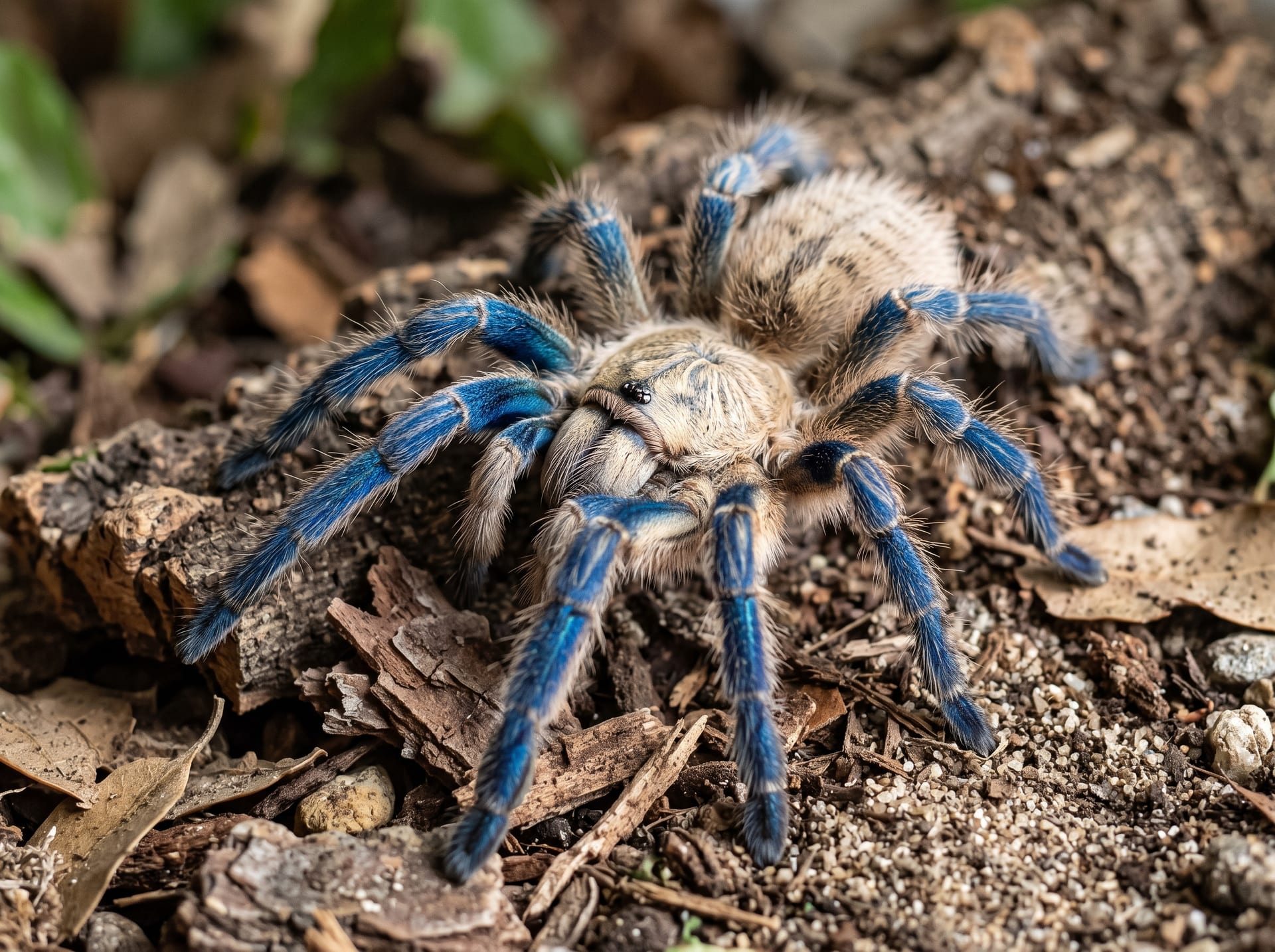
Socotra Island Blue Baboon
The Socotra Island Blue Baboon is a striking Old World tarantula found only on Socotra Island off the coast of Yemen, prized for the contrast between its blue-tinged legs and pale cream carapace. Quick-moving and alert like other Old World species, it's nonetheless considered relatively calm for the group, and is one of the few tarantulas known to thrive living communally in the same enclosure. A natural burrower, it spends much of its life in underground retreats, making its vivid blue coloring all the more striking whenever it comes out to explore.
View Socotra Island Blue Baboon encyclopedia →0% commission on your first sales!Register by September 30, 2026 and your first 2 sales are commission-free!
Breeder Wanted!
List on BreederDirect and sell directly to customers nationwide!
5 Transparency Standards You Can Trust
When listing Exotic Invertebrates, Breeders disclose the following. We guarantee transparency on growth stage and breeding unit.
- Real Photos
- Breeding Unit
- Generation Info
- Body Length (mm)
- Country of Origin
Browse all 286 breeds
Verified breeders wanted for Exotic Invertebrates
Breeders are signing up now ahead of launch. Subscribe to be notified when new listings go live.
Getting alerts is free with a member account. When new listings match your saved search, we'll notify you by email and in-app.
Browse other categories
Verified breeders (preview)
Are you raising exotic invertebrates?
Register as a breeder and connect with buyers directly.
Apply as a breederSocotra Island Blue Baboon key facts
- Care level
- Intermediate
- Lifespan
- Female 12-15 years / Male 4-5 years
- Size
- Leg span 10-13 cm
- Temperature
- 24〜28℃
- Humidity
- 50〜65%
- Diet
- Live insects such as crickets and roaches, offered roughly weekly.
- Habitat
- Fossorial-leaning setup with deep substrate and a hide; webs readily.
- Temp & Humidity
- 24-28°C, 50-65% humidity; drier side with a water dish.
- Feeding
- Good eater; weekly feeding suffices.
- Caution
- No urticating hairs and relatively calm, but as an Old World species its venom is potent—avoid handling.
About Socotra Island Blue Baboon
A striking Old World tarantula native to Socotra Island, known for its blue legs, cream carapace, and rare ability to be kept communally with others of its kind.
7 things to know before welcoming a Socotra Island Blue Baboon
1Setting Up the Enclosure
This species is a natural burrower, so provide a deep substrate layer that allows for digging along with a hide. A well-structured enclosure helps it feel secure and settle in comfortably.
2Communal Keeping
Unusually for an Old World tarantula, this species is known to thrive when kept communally with others of its kind. Success depends on providing enough space, multiple hides, and carefully managed feeding to avoid competition.
3Temperament & Handling
It moves quickly and can show defensive behavior typical of Old World species. Rather than handling, it's best appreciated through observation from outside the enclosure.
4Lifespan: Males vs Females
Females typically live 12 to 15 years, while males have a much shorter adult lifespan of around 4 to 5 years. If you're hoping for a long-term companion, a female is the better choice.
5Adult Size
Adults reach a leg span of roughly 10 to 13 centimeters. It's worth choosing an enclosure sized with this eventual growth in mind from the start.
6Temperature & Humidity
Native to a humid island environment, this species does best with moderate warmth and consistent humidity. Aim for a balance that avoids both dryness and excess moisture buildup.
7Before You Bring One Home
As an intermediate-level species, some prior experience with tarantula care is recommended before bringing one home. Make sure you're prepared for a long-term commitment, especially if keeping a female.
Frequently asked questions about Socotra Island Blue Baboon
- Q.Is this species suitable for beginners?
- A.It's generally classified as an intermediate-level species. With a solid understanding of basic tarantula care and a carefully prepared setup, it's approachable for keepers ready to take the next step.
- Q.What does communal keeping actually mean?
- A.It refers to the ability to house multiple individuals together in the same enclosure. This is unusual among Old World tarantulas and is one of the species' most notable traits.
- Q.Why do males and females have such different lifespans?
- A.In tarantulas generally, males tend to have a much shorter adult lifespan than females. In this species, females can live 12 to 15 years while males typically live only 4 to 5 years.
- Q.Is a bite from this species dangerous?
- A.As an Old World species, it lacks urticating hairs and tends to rely on biting as a defensive response. Individual temperament varies, so it's best to avoid provoking or handling it unnecessarily.
- Q.How big does it get as an adult?
- A.Adults reach a leg span of about 10 to 13 centimeters. Within the world of exotic invertebrates, that places it in the medium size range.
Learn more about Socotra Island Blue Baboon in the encyclopedia
View Socotra Island Blue Baboon encyclopedia entry →
Care difficulty, lifespan, size and diet — all basics covered.
More in this category
Can't find the one you're looking for?
Post your wishes for free and breeders with matching animals will contact you with introductions.