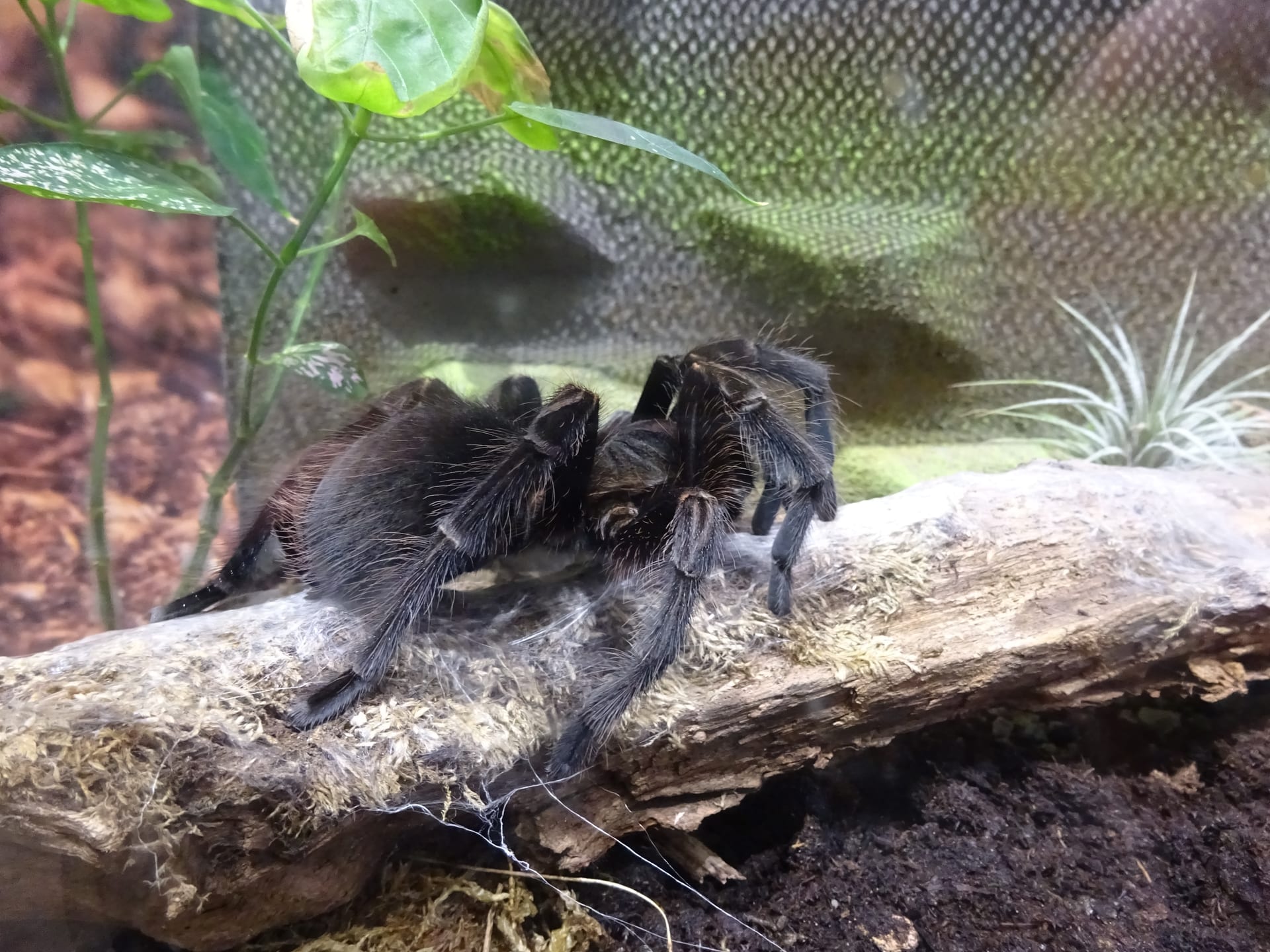
 © Erfil / CC BY-SA 4.0
Hispaniolan Giant Tarantula
The Hispaniolan Giant Tarantula is a large, ground-dwelling species native to the island of Hispaniola in the Caribbean. Adults reach a leg span of 18 to 20 cm, and their appearance changes dramatically with age — juveniles display a striking blue-green coloration, while adults develop rich brown legs and a metallic sheen across the carapace. Known for a hearty appetite and fast growth rate, this species lets keepers watch visible progress over time. With its bold size and striking coloring, it has become a favorite among intermediate-level tarantula enthusiasts.
View Hispaniolan Giant Tarantula encyclopedia →0% commission on your first sales!Register by September 30, 2026 and your first 2 sales are commission-free!
Breeder Wanted!
List on BreederDirect and sell directly to customers nationwide!
5 Transparency Standards You Can Trust
When listing Exotic Invertebrates, Breeders disclose the following. We guarantee transparency on growth stage and breeding unit.
- Real Photos
- Breeding Unit
- Generation Info
- Body Length (mm)
- Country of Origin
Browse all 249 breeds
Verified breeders wanted for Exotic Invertebrates
Breeders are signing up now ahead of launch. Subscribe to be notified when new listings go live.
Getting alerts is free with a member account. When new listings match your saved search, we'll notify you by email and in-app.
Browse other categories
Verified breeders (preview)
Are you raising exotic invertebrates?
Register as a breeder and connect with buyers directly.
Apply as a breederHispaniolan Giant Tarantula key facts
- Care level
- Intermediate
- Lifespan
- Females 10-15 years / males 3-5 years
- Size
- 18-20cm leg span
- Temperature
- 22〜28℃
- Humidity
- 60〜70%
- Diet
- Live insects such as crickets and roaches
- Temperature & Humidity
- Keep around 22-28 C and roughly 60-70% humidity, with a moisture gradient of damp lower substrate and a drier surface. Provide a permanent water dish and good ventilation.
- Enclosure
- It grows large, so use a roomy horizontal enclosure with deep substrate for burrowing, though in practice it spends much of its time on the surface.
- Diet & Feeding
- The appetite is enormous and adults eat almost anything offered. Growth is fast, so increase prey size after each moult, but avoid overfeeding.
- Temperament & Venom
- Skittish rather than defensive, fleeing into its burrow when disturbed. Its fangs exceed 2 cm so a bite hurts, but serious symptoms are rare. It has urticating hairs.
- Notes
- Its rapid growth means frequent rehousing and attention around moults. Adults are fearless and come forward, so keep your distance during maintenance.
About Hispaniolan Giant Tarantula
The Hispaniolan Giant Tarantula is a large ground-dwelling species from Hispaniola, reaching an 18-20cm leg span with a hearty appetite and fast growth — a popular pick for intermediate keepers.
7 things to know before welcoming a Hispaniolan Giant Tarantula
1Set Up for a Ground Dweller
As a burrowing, ground-dwelling species, the Hispaniolan Giant does better with deep substrate than climbing branches. Adding a hide or shelter helps it settle in comfortably.
2Coloring Changes With Age
Juveniles start out blue-green, but with each molt the legs gradually turn brown and the carapace develops a metallic sheen. Watching this transformation is part of the appeal.
3Big Appetite, Fast Growth
This species tends to eat more and grow faster than many other tarantulas. Adjust feeding frequency and portion size as the individual grows.
4Can Be a Bit Defensive
Some individuals may display defensive postures or react sharply to disturbance. Avoid direct hand contact and use tools when handling enclosure maintenance.
5Give It Space Around Molting
Before molting, it may stop eating and move less. Right after a molt its body is extremely fragile, so hold off on feeding and disturbance for a while.
6Can Flick Urticating Hairs
When threatened, it can flick urticating hairs from its abdomen as a defense. Contact with skin or eyes may cause irritation, so take care during cleaning or layout changes.
7Plan Ahead for Adult Size
As it grows it will need considerably more space, so preparing an enclosure and temperature/humidity setup sized for its adult form in advance makes the transition smoother.
Frequently asked questions about Hispaniolan Giant Tarantula
- Q.Can beginners keep a Hispaniolan Giant Tarantula?
- A.It's considered suitable for intermediate keepers, so some prior tarantula-keeping experience is recommended. Handling its urticating hairs and variable temperament takes some familiarity.
- Q.How much does its appearance change from juvenile to adult?
- A.Juveniles are blue-green, but as they grow the legs turn brown and the carapace develops a metallic sheen. Each molt brings a noticeable change in coloring.
- Q.How large does it get as an adult?
- A.Adults reach a leg span of 18 to 20 cm. As a large ground-dwelling species, it's best to prepare an enclosure sized for its full-grown form in advance.
- Q.Does it require more care than other tarantulas?
- A.Because of its hearty appetite and fast growth, feeding frequency needs closer adjustment. Otherwise the basic care routine is similar to other ground-dwelling tarantulas.
- Q.Is this species subject to CITES?
- A.The Hispaniolan Giant Tarantula is not subject to CITES.
Learn more about Hispaniolan Giant Tarantula in the encyclopedia
View Hispaniolan Giant Tarantula encyclopedia entry →
Care difficulty, lifespan, size and diet — all basics covered.
More in this category
Can't find the one you're looking for?
Post your wishes for free and breeders with matching animals will contact you with introductions.