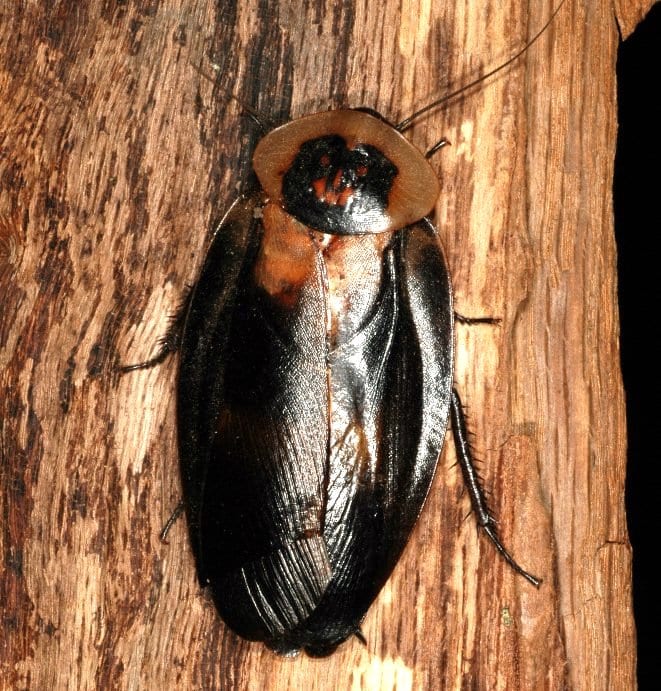
 © Acrocynus / CC BY-SA 3.0
Death's Head Cockroach
The Death's Head Cockroach is a striking mid-sized roach named for the skull-like pattern on its pronotum, paired with jet-black forewings that look like a cape. Native to Mexico, Central America, and the West Indies, it has a calm temperament that belies its dramatic looks, making it far easier to keep than its appearance suggests. Adults can't climb glass and don't fly, so escape risk is low, a reassuring trait for first-time keepers. At 5.3 to 5.7 cm as adults, they're a comfortable size to observe up close, and their bold markings make them a popular gateway species into exotic insect keeping.
View Death's Head Cockroach encyclopedia →0% commission on your first sales!Register by September 30, 2026 and your first 2 sales are commission-free!
Breeder Wanted!
List on BreederDirect and sell directly to customers nationwide!
5 Transparency Standards You Can Trust
When listing Exotic Invertebrates, Breeders disclose the following. We guarantee transparency on growth stage and breeding unit.
- Real Photos
- Breeding Unit
- Generation Info
- Body Length (mm)
- Country of Origin
Browse all 249 breeds
Verified breeders wanted for Exotic Invertebrates
Breeders are signing up now ahead of launch. Subscribe to be notified when new listings go live.
Getting alerts is free with a member account. When new listings match your saved search, we'll notify you by email and in-app.
Browse other categories
Verified breeders (preview)
Are you raising exotic invertebrates?
Register as a breeder and connect with buyers directly.
Apply as a breederDeath's Head Cockroach key facts
- Care level
- Beginner-friendly
- Lifespan
- 1-2 years
- Size
- 5.3-5.7cm
- Temperature
- 21〜29℃
- Diet
- Decaying plant matter, vegetables, fruit, grains, prepared insect food
- Temperature & Humidity
- Tolerates a wide 21-29 C. Not fussy about air humidity, but avoid bone-dry conditions to prevent moulting problems.
- Enclosure
- They cannot climb, so a simple lid suffices, but use a deep enclosure since adults glide short distances. Provide a thick substrate so nymphs can burrow.
- Diet & Feeding
- In the wild they eat any available organic matter including leaf litter. In captivity combine vegetables and fruit with grains or prepared insect food.
- Temperament & Venom
- No venom and no biting. When threatened it burrows into the substrate, and adults may glide short distances.
- Notes
- B. discoidalis is sometimes sold under the death's head name. Check the pronotal marking and the jet-black wings.
About Death's Head Cockroach
A mid-sized cockroach with a skull-shaped marking, native to Mexico and Central America. Unable to climb glass or fly, it's an easy, beginner-friendly exotic pet at 5.3 to 5.7 cm as an adult.
7 things to know before welcoming a Death's Head Cockroach
1Low Escape Risk
Death's Head Cockroaches can't climb glass and don't fly as adults, so escape risk is low. As long as the enclosure lid is secure, even first-time keepers can house them with confidence.
2Calm, Easy Temperament
Despite their dramatic looks, they're a very docile species with little to no aggression. Their slow, deliberate movements also make observation and enclosure cleaning easier.
3Skull-Patterned Markings
The bone-like pattern on the pronotum, paired with jet-black, cape-like forewings, is the species' signature feature. The intensity of the markings varies between individuals, adding to the fun of comparing them.
4Prefers Warm, Humid Conditions
Native to tropical and subtropical regions, they do best in an enclosure with steady warmth and humidity. Provide substrate and hiding spots, and avoid letting conditions dry out too much.
5Easy, Omnivorous Feeding
They're omnivorous and will eat insect jelly, vegetable scraps, and prepared foods, so feeding is low-effort. Offering occasional protein, like softened pet food, helps keep them in good condition.
6Breeds Readily in Captivity
This species reproduces readily under captive conditions, and numbers can grow before you notice. If you want to keep numbers in check, it helps to pay attention to enclosure density and sex ratios.
7Nocturnal and Hides by Day
They're nocturnal and tend to stay still, tucked into substrate or shaded spots, during the day. Providing a calm hiding place helps them settle in with less stress.
Frequently asked questions about Death's Head Cockroach
- Q.Is the Death's Head Cockroach suitable for beginners?
- A.Yes, it's considered a beginner-friendly species. Since adults can't climb glass or fly, escape risk is low, and their calm temperament makes them easy to keep.
- Q.Is it aggressive, given its dramatic appearance?
- A.No, despite its striking looks, it has a calm temperament with little to no aggression. Its slow movements also make it easy to observe.
- Q.How big do they get?
- A.Adults typically reach about 5.3 to 5.7 cm, making them a mid-sized cockroach. There's some individual variation, but most fall within this range.
- Q.Are there any legal restrictions?
- A.The Death's Head Cockroach is not subject to CITES.
- Q.Is daily care and feeding difficult?
- A.They're omnivorous and eat a wide range of foods, including insect jelly and vegetable scraps, so feeding is low-effort. As long as temperature, humidity, and hiding spots are in order, day-to-day care is straightforward.
Learn more about Death's Head Cockroach in the encyclopedia
View Death's Head Cockroach encyclopedia entry →
Care difficulty, lifespan, size and diet — all basics covered.
More in this category
Can't find the one you're looking for?
Post your wishes for free and breeders with matching animals will contact you with introductions.