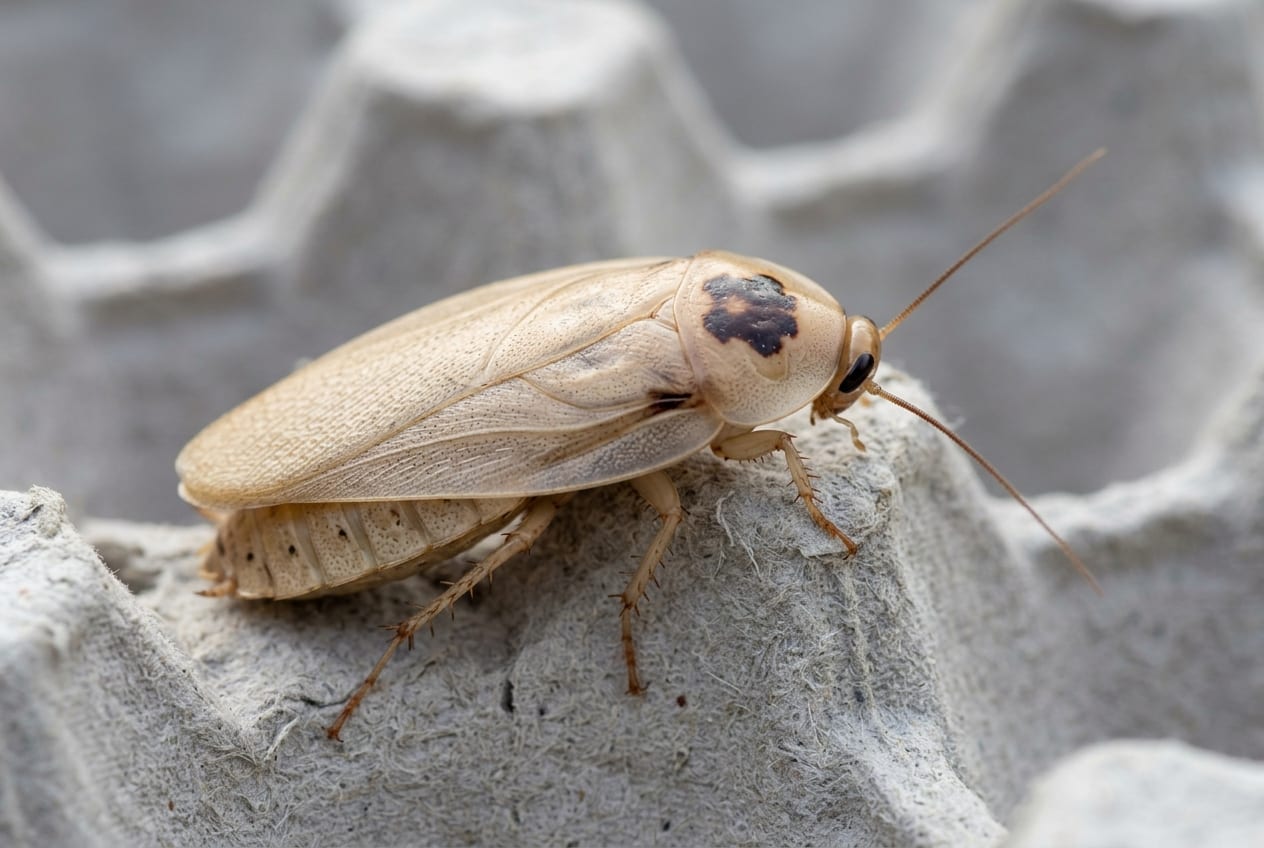
Discoid Cockroach
The Discoid Cockroach is a large feeder roach native to Central America, recognized by its light brown body and a dark marking on the pronotum. Unable to climb glass or fly, it rarely escapes its enclosure, making it one of the easiest feeder species to manage. It's hardy and breeds readily, reaching adulthood in as little as three months under good conditions, so a colony can be built up quickly. Calm and easy to observe, it's a favorite starter species among reptile and amphibian keepers.
View Discoid Cockroach encyclopedia →0% commission on your first sales!Register by September 30, 2026 and your first 2 sales are commission-free!
Breeder Wanted!
List on BreederDirect and sell directly to customers nationwide!
5 Transparency Standards You Can Trust
When listing Exotic Invertebrates, Breeders disclose the following. We guarantee transparency on growth stage and breeding unit.
- Real Photos
- Breeding Unit
- Generation Info
- Body Length (mm)
- Country of Origin
Browse all 249 breeds
Verified breeders wanted for Exotic Invertebrates
Breeders are signing up now ahead of launch. Subscribe to be notified when new listings go live.
Getting alerts is free with a member account. When new listings match your saved search, we'll notify you by email and in-app.
Browse other categories
Verified breeders (preview)
Are you raising exotic invertebrates?
Register as a breeder and connect with buyers directly.
Apply as a breederDiscoid Cockroach key facts
- Care level
- Beginner-friendly
- Lifespan
- 1-2 years
- Size
- 3.5-5.7cm
- Temperature
- 21〜29℃
- Diet
- Vegetables, fruit, grains, prepared insect food
- Temperature & Humidity
- Tolerates a wide 21-29 C; keep nearer 29 C to speed up breeding. Air humidity is not critical.
- Enclosure
- They cannot climb or fly, so a deep open-topped bin works. Stand egg crates for surface area and provide ventilation.
- Diet & Feeding
- Combine vegetables and fruit with grains or prepared insect food, and gut-load before use as feeders.
- Temperament & Venom
- No venom and no biting, and it is calm and easy to handle.
- Notes
- Untracked stock is often hybridised with Blaberus boliviensis, so check the source if a pure line matters. It is easily confused with the death's head roach (Blaberus craniifer) and is also called the false death's head cockroach. B. craniifer has jet-black forewings, while this species keeps brown ones.
About Discoid Cockroach
A large Central American feeder roach that can't climb glass or fly. Hardy, fast-breeding, and easy for beginners to keep.
7 things to know before welcoming a Discoid Cockroach
1Low escape risk by design
Discoid Cockroaches can't climb smooth surfaces like glass and cannot fly. This makes escapes unlikely even in simple enclosures, giving first-time keepers a low-stress introduction to managing feeder insects.
2Hardy and low-maintenance
Rated as beginner-friendly, this species is quite resilient and not difficult to raise. As long as temperature and humidity are kept within a suitable range, upkeep tends to be trouble-free.
3Fast breeding cycle
Under favorable conditions, individuals can reach adulthood in about three months, giving this species a relatively short breeding cycle. This makes it well suited for keepers who want to maintain an ongoing colony.
4Adult size range
Adults typically measure between 3.5 and 5.7 cm. Keep this size range in mind when preparing an enclosure and allotting enough space for the colony.
5Distinctive markings
Its light brown body with a dark marking on the pronotum makes it easy to distinguish from other feeder roach species. This distinct appearance also makes individuals simple to observe.
6Calm temperament
Movements tend to be calm rather than erratic, and individuals won't suddenly leap when startled. This suits keepers who prefer relaxed daily care and observation.
7Prepare the setup in advance
Before bringing them home, it helps to have an enclosure that can maintain stable temperature and humidity, along with substrate or hides for shelter. If you plan to let the colony grow, consider leaving extra room in the enclosure.
Frequently asked questions about Discoid Cockroach
- Q.Can beginners keep Discoid Cockroaches?
- A.Yes, this species is considered beginner-friendly. Since it can't climb glass or fly, escapes are unlikely, and its hardiness keeps day-to-day care manageable — even for those handling feeder insects for the first time.
- Q.How big do Discoid Cockroaches get?
- A.Adults grow to roughly 3.5 to 5.7 cm. Use this range as a guide when setting up an enclosure.
- Q.Is there a risk of them escaping?
- A.Since they can't climb glass or fly, the escape risk is lower than with many other insects. That said, they aren't entirely incapable of getting out, so it's best to keep them in an enclosure with a secure lid.
- Q.How long does it take for them to breed?
- A.Under good conditions, it takes roughly three months to reach adulthood from hatching. Actual timing varies depending on factors like temperature and humidity in the enclosure.
- Q.Are there any regulatory considerations?
- A.Discoid Cockroaches are not subject to CITES. There are no other special regulatory considerations for this species.
Learn more about Discoid Cockroach in the encyclopedia
View Discoid Cockroach encyclopedia entry →
Care difficulty, lifespan, size and diet — all basics covered.
More in this category
Can't find the one you're looking for?
Post your wishes for free and breeders with matching animals will contact you with introductions.