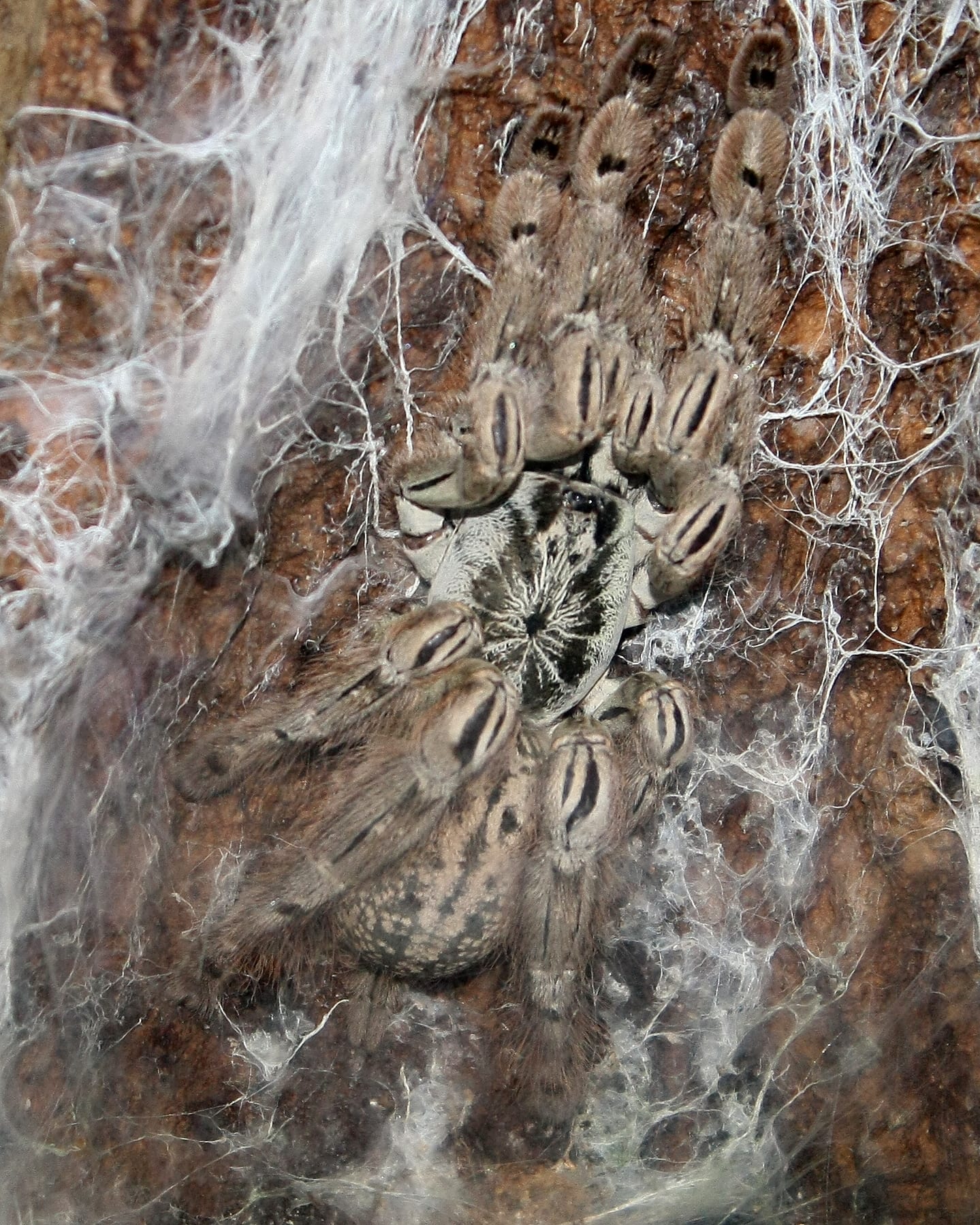
 © Greg Hume / CC BY-SA 3.0
Togo Starburst Baboon
The Togo Starburst Baboon Tarantula is an arboreal species native to Togo in West Africa. Its striking pattern of dark brown mottling over a chalky white body, paired with noticeably thick, powerful hind legs, makes it a visually distinctive species for tarantula keepers. That said, it moves extremely fast and can flash a defensive posture or bolt the moment it feels threatened. Because its venom is considered medically significant, it's generally recommended only for experienced keepers who understand safe handling practices. Anyone considering bringing one home should research proper housing and care techniques beforehand.
View Togo Starburst Baboon encyclopedia →0% commission on your first sales!Register by September 30, 2026 and your first 2 sales are commission-free!
Breeder Wanted!
List on BreederDirect and sell directly to customers nationwide!
5 Transparency Standards You Can Trust
When listing Exotic Invertebrates, Breeders disclose the following. We guarantee transparency on growth stage and breeding unit.
- Real Photos
- Breeding Unit
- Generation Info
- Body Length (mm)
- Country of Origin
Browse all 249 breeds
Verified breeders wanted for Exotic Invertebrates
Breeders are signing up now ahead of launch. Subscribe to be notified when new listings go live.
Getting alerts is free with a member account. When new listings match your saved search, we'll notify you by email and in-app.
Browse other categories
Verified breeders (preview)
Are you raising exotic invertebrates?
Register as a breeder and connect with buyers directly.
Apply as a breederTogo Starburst Baboon key facts
- Care level
- Advanced
- Lifespan
- Females 10-12 years / males 2-3 years
- Size
- Body 5-7cm, leg span 11-13cm
- Temperature
- 22〜26℃
- Humidity
- 70〜80%
- Diet
- Live insects such as crickets and roaches
- Temperature & Humidity
- Aim for 22-26C and 70-80% humidity, matching West African rainforest while keeping ventilation and avoiding dryness.
- Enclosure
- Being arboreal it needs a tall vertical enclosure with upright cork bark so it can spin its tube web.
- Diet & Feeding
- Offer active live prey such as crickets and roaches, and remove uneaten items within a day.
- Temperament & Venom
- It has no urticating hairs and defends itself by fleeing or biting. Its venom is medically significant and handling is not recommended.
- Notes
- It is extremely fast and can bolt the moment the lid opens, so all work should be done in an enclosed space.
About Togo Starburst Baboon
The Togo Starburst Baboon Tarantula is an arboreal species from West Africa, known for its chalky white and dark brown mottled pattern, thick hind legs, and fast movements — a species best suited to experienced keepers.
7 things to know before welcoming a Togo Starburst Baboon
1Needs Vertical Housing
As an arboreal species, the Togo Starburst spends much of its time off the ground rather than burrowing. Choose an enclosure that's taller than it is wide, and add cork bark or driftwood for climbing.
2Extremely Fast Mover
This species can bolt the instant its enclosure is opened. Plan your maintenance and feeding routine carefully, and take extra precautions to prevent an escape.
3Medically Significant Venom
Its venom is considered medically significant, and a bite can cause pain and other symptoms. Avoid direct handling and use tongs or feeding tools instead.
4Skittish, Defensive Nature
When startled, it may rear up in a threat posture or dart away quickly. This is a species best kept for observation rather than handling.
5Humidity Is Key
Native to West Africa's tropical regions, this species doesn't tolerate extreme dryness well. Keep part of the substrate slightly moist while maintaining ventilation to avoid a stagnant enclosure.
6Provide Climbing Shelter
Combine cork bark and artificial climbing branches to create a vertical layout that mimics its natural habitat. These structures also give it anchor points for webbing.
7Best For Experienced Keepers
Combining rapid movement with medically significant venom, this species is generally considered suitable for advanced keepers. Prior tarantula-keeping experience is recommended before bringing one home.
Frequently asked questions about Togo Starburst Baboon
- Q.Is the Togo Starburst suitable for beginners?
- A.It's generally considered a species for experienced keepers, so it isn't recommended for those without prior tarantula-keeping experience. Its speed and the need for careful handling around its venom both require some familiarity.
- Q.How big does it get?
- A.Adults typically reach a body length of about 5 to 7 cm, with a leg span of roughly 11 to 13 cm. Size can vary somewhat by sex and individual.
- Q.What happens if it bites?
- A.Its venom is considered medically significant, and a bite may cause pain and swelling. It's best to avoid direct contact and use tools for handling and enclosure maintenance.
- Q.Is it regulated under CITES?
- A.The Togo Starburst is not listed under CITES.
- Q.Since it's arboreal, what kind of enclosure should I use?
- A.Choose a taller enclosure rather than a wide, ground-level one, and add cork bark or driftwood for climbing. Make sure the lid closes securely to prevent this fast-moving species from escaping.
Learn more about Togo Starburst Baboon in the encyclopedia
View Togo Starburst Baboon encyclopedia entry →
Care difficulty, lifespan, size and diet — all basics covered.
More in this category
Can't find the one you're looking for?
Post your wishes for free and breeders with matching animals will contact you with introductions.