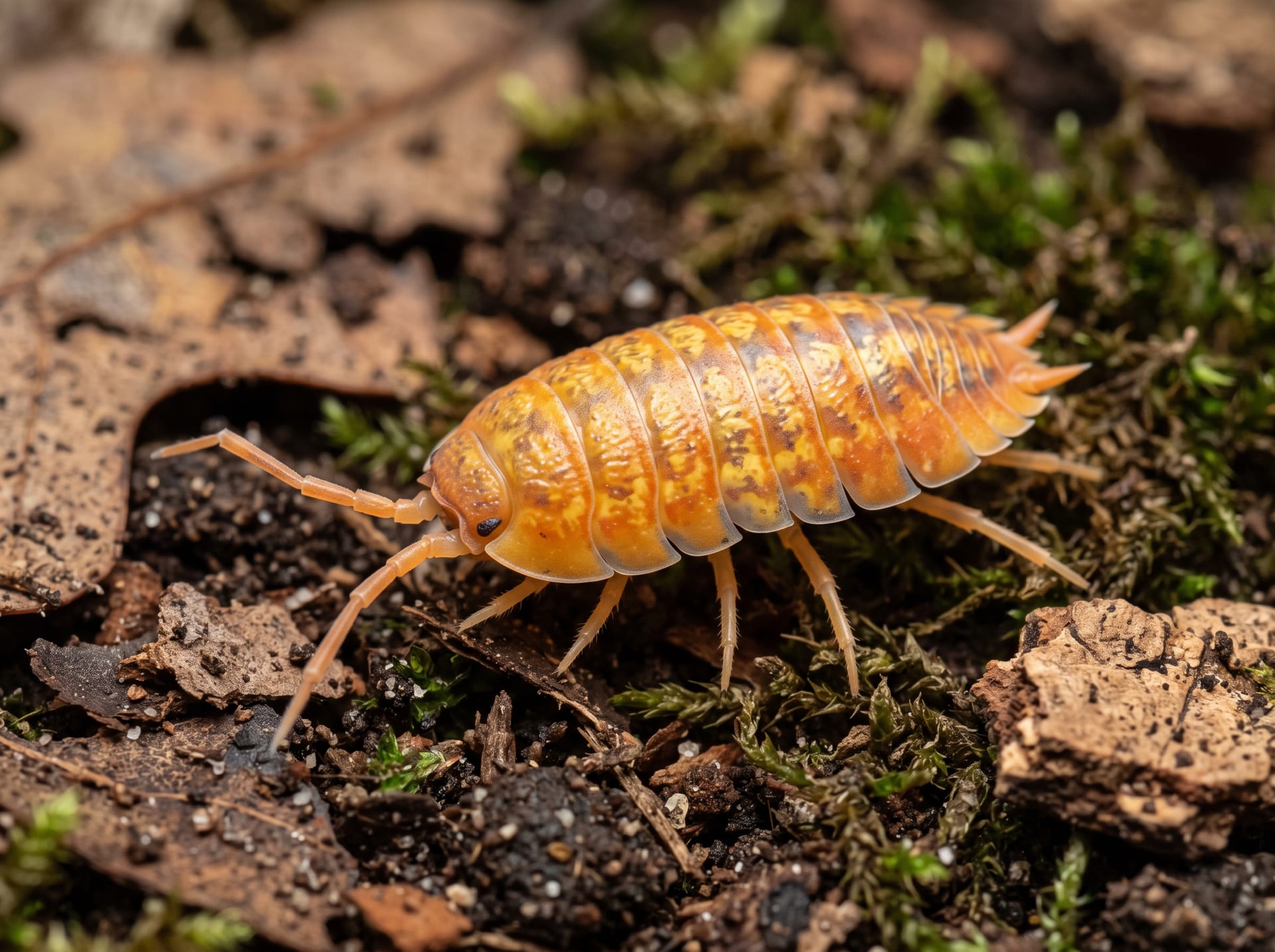
Spanish Orange Isopod
The Spanish Orange Isopod is a large isopod species native to Spain, prized for its vivid orange coloring that makes it a standout addition to any terrarium. Adults grow to about 2.5–4 cm, and while they move quickly, they are completely docile — they don't bite and carry no venom. As detritivores, they help break down decaying wood, leaves, and other organic matter, effectively acting as a cleanup crew in their enclosure. They prefer drier conditions than many isopods and need a steady calcium source to support their size and color. Considered an intermediate-level species, they reward keepers who get the humidity and diet right with a long, engaging keeping experience.
View Spanish Orange Isopod encyclopedia →0% commission on your first sales!Register by September 30, 2026 and your first 2 sales are commission-free!
Breeder Wanted!
List on BreederDirect and sell directly to customers nationwide!
5 Transparency Standards You Can Trust
When listing Exotic Invertebrates, Breeders disclose the following. We guarantee transparency on growth stage and breeding unit.
- Real Photos
- Breeding Unit
- Generation Info
- Body Length (mm)
- Country of Origin
Browse all 249 breeds
Verified breeders wanted for Exotic Invertebrates
Breeders are signing up now ahead of launch. Subscribe to be notified when new listings go live.
Getting alerts is free with a member account. When new listings match your saved search, we'll notify you by email and in-app.
Browse other categories
Verified breeders (preview)
Are you raising exotic invertebrates?
Register as a breeder and connect with buyers directly.
Apply as a breederSpanish Orange Isopod key facts
- Care level
- Intermediate
- Lifespan
- About 2-3 years
- Size
- About 2.5-4 cm
- Temperature
- 20〜26℃
- Humidity
- 50〜70%
- Diet
- Leaf litter plus, being large, a strong appetite for protein and ample calcium such as cuttlebone.
- Habitat
- Provide strong ventilation, a large dry area, hides, and limestone.
- Temp & Humidity
- Keep 20-26C on the drier side with one moist corner.
- Feeding
- Offer generous protein and calcium to support growth.
- Notes
- Fast and intolerant of excess moisture; harmless with no venom or bite.
About Spanish Orange Isopod
A care guide to the Spanish Orange Isopod, a large Spanish isopod species — covering its traits, care difficulty, lifespan, adult size, and what to know before bringing one home.
7 things to know before welcoming a Spanish Orange Isopod
1Prefers Drier Conditions
Unlike many isopod species that thrive in high humidity, Spanish Orange Isopods prefer drier conditions. Keep the substrate on the dry side and use a well-ventilated enclosure with a slight moisture gradient.
2Needs Extra Calcium
Their large size and bright orange coloring mean they need plenty of calcium. Keep a steady calcium source, such as cuttlebone or crushed eggshell, available in the substrate at all times.
3Harmless, No Bite or Venom
They move quickly but are entirely docile and will never bite. With no venom either, they're a safe, low-stress species for anyone new to isopods or exotic invertebrates.
4Natural Decomposers
They feed on decaying wood, leaf litter, and dead plant matter, making them effective cleanup crew members. They're a popular choice for bioactive terrariums and vivarium maintenance.
5Molts in Two Halves
Like other isopods, they molt the front and back halves of their body separately rather than all at once. Right after molting their exoskeleton is soft and pale, so it's best to avoid disturbing them during this time.
6Thrives in Colonies
They do better kept in groups than alone, and will breed and grow their numbers when conditions suit them. Since they're considered an intermediate-level species, stable humidity and temperature are key to successful breeding.
7What to Prepare Beforehand
Have a well-ventilated enclosure, substrate that can be kept on the drier side, hiding spots like bark or rotting wood, and a calcium source ready before bringing them home. Adults reach about 2.5–4 cm, so plan for an enclosure with enough space.
Frequently asked questions about Spanish Orange Isopod
- Q.Do they bite or have venom?
- A.No — they don't bite and carry no venom. They move fast but are docile, so they're safe to handle and observe.
- Q.How long do they live?
- A.Spanish Orange Isopods typically live about 2–3 years. Good humidity management and a steady calcium supply help them stay healthy over that time.
- Q.How big do they get?
- A.Adults reach roughly 2.5–4 cm, making them a fairly large isopod species. Combined with their bright orange coloring, they have a noticeably striking presence.
- Q.Are they good for beginners?
- A.They're generally considered an intermediate-level species. Maintaining drier conditions and supplying extra calcium takes a bit more care than typical beginner isopod setups.
- Q.What do they eat?
- A.As detritivores, they feed on decaying wood, leaf litter, and vegetable scraps. Keep some organic matter in the substrate and don't let their calcium source run out.
Learn more about Spanish Orange Isopod in the encyclopedia
View Spanish Orange Isopod encyclopedia entry →
Care difficulty, lifespan, size and diet — all basics covered.
More in this category
Can't find the one you're looking for?
Post your wishes for free and breeders with matching animals will contact you with introductions.