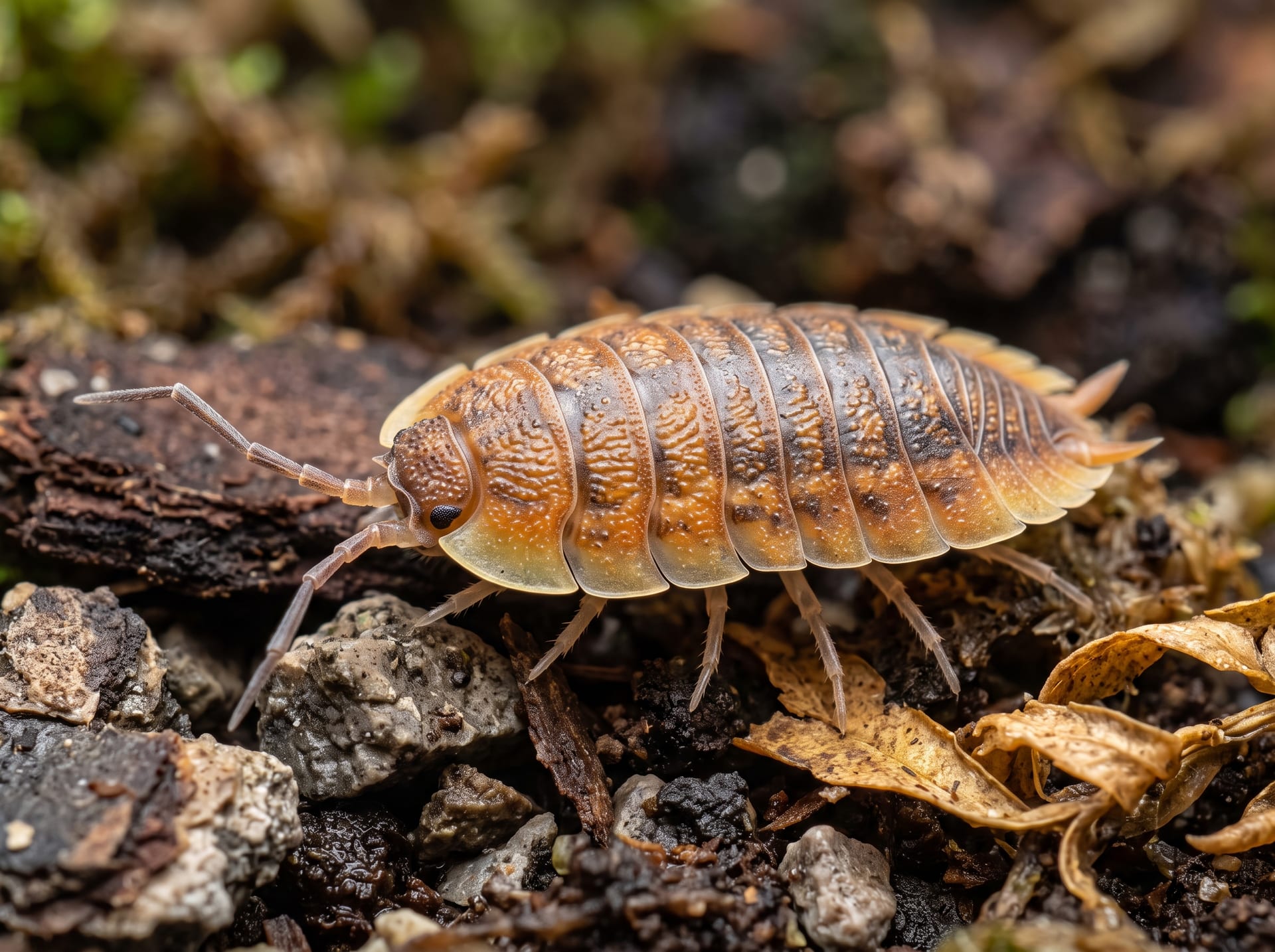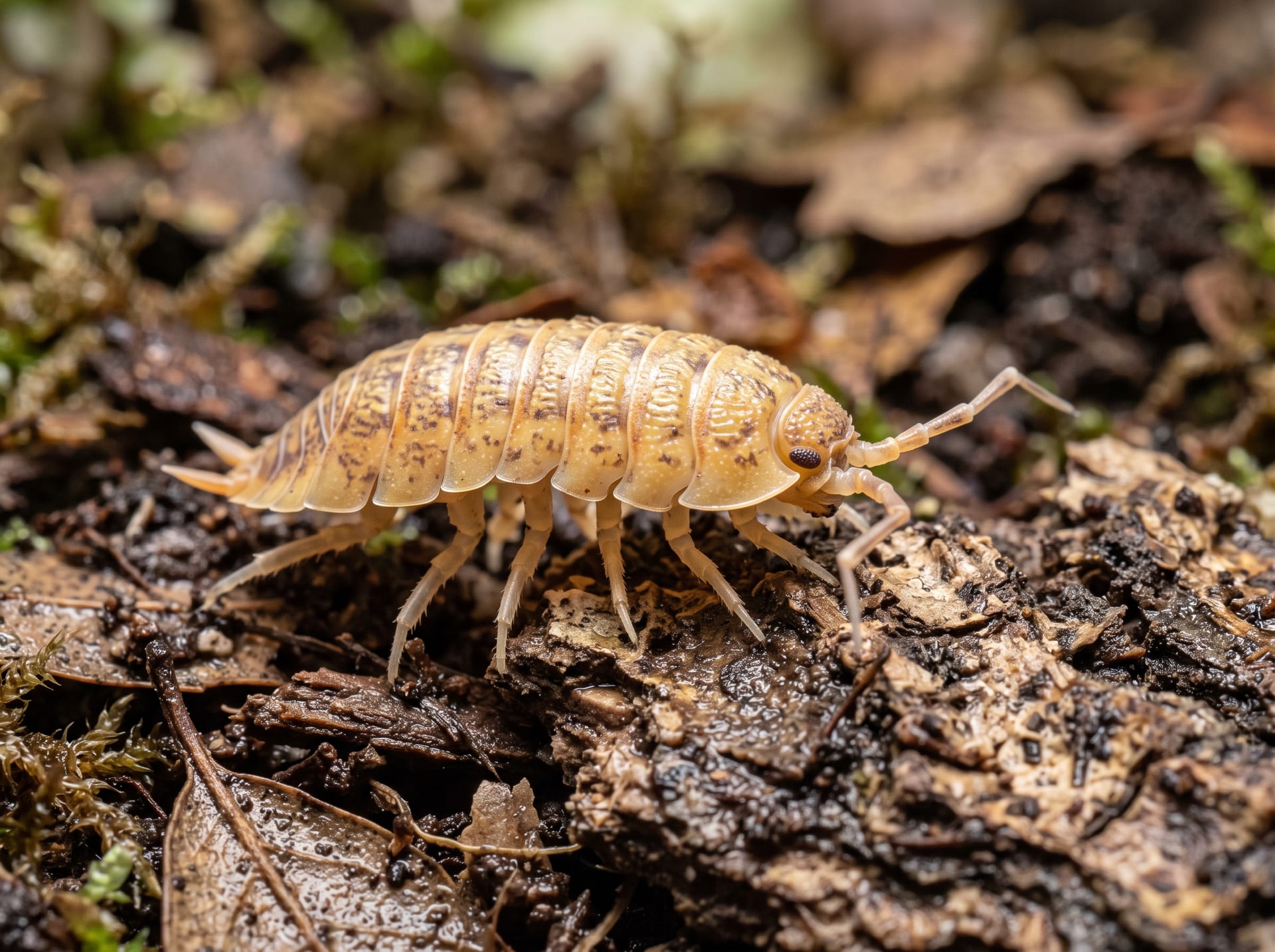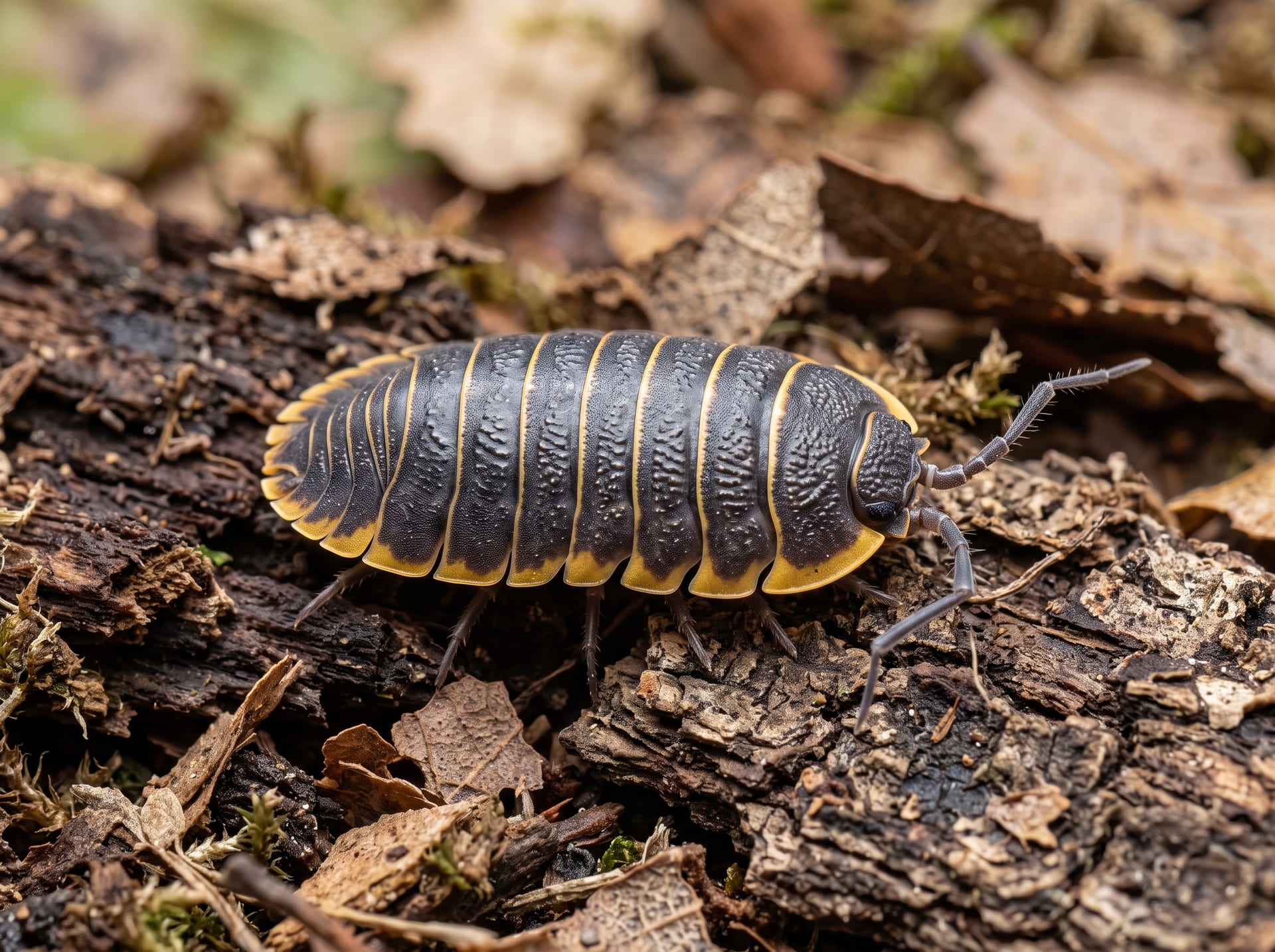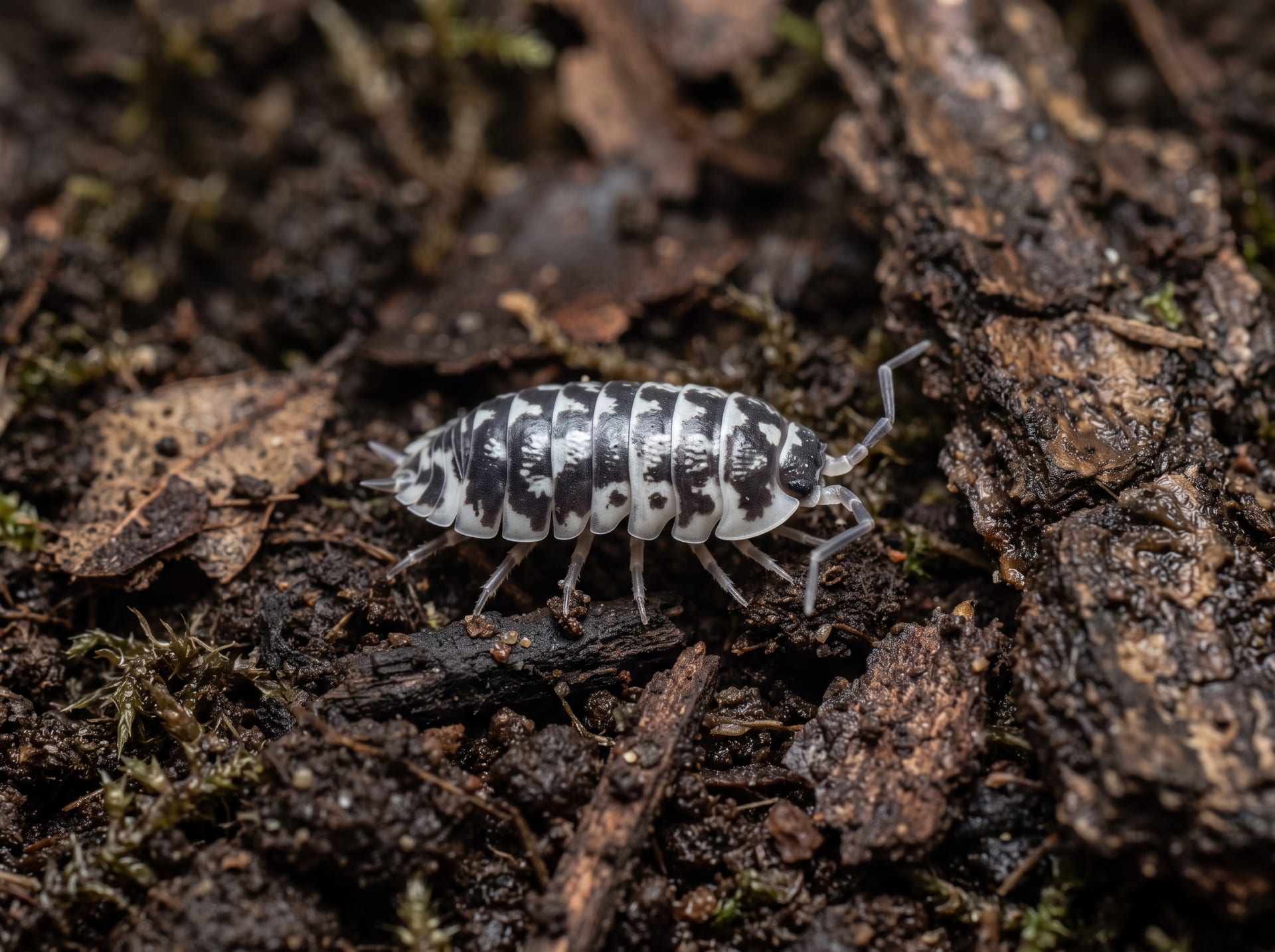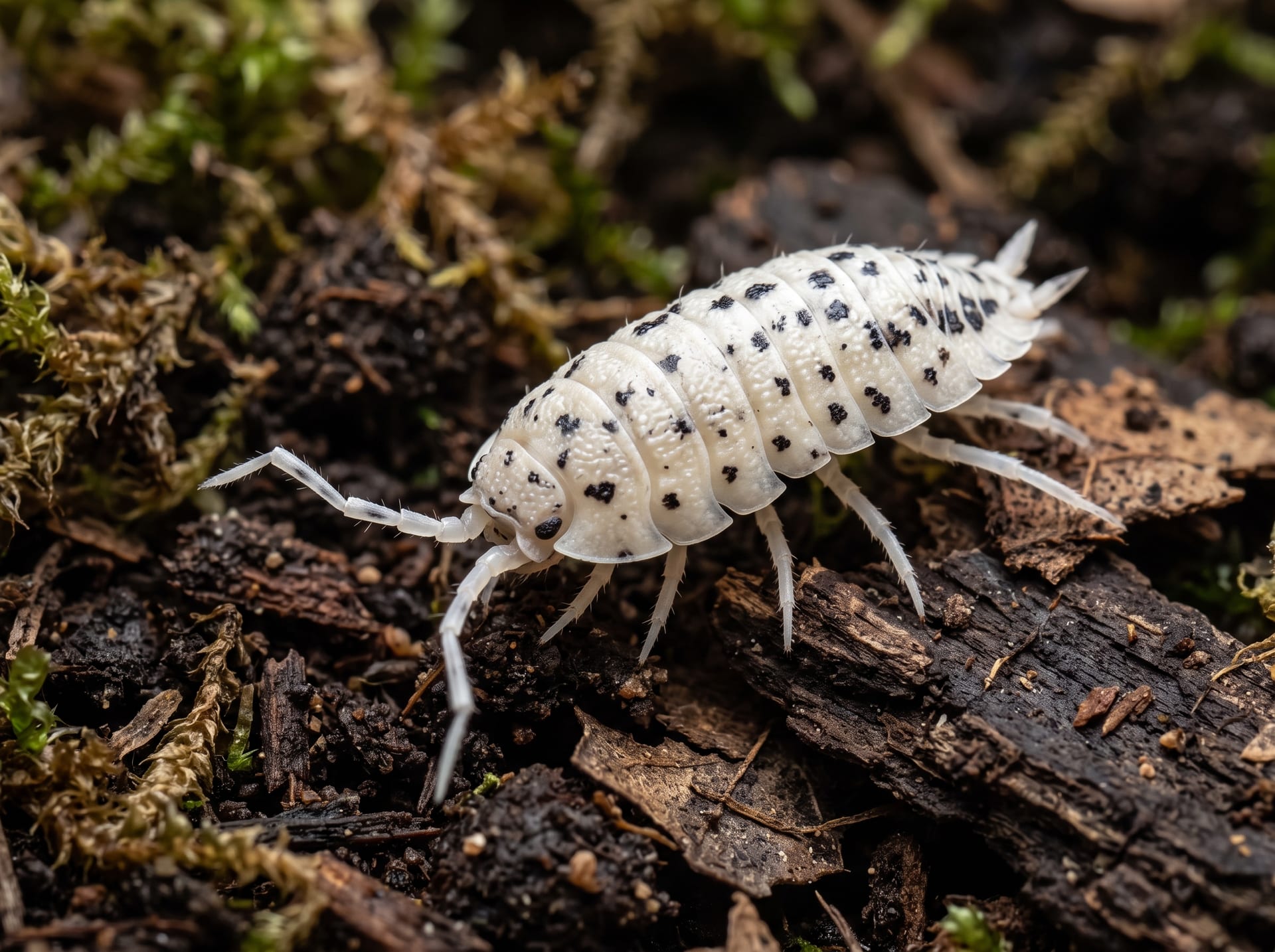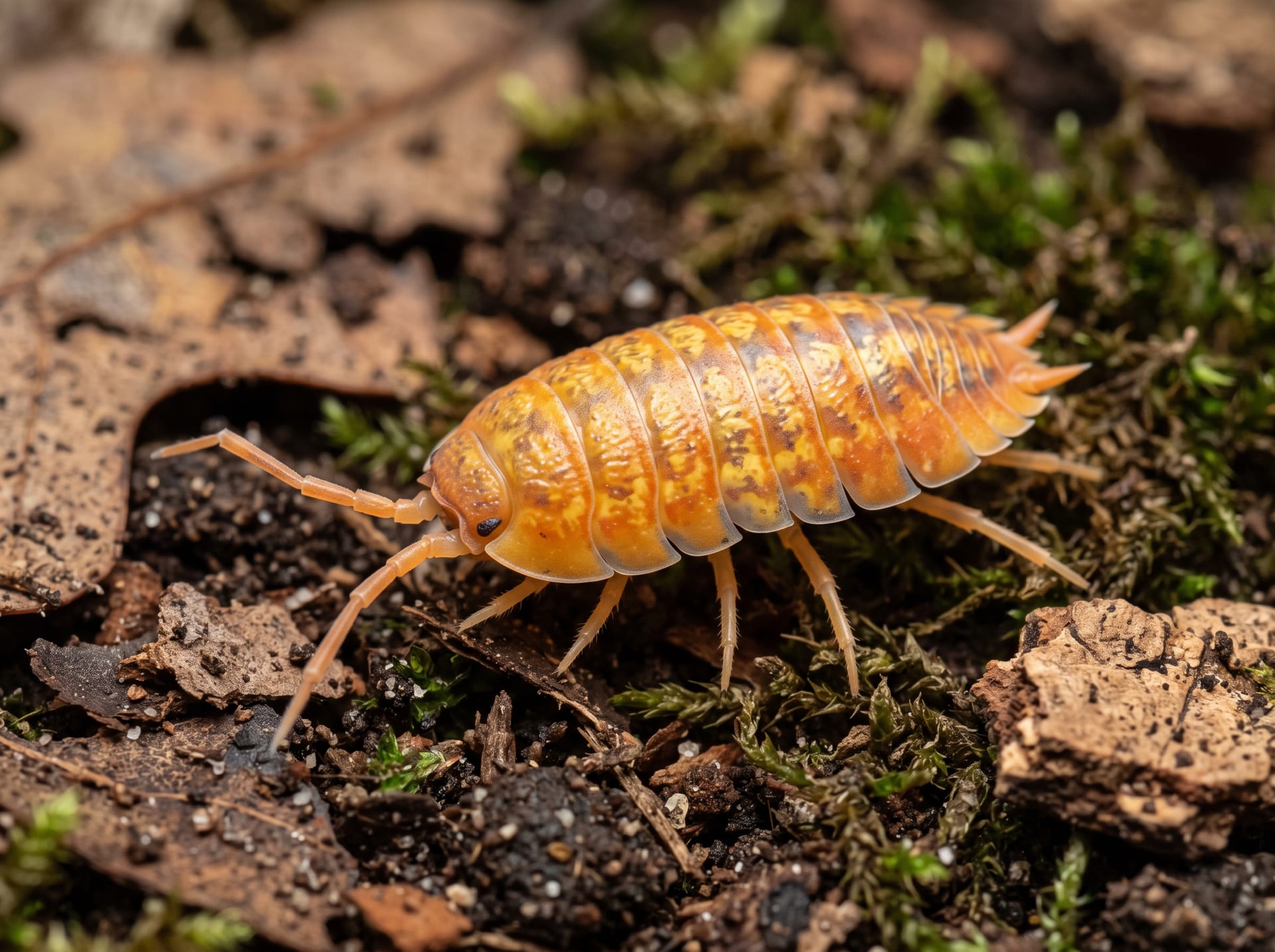
AI-generated image
Spanish Orange Isopod
IntermediatePorcellio hoffmannseggii
A large Spanish isopod prized for its vivid orange color and impressive size. It prefers drier, calcium-rich conditions; fast-moving but a harmless detritivore with no bite or venom.
Difficulty
Intermediate
Temperature
20〜26℃
Lifespan
About 2-3 years
Size
About 2.5-4 cm
Humidity
50〜70%
Diet
Leaf litter plus, being large, a strong appetite for protein and ample calcium such as cuttlebone.
About
The Spanish Orange Isopod (Porcellio hoffmannseggii) is a large species prized for its vivid orange color and impressive size, ranking among the biggest in the genus Porcellio. Native to the southern Iberian Peninsula and North Africa (Morocco), it grows to about 2.5–4 cm and lives roughly 2–3 years. Because of its size it readily takes protein, so abundant calcium should always be provided.
Lifespan of the Spanish Orange Isopod
The Spanish Orange Isopod lives About 2-3 years.
Size of the Spanish Orange Isopod
The Spanish Orange Isopod grows to About 2.5-4 cm.
Temperature & humidity for the Spanish Orange Isopod
The ideal temperature for the Spanish Orange Isopod is 20〜26℃. Ideal humidity is 50〜70%.
Fast-moving but a harmless detritivore with no bite or venom, it prefers drier, calcium-rich conditions at 20–26°C and 50–70% humidity.
Basic Info
Origin
Native to the southern Iberian Peninsula and northwest Africa (Morocco); one of the largest Porcellio species
Lifespan
About 2-3 years
Size
About 2.5-4 cm
Temperature
20〜26℃
References & Sources
Edited & verified by: BreederDirect editorial team
The taxonomic, regulatory, and husbandry data on this page are compiled and verified against the authoritative primary sources below.
Spanish Orange Isopod Listings
Loading latest listingsFind listings for this species