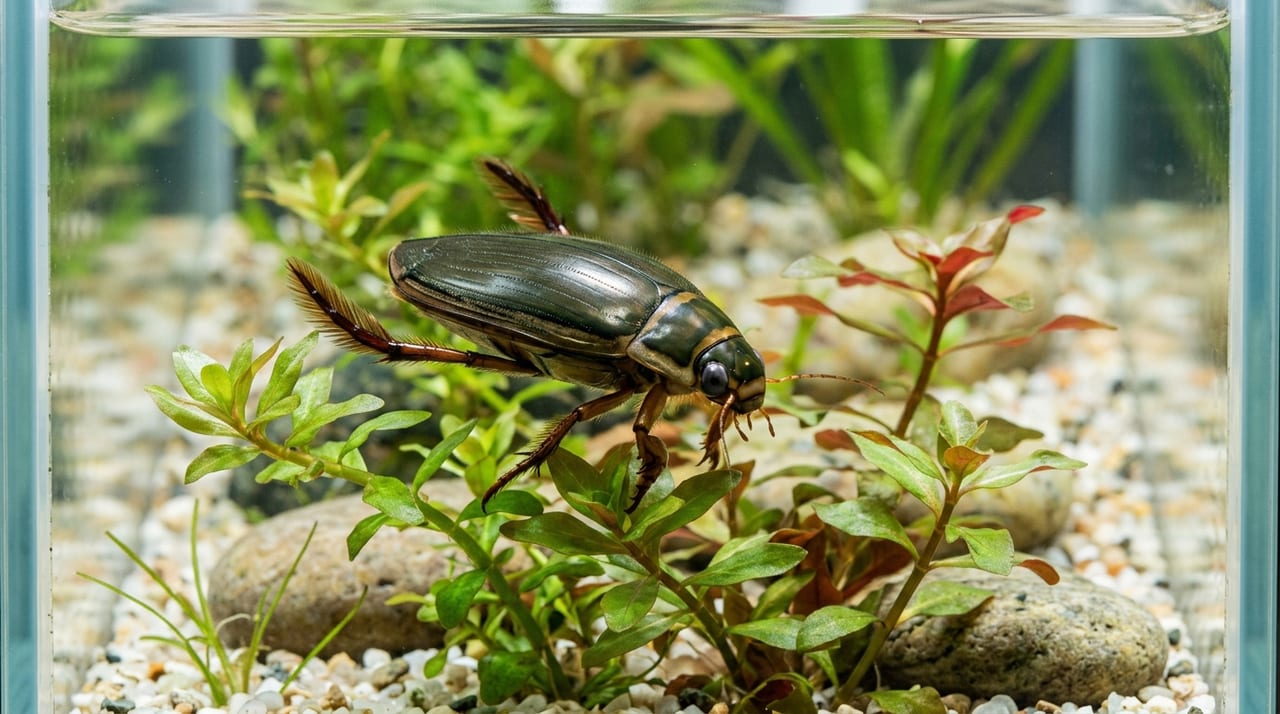
Bioactive Care Guide for Pill Bugs and Sow Bugs | Utilizing Cleanup Crews
Learn about bioactive care for pill bugs and sow bugs. Discover how to use them as cleanup crews in vivariums.
Key Takeaways
Learn about bioactive care for pill bugs and sow bugs. Discover how to use them as cleanup crews in vivariums.
Related Species
Pill bugs and sow bugs (Isopoda) have recently gained significant attention alongside the bioactive vivarium boom. As "living custodians" of terrariums and vivariums—essential cleanup crews—striking morphs like Magic Potion and Duck Yellow remain highly sought after by collectors as of 2026. With low difficulty in care and relatively easy breeding, they are ideal starter species not only for reptile and amphibian keepers but also for those raising "insects" for the first time. This article provides a comprehensive guide, covering their role in bioactive care, popular morphs, and tips for breeding and maintenance.
Role in Bioactive Vivariums
A bioactive vivarium is a care method that recreates a natural ecosystem by housing plants, microorganisms, and small animals together within an enclosure. Pill bugs and sow bugs function as "decomposers," playing a central role in this system. An increasing number of keepers are introducing a bioactive substrate layer to enclosures for arid-dwelling animals like tarantulas; the layout approach covered in Tarantula Enclosure Setup Guide is also useful as a reference.
Breaking Down Waste: They rapidly decompose reptile and frog droppings, suppressing the rise in ammonia concentration. This significantly reduces the frequency of substrate changes needed.
Suppressing Mold: By consuming mold that develops on fallen leaves, cork bark, and wood fragments, they keep the enclosure clean. Mold can be especially problematic in high-humidity environments, but isopods naturally suppress it.
Improving Substrate: They constantly work the substrate (bottom bedding), maintaining aeration and drainage. They also contribute to healthy root growth in plants.
Synergy with Springtails: When combined with springtails, the effect is even more powerful. A division of labor emerges where springtails handle fine organic matter and fungal threads, while pill bugs and sow bugs tackle coarser debris.
Popular Morphs (Color Morphs)
Display morphs are increasingly available in trade. The following are representative varieties.
✍️
BreederDirect Editorial
The BreederDirect editorial team specializes in care information for animals, covering veterinary care and breeding to deliver beginner-friendly guides.
Find Exotic Invertebrates on BreederDirect
Buy directly from verified breeders
Browse Related Listings
Find Exotic Invertebrates listings related to this article on BreederDirect. Buy directly from verified breeders.
Related Articles
Browse by Category
🪸Coral
🐠Marine Fish
🐟Tropical Fish
🐡Goldfish
🐟Medaka
🦎Reptiles
Share
Magic Potion
Characterized by a fantastical coloring that blends purple and orange. Scarce in availability and commanding high prices, they remain in exceptionally high demand among collectors. Because they stand out beautifully as vivarium accents, they are often kept for purely aesthetic purposes.
Duck Yellow
A sow bug displaying vibrant yellow throughout its body. Thanks to its bright coloring, it stands out beautifully against vivarium substrates. These individuals are robust and reproduce quickly, making them especially valuable as cleanup crews. They are also recommended for those attempting morphs for the first time.
Zebra
A variety characterized by striking black and white striping. Popular for its sleek, cool appearance, it works well as a display-only collection. Keepers also appreciate that populations don't explode and remain at manageable numbers.
Dairy Cow
Named for its resemblance to a dairy cow—black coloring with white spots scattered across the body. Its unique appearance has made it popular on social media and is gaining attention as a vivarium-photogenic morph.
Setting Up the Care Environment
Container Selection
Plastic containers, storage bins, and reptile enclosures are all suitable. The key is ensuring adequate ventilation. Drill multiple air holes in the lid or use a mesh top. Airtight sealing leads to condensation and oxygen depletion, causing mortality.
Substrate (Bedding)
The foundation is a mixture of decomposed leaf matter and coco husk at roughly a 7:3 ratio. Aim for a depth of 5–8 cm. Decomposed leaf matter is rich in organic material and microorganisms, also serving as a food source for isopods. Avoid peat moss, as it is too acidic.
Humidity Management
A humidity gradient is essential for pill bugs and sow bugs. Keep one side of the container damp and the other relatively dry, allowing individuals to choose the environment that suits them. If both ends are uniformly wet, the risk of death from overhumidity increases; if completely dry, dehydration becomes a concern.
Providing Hiding Places
Create hiding spots by stacking cork bark, wood pieces, and fallen leaves. Pill bugs and sow bugs avoid light and naturally congregate in tight crevices. Without sufficient hiding places, stress reduces breeding rates.
Feeding
Staple: Decomposed leaves from broadleaf trees (oak, Japanese sumac, cherry, etc.). Oak and Japanese sumac are particularly preferred.
Supplements: Vegetable scraps like carrots, zucchini, and pumpkin.
Calcium Supplementation: Keep dried eggshells (lightly washed and dried) or cuttlebone permanently available. These support molting and are essential for healthy growth.
Overfeeding causes mold and decay. Aim to provide only what they can consume in 2–3 days.
Breeding Tips
Sow bugs reproduce explosively when conditions are right. Females carry eggs in their abdominal "marsupium," protecting them until hatching. A single brood produces dozens of juveniles, reaching maturity in about 3–4 months. With a stable environment, generations cycle on their own. For those pursuing more serious selective breeding, see the Sow Bug and Pill Bug Breeding & Care Guide for content focused specifically on reproduction.
Key points to accelerate breeding include:
Temperature: 20–25°C is optimal. In winter, heat mats help maintain proper temperatures.
Avoiding Overcrowding: Too many individuals cause food competition and slow breeding. Divide them into separate containers as needed.
Protecting Juveniles: Hatchlings are susceptible to drying, so pay special attention to humidity management immediately after they hatch.
BreederDirect's Trust and Safety Measures
BreederDirect is a platform that connects you directly with domestic breeders. You can purchase rare morph sow bugs like Magic Potion and Duck Yellow directly from breeders who actively raise and breed them, ensuring you can verify the individual's health and breeding history before acquisition.
All communications and agreements are recorded in the messaging system, and payment timing is arranged in advance, minimizing the risk of payment disputes or undelivered orders. Even first-time sow bug buyers can confidently proceed with transactions while asking breeders questions directly. Starter sets for bioactive vivariums and multi-morph bundle sales are also listed, so be sure to check them out.