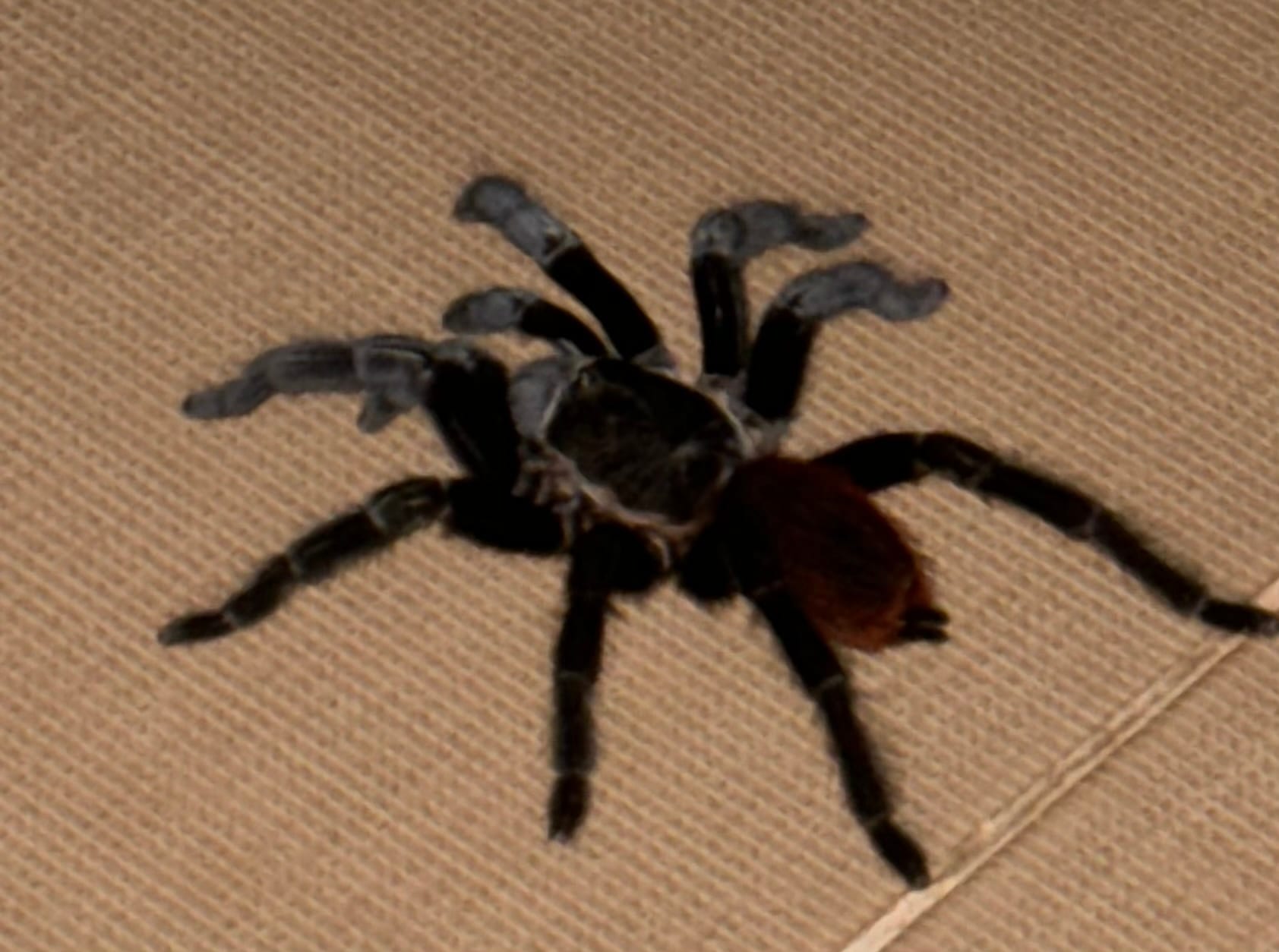
 © Jmoudy / CC BY 4.0
Mexican Red Rump
The Mexican Red Rump is a ground-dwelling tarantula native to Mexico's Yucatan Peninsula and ranging south through Central America. Its jet-black body offset by reddish hairs on the abdomen gives the species its name, and a full leg span can stretch past 16cm. Despite its bold appearance, it tends to be calm and unhurried, with a long track record in captive care and breeding that makes it a popular starter species for first-time tarantula keepers. In the wild it digs shallow burrows for shelter, so enclosures with hides and room to dig suit it well.
View Mexican Red Rump encyclopedia →0% commission on your first sales!Register by September 30, 2026 and your first 2 sales are commission-free!
Breeder Wanted!
List on BreederDirect and sell directly to customers nationwide!
5 Transparency Standards You Can Trust
When listing Exotic Invertebrates, Breeders disclose the following. We guarantee transparency on growth stage and breeding unit.
- Real Photos
- Breeding Unit
- Generation Info
- Body Length (mm)
- Country of Origin
Browse all 249 breeds
Verified breeders wanted for Exotic Invertebrates
Breeders are signing up now ahead of launch. Subscribe to be notified when new listings go live.
Getting alerts is free with a member account. When new listings match your saved search, we'll notify you by email and in-app.
Browse other categories
Verified breeders (preview)
Are you raising exotic invertebrates?
Register as a breeder and connect with buyers directly.
Apply as a breederMexican Red Rump key facts
- Care level
- Beginner-friendly
- Lifespan
- Females can potentially reach 25-40 years
- Size
- Body up to about 5cm and legs up to about 5.5cm, with a legspan of some 16.5cm
- Diet
- Mainly insects, sometimes small lizards and rodents
- Temperature & Humidity
- It occurs in shrubland from Mexico into Central America. Avoid keeping it in hot, humid conditions.
- Enclosure
- A terrestrial species that digs its own burrow. A wide enclosure with deep substrate and a hide suits it.
- Diet & Feeding
- It eats anything it can overpower, mostly insects. Feed live insects in captivity.
- Temperament & Venom
- Typically docile but skittish, and quick to release urticating hairs from the abdomen, which strongly irritate skin and eyes.
- Notes
- Listed on CITES Appendix II under its former name Brachypelma vagans, so permits are required for import and export. Habitat destruction and collection make it vulnerable to extinction.
About Mexican Red Rump
Mexican Red Rump: a calm, ground-dwelling tarantula from Mexico's Yucatan Peninsula, known for its black body and red-haired abdomen. A hardy, beginner-friendly species.
7 things to know before welcoming a Mexican Red Rump
1Digs a Burrow
As a ground-dwelling species, it digs a shallow burrow in the wild. Giving it a deep substrate layer and a hide in captivity helps it settle in and feel secure.
2Calm, But Has Urticating Hairs
Its movements tend to be slow and deliberate, and most individuals have a fairly placid temperament that suits newer keepers. Like other tarantulas, though, it can kick barbed hairs off its abdomen with its hind legs when startled, so avoid contact with your eyes or skin.
3Females Live for Decades
Females can live 25 to 40 years, so this is a long-term companion rather than a short-lived pet. It's worth thinking ahead about where the enclosure will live and who will care for it over that span.
4Adult Size at a Glance
Adults reach a body length of up to about 5cm and legs up to about 5.5cm, giving a leg span that can exceed 16cm. If you start with a juvenile, plan to upgrade the enclosure size as it grows.
5Feeds Mainly on Crickets
Crickets and similar insects make up the typical diet, and adults generally need feeding less often than younger spiders. Remove any uneaten prey from the enclosure rather than leaving it in.
6Stay Calm Around Molting
Before a molt it may stop eating or become less active, which are normal signs to watch for. During and right after a molt its body is extremely fragile, so keep disturbance to a minimum.
7Prep the Enclosure First
Set up the enclosure with substrate and a hide before bringing your spider home so the environment is already settled. Since it's ground-dwelling, prioritize floor space over height in the layout.
Frequently asked questions about Mexican Red Rump
- Q.Is this species suitable for beginners?
- A.Yes — it's known for being calm and hardy, and it's widely kept as a starter species for first-time tarantula owners. As long as you keep up a basic enclosure setup and feeding routine, it's a manageable species to care for.
- Q.How big does it get?
- A.Adults reach a body length of up to about 5cm and legs up to about 5.5cm, with a leg span that can exceed 16cm. If you start with a juvenile, you'll need to size up the enclosure as it grows.
- Q.How long does it live?
- A.Females tend to outlive males by a wide margin and can reach 25 to 40 years of age. It's best to take this on knowing you're committing to decades of care.
- Q.Is it aggressive or likely to bite?
- A.It's generally considered calm and slow-moving, though like any tarantula it may kick urticating hairs off its abdomen when startled. It's best handled with a hands-off approach rather than frequent direct contact.
- Q.Is this species regulated under CITES?
- A.Mexican Red Rump is listed in CITES Appendix II. International trade requires a permit from the exporting country, but as far as CITES is concerned, no registration is needed to buy or sell individuals already legally in Japan.
Learn more about Mexican Red Rump in the encyclopedia
View Mexican Red Rump encyclopedia entry →
Care difficulty, lifespan, size and diet — all basics covered.
More in this category
Can't find the one you're looking for?
Post your wishes for free and breeders with matching animals will contact you with introductions.