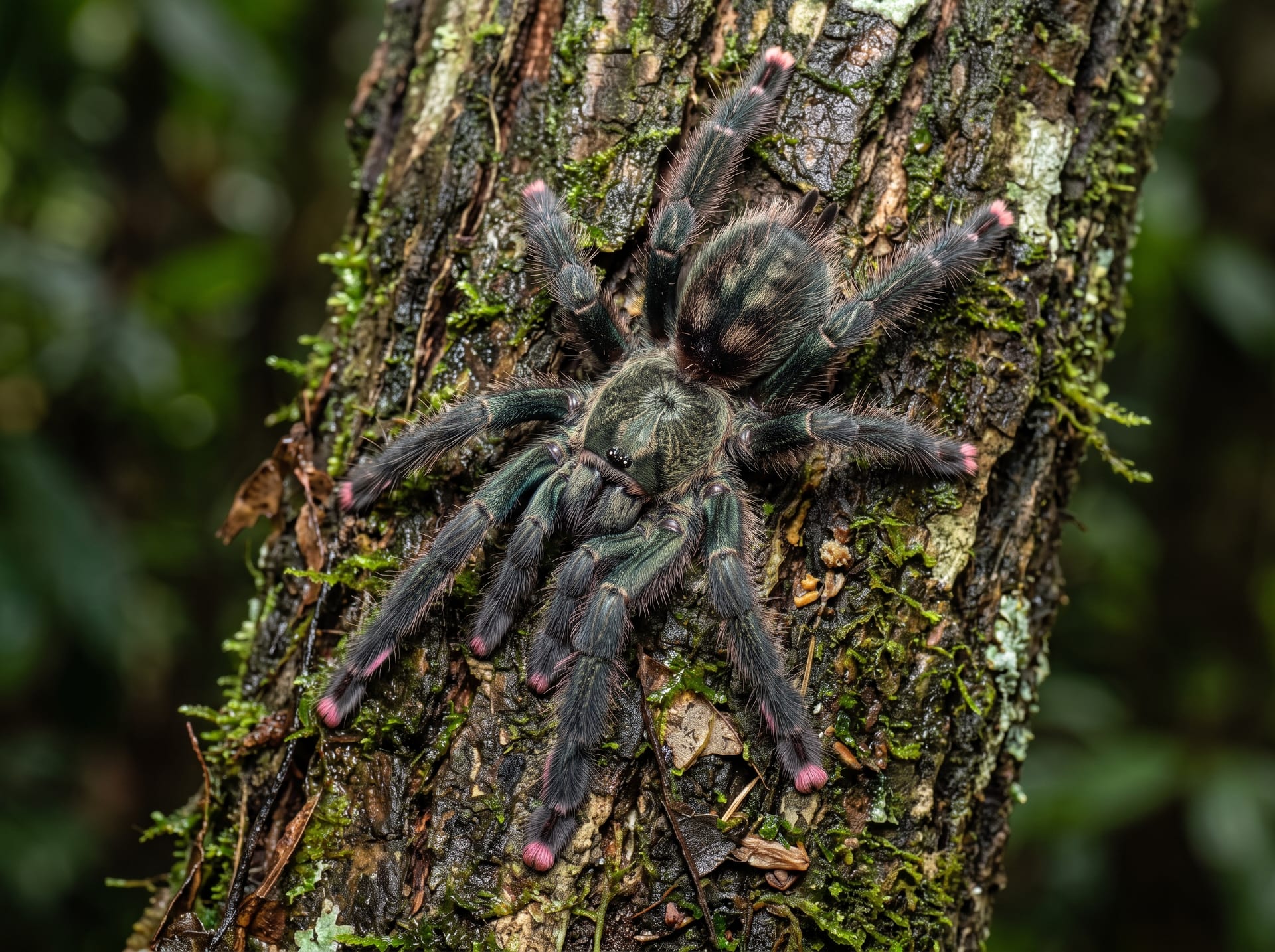
Common Pinktoe
The Common Pinktoe is a South American arboreal tarantula known for its dark body and distinctive pink-tipped legs. It has a relatively calm temperament and moves in a measured, deliberate way, making it one of the more approachable arboreal species — a favorite starting point for keepers moving from terrestrial tarantulas into arboreal ones for the first time. Because it lives and climbs above ground, it needs a tall enclosure with branches or cork bark for footing, along with careful attention to ventilation and humidity balance. Adults stay fairly compact, reaching about 12–14 cm in leg span, so they don't demand a huge footprint. One detail worth knowing before bringing one home: males and females have notably different lifespans.
View Common Pinktoe encyclopedia →0% commission on your first sales!Register by September 30, 2026 and your first 2 sales are commission-free!
Breeder Wanted!
List on BreederDirect and sell directly to customers nationwide!
5 Transparency Standards You Can Trust
When listing Exotic Invertebrates, Breeders disclose the following. We guarantee transparency on growth stage and breeding unit.
- Real Photos
- Breeding Unit
- Generation Info
- Body Length (mm)
- Country of Origin
Browse all 286 breeds
Verified breeders wanted for Exotic Invertebrates
Breeders are signing up now ahead of launch. Subscribe to be notified when new listings go live.
Getting alerts is free with a member account. When new listings match your saved search, we'll notify you by email and in-app.
Browse other categories
Verified breeders (preview)
Are you raising exotic invertebrates?
Register as a breeder and connect with buyers directly.
Apply as a breederCommon Pinktoe key facts
- Care level
- Intermediate
- Lifespan
- Female 10-12 years / Male 3-4 years
- Size
- Leg span 12-14 cm
- Temperature
- 24〜28℃
- Humidity
- 70〜80%
- Diet
- Live insects such as crickets, flies and roaches, offered roughly weekly.
- Habitat
- Tall enclosure with vertical branches and cork for web anchorage.
- Temp & Humidity
- 24-28°C, 70-80% humidity; balance moisture with ample ventilation.
- Feeding
- Takes flying prey; feed about weekly.
- Caution
- May leap or flick feces when startled; weak urticating hairs and mild venom.
About Common Pinktoe
A care guide to the Common Pinktoe, a South American arboreal tarantula — temperament, care difficulty, lifespan, and what to know before bringing one home.
7 things to know before welcoming a Common Pinktoe
1Needs a Tall Enclosure
As an arboreal species, it needs vertical space more than floor space. Add branches or cork bark to climb on — this doubles as a hiding spot and lets it behave naturally.
2Balancing Ventilation and Humidity
Arboreal species need good airflow while still maintaining humidity, so keepers must avoid both stagnant, damp air and excessive dryness. Adjust misting and ventilation daily to find the right balance.
3Best Suited to Intermediate Keepers
It's often chosen as a first arboreal species, but environmental management benefits from prior experience, which is why it's considered intermediate-level. It's best to have some foundational tarantula-keeping experience before bringing one home.
4A Relatively Calm Temperament
Compared to many tarantulas, it tends to be calm and shows aggressive display behavior less often. That said, it remains a wild animal, so it's important to handle its enclosure without startling or provoking it.
5Lifespan Differs Greatly by Sex
Females typically live 10–12 years, while males live only about 3–4 years — a substantial difference. If you're hoping for a long-term companion, it's worth factoring in sex when choosing your individual.
6Compact Adult Size
Even as adults, they stay fairly compact at about 12–14 cm in leg span. Compared to larger species, this makes them easier to accommodate in an indoor setup without needing a large footprint.
7Prepare the Habitat Before Arrival
Set up the tall enclosure, climbing branches, ventilation, and a thermo-hygrometer before your tarantula arrives. Having the environment ready in advance reduces stress after transport.
Frequently asked questions about Common Pinktoe
- Q.Can beginners keep a Common Pinktoe?
- A.It's classified as intermediate-level. While it's relatively approachable as arboreal species go, ventilation and humidity management require care, so it's best to have a basic understanding of tarantula keeping before getting one.
- Q.Should I choose a male or a female?
- A.Lifespans differ significantly — females live about 10–12 years, males about 3–4 years. If you want a long-term companion, a female may suit you better, but the key is choosing with this difference in mind.
- Q.How tall does the enclosure need to be?
- A.Since it's arboreal, an enclosure with more vertical height than floor space is preferable. Add branches or cork bark for climbing and make sure there's adequate vertical room.
- Q.Is its temperament aggressive?
- A.It's considered relatively calm among tarantulas and shows aggressive posturing less often. That said, it's still a wild animal, so it should be handled carefully without provoking it.
- Q.Is it subject to any regulations?
- A.The Common Pinktoe is not subject to CITES.
Learn more about Common Pinktoe in the encyclopedia
View Common Pinktoe encyclopedia entry →
Care difficulty, lifespan, size and diet — all basics covered.
More in this category
Can't find the one you're looking for?
Post your wishes for free and breeders with matching animals will contact you with introductions.