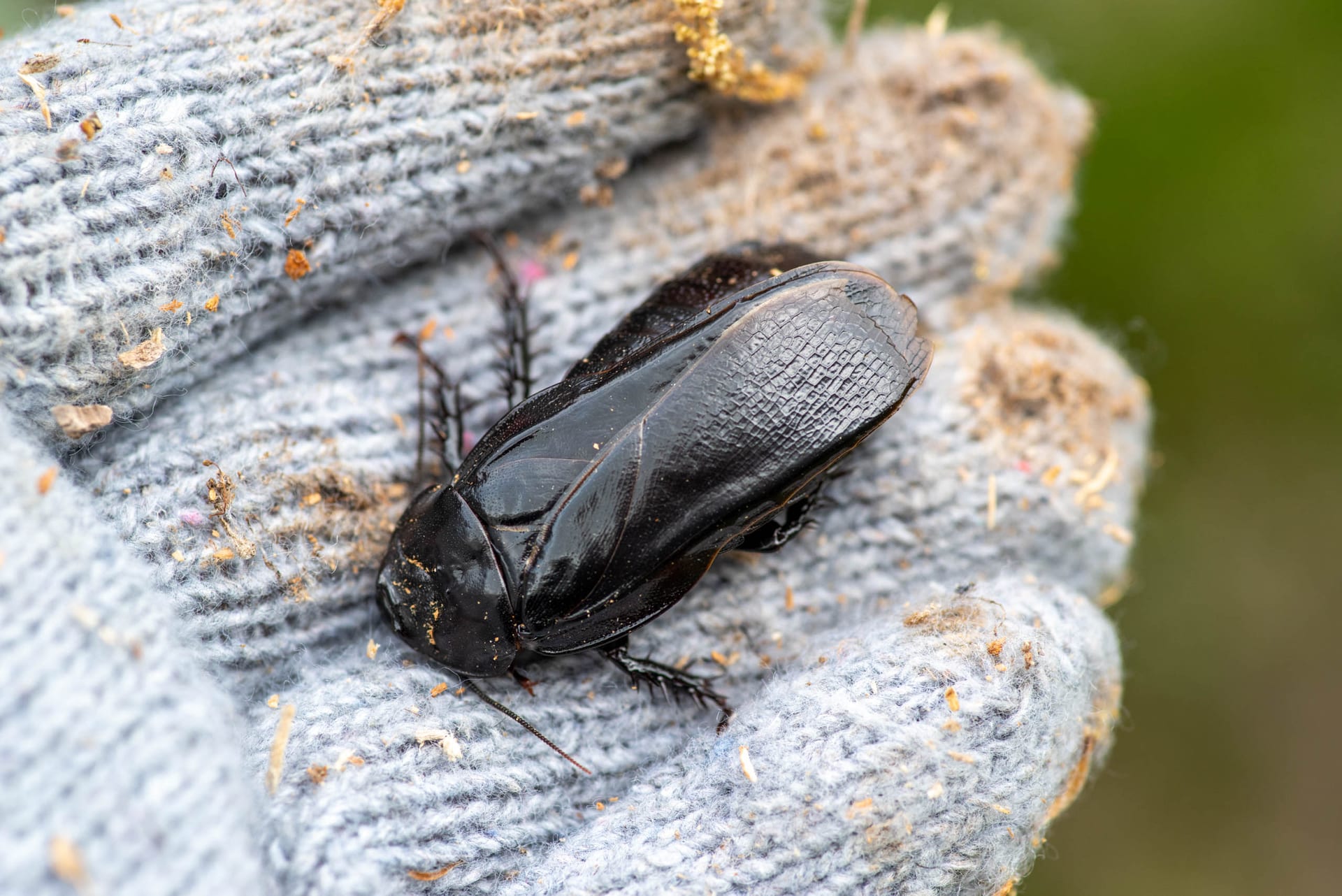
 © Hige-hige-Japan / CC BY-SA 4.0
Japanese giant wood cockroach
The Japanese giant wood cockroach is a forest-dwelling species with a jet-black body of about 40 to 45 mm. In the wild, many individuals live together inside rotting logs in evergreen broadleaf forests and feed on the wood itself, so its lifestyle is quite different from that of household cockroaches. It is a species best enjoyed by watching how the group lives in and around its wood. Be prepared for a long commitment: the nymph stage lasts 4 to 5 years or more, breeding is slow, and adults live roughly two and a half to three years. It is rated as suitable for intermediate keepers.
View Japanese giant wood cockroach encyclopedia →Breeder Wanted!
List on BreederDirect and sell directly to customers nationwide!
BreederDirect's 5 Transparency Commitments
When listing Exotic Invertebrates, Breeders disclose the following. We guarantee transparency on growth stage and breeding unit.
- Real Photos
- Breeding Unit
- Generation Info
- Body Length (mm)
- Country of Origin
Browse all 286 breeds
Verified breeders wanted for Exotic Invertebrates
Breeders are signing up now ahead of launch. Subscribe to be notified when new listings go live.
Getting alerts is free with a member account. When new listings match your saved search, we'll notify you by email and in-app.
Browse other categories
Verified breeders (preview)
Are you raising exotic invertebrates?
Register as a breeder and connect with buyers directly.
Apply as a breederJapanese giant wood cockroach key facts
- Care level
- Intermediate
- Lifespan
- Nymphal period 4-5 years or more; adults 2.5-3 years
- Size
- Body length 40-45 mm
- Diet
- Rotting wood (well-decayed hardwood)
- Enclosure
- It lives in groups inside rotting logs, so provide well-decayed hardwood logs and a deep layer of crumbled rotten-wood substrate. It can be kept in groups.
- Temperature & Humidity
- The suitable temperature for keeping is unclear. It is a Japanese forest species, so avoid heat and drying and keep the substrate and wood moist.
- Diet & Feeding
- Its staple food is rotting wood, digested with the help of gut symbionts. Add fresh rotten wood before the old supply is used up.
- Temperament & Venom
- Harmless and slow-moving, and it rarely bites. It has hind wings but is thought to fly only rarely.
- Notes
- Nymphs develop slowly and broods are small, so numbers do not rise quickly. Several prefectures list it as threatened or near threatened, so never release captive or non-local animals, and use a close-fitting lid.
About Japanese giant wood cockroach
Japanese giant wood cockroach: a jet-black forest cockroach of 40 to 45 mm that feeds on rotting wood. Nymphs take 4 to 5 years or more to mature. Care tips, lifespan and FAQ for intermediate keepers.
7 things to know before welcoming a Japanese giant wood cockroach
1Plan for a long commitment
Nymphs take 4 to 5 years or more to mature, and adults live about two and a half to three years. Breeding is also slow. Make sure you can keep up with care over a span of years before bringing one home.
2Provide rotting wood
In the wild it lives inside rotting logs and eats the wood. Provide rotting wood and a wood-rich substrate so the insects can burrow and gnaw. The wood gets used up over time, so check it regularly and top it up.
3A group-living species
This species lives in large groups in the wild, and adults reach about 40 to 45 mm. Choose an enclosure with plenty of room, and if it starts to feel crowded, review the amount of wood and the number of insects together.
4Avoid extreme dryness and dampness
As a forest species that lives in rotting wood, it is likely to dislike extreme dryness. Keeping everything constantly soggy can lead to mold and dirty conditions, though, so create both damp and drier areas inside the enclosure. Adjust the moisture little by little, for example with a mist sprayer.
5Use a secure lid
Choose a lid that closes firmly and allows ventilation without leaving gaps for escape. It is not a house-dwelling species, but an escaped insect is hard to find again. If one does get out, recover it indoors rather than releasing it outside.
6Settling in after arrival
After arrival, let them settle into the rotting wood and avoid digging around too often. If they seem unusually sluggish or have trouble molting, review the humidity and the condition of the wood.
7Why it suits intermediate keepers
Setting up rotting wood, managing humidity and caring for them over several years make this an intermediate-level species. Experience keeping other insects helps you get a feel for the routine.
Frequently asked questions about Japanese giant wood cockroach
- Q.Can a beginner keep Japanese giant wood cockroaches?
- A.It is rated for intermediate keepers. You need to set up rotting wood, manage humidity and provide care over several years, so beginners may want to learn the basics with other insects first.
- Q.How long do they live?
- A.The nymph stage lasts 4 to 5 years or more, and adults live about two and a half to three years. Because growth is slow, you need to be ready to care for them over the long term.
- Q.Are they the same as household cockroaches?
- A.No. This is a forest species that lives inside rotting wood, and its lifestyle differs from that of household cockroaches. Even so, keep it in an enclosure with a secure lid so it cannot escape.
- Q.What do they eat?
- A.In the wild they grow up eating rotting wood. In captivity the wood serves as both food and shelter, so keep it available and top it up as it gets used.
- Q.Is breeding easy?
- A.Breeding is slow. With a nymph stage of 4 to 5 years or more, it is hard to increase numbers quickly, so this species suits keepers who prefer to raise a small group patiently.
Learn more about Japanese giant wood cockroach in the encyclopedia
View Japanese giant wood cockroach encyclopedia entry →
Care difficulty, lifespan, size and diet — all basics covered.
More in this category
Can't find the one you're looking for?
Post your wishes for free and breeders with matching animals will contact you with introductions.