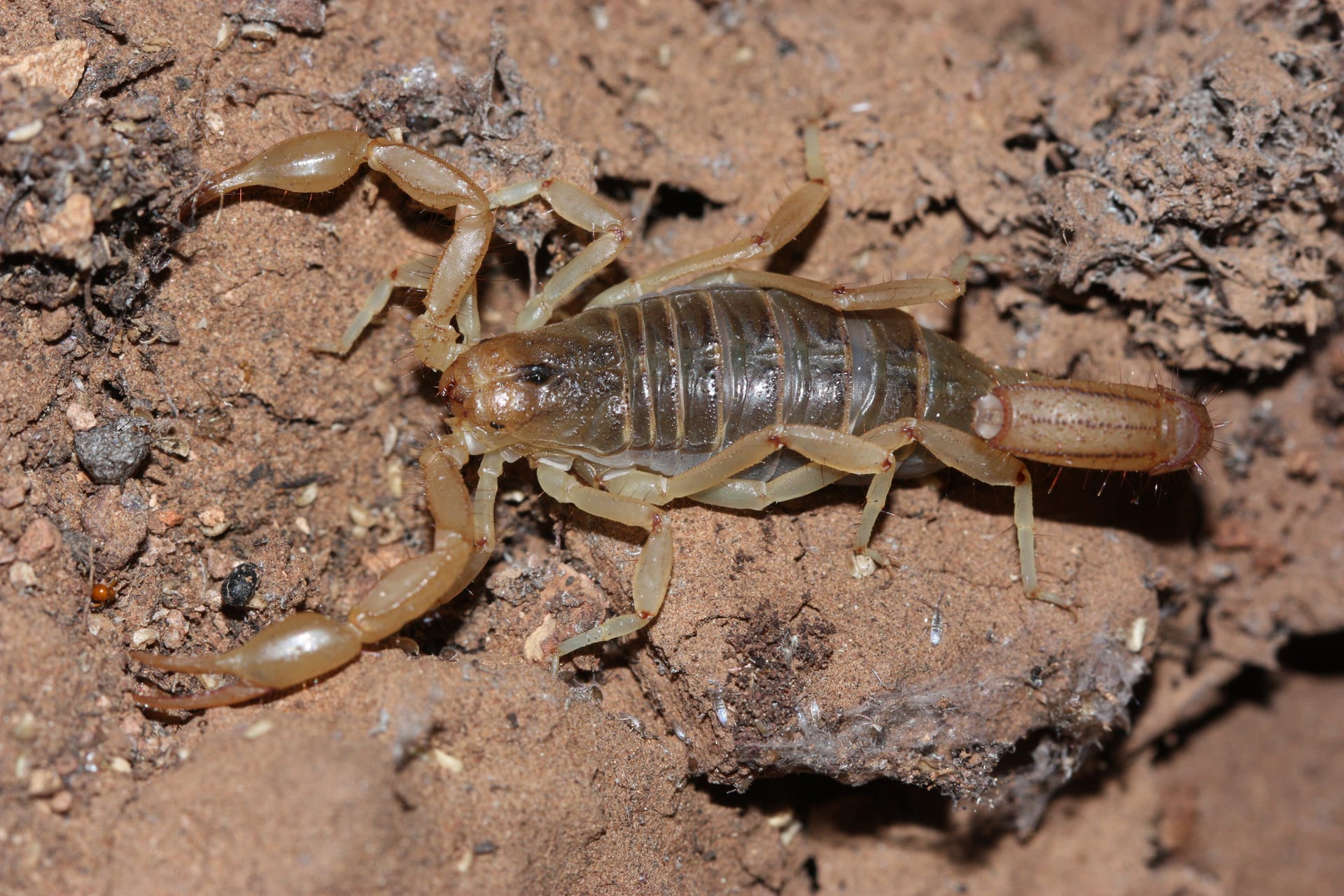
 © Andrew Meeds / CC BY 4.0
Stripe-tailed scorpion
The devil stripe scorpion, also called the stripe-tailed scorpion, comes from the Sonoran Desert of southwestern North America. Its defining mark is a brown stripe running along the raised ridges (keels) on top of the tail. Adults reach close to 60–70 mm in total length and weigh about 9.5 g. Its venom is considered not medically significant to humans, and the species is rated beginner-friendly. A tail thicker than its pincers sets it apart from the similar bark scorpion. Like most scorpions it is nocturnal, so it tends to stay hidden by day. It is a good fit for anyone looking for a first scorpion.
View Stripe-tailed scorpion encyclopedia →0% commission on your first sales!Register by September 30, 2026 and your first 2 sales are commission-free!
Breeder Wanted!
List on BreederDirect and sell directly to customers nationwide!
BreederDirect's 5 Transparency Commitments
When listing Exotic Invertebrates, Breeders disclose the following. We guarantee transparency on growth stage and breeding unit.
- Real Photos
- Breeding Unit
- Generation Info
- Body Length (mm)
- Country of Origin
Browse all 286 breeds
Verified breeders wanted for Exotic Invertebrates
Breeders are signing up now ahead of launch. Subscribe to be notified when new listings go live.
Getting alerts is free with a member account. When new listings match your saved search, we'll notify you by email and in-app.
Browse other categories
Verified breeders (preview)
Are you raising exotic invertebrates?
Register as a breeder and connect with buyers directly.
Apply as a breederStripe-tailed scorpion key facts
- Care level
- Beginner-friendly
- Lifespan
- Little data
- Size
- Total length nearly 60-70 mm; weight about 9.5 g
- Diet
- Carnivorous (small invertebrates such as crickets, mealworms and roaches)
- Enclosure
- It shelters under rocks and surface objects, so use a sandy substrate with flat stones or bark as hides. Keep singly.
- Temperature & Humidity
- Little data on keeping temperatures exist. It is a desert species but seeks out the most humid spots, so keep the enclosure mostly dry with slightly moist substrate under the hides.
- Diet & Feeding
- Small prey such as crickets, mealworms and roaches sized to the scorpion. It also eats other scorpions, so do not house them together.
- Temperament & Venom
- It is venomous, but the venom is not considered medically significant to people or other mammals. A sting still hurts, so do not handle it bare-handed; use tongs.
- Notes
- Scorpions escape through small gaps and loose lids, so use a container with a lockable lid. Always check the scientific name so it is not confused with the similar-looking Arizona bark scorpion, a buthid and a designated invasive species in Japan. Never release captive animals.
About Stripe-tailed scorpion
Meet the devil stripe scorpion, a beginner-friendly scorpion from the Sonoran Desert. Learn about its brown-striped tail, its 60–70 mm size, care basics, and common questions before you bring one home.
7 things to know before welcoming a Stripe-tailed scorpion
1Tail stripe and build
A brown stripe follows the ridges along the top of the tail, which is the look this species is known for. The tail is thicker than the pincers, which is the key feature that separates it from the similar bark scorpion. Check both traits against photos so you know exactly which species you are getting.
2Compact adult size
Adults reach close to 60–70 mm in total length and weigh about 9.5 g. Because the body is compact, you can start with an enclosure that is not oversized. Choose one with a secure lid and few gaps so the scorpion cannot escape.
3A dry desert setup
This scorpion comes from the Sonoran Desert, so build the enclosure around dry conditions. Lay down sand or soil and add stones or bark it can hide under, which helps it settle in. Provide a water dish for drinking, but avoid keeping the whole substrate damp.
4Nocturnal habits
It tends to hide during the day and become active at night. Not seeing it in daylight is not necessarily a sign of trouble. Evening, with the lights lowered, is the best time to watch it, and a shelter that fits its body snugly helps it feel secure.
5Venom and handling
Its venom is considered not medically significant to humans, but reactions to a sting vary from person to person. Avoid touching it with bare hands, and use tweezers or long tools for feeding and cleaning. If you are stung and feel unwell, consult a medical professional.
6Feeding and molting
Live insects such as crickets are the staple, and the prey should not be too large for the scorpion. Remove uneaten food, since it can foul the enclosure. Appetite and activity often drop around a molt, so leave the scorpion undisturbed until it has finished.
7Before you bring one home
Have the enclosure, substrate, shelter, and water dish ready beforehand. Little is documented about its lifespan, so get ready to care for it for as long as it lives. If anything about the individual or how it was raised is unclear, ask the breeder.
Frequently asked questions about Stripe-tailed scorpion
- Q.Can a beginner keep one?
- A.Its care difficulty is rated as beginner-friendly. Since it is a venomous animal, basic precautions still matter, such as never handling it bare-handed and keeping the enclosure escape-proof.
- Q.Is its venom dangerous?
- A.It is considered not medically significant to humans, but reactions to a sting differ between individuals. Do not handle it with bare hands, and if you are stung and worried about how you feel, consult a medical professional.
- Q.How do I tell it from a bark scorpion?
- A.The tail being thicker than the pincers is the main way to tell them apart. The brown stripe along the ridges on top of the tail is also characteristic, so check both together.
- Q.What kind of setup does it need?
- A.Because it comes from the Sonoran Desert, the basics are a dry substrate, a hiding place, and a water dish. Use an enclosure with a secure lid and few gaps to prevent escapes.
- Q.How long does it live?
- A.Little documentation exists on its lifespan, so no reliable estimate can be given. It is worth asking the breeder about the individual's age and how it was raised before you bring it home.
Learn more about Stripe-tailed scorpion in the encyclopedia
View Stripe-tailed scorpion encyclopedia entry →
Care difficulty, lifespan, size and diet — all basics covered.
More in this category
Can't find the one you're looking for?
Post your wishes for free and breeders with matching animals will contact you with introductions.