 © Richard Fuller / CC0
Surinam cockroach
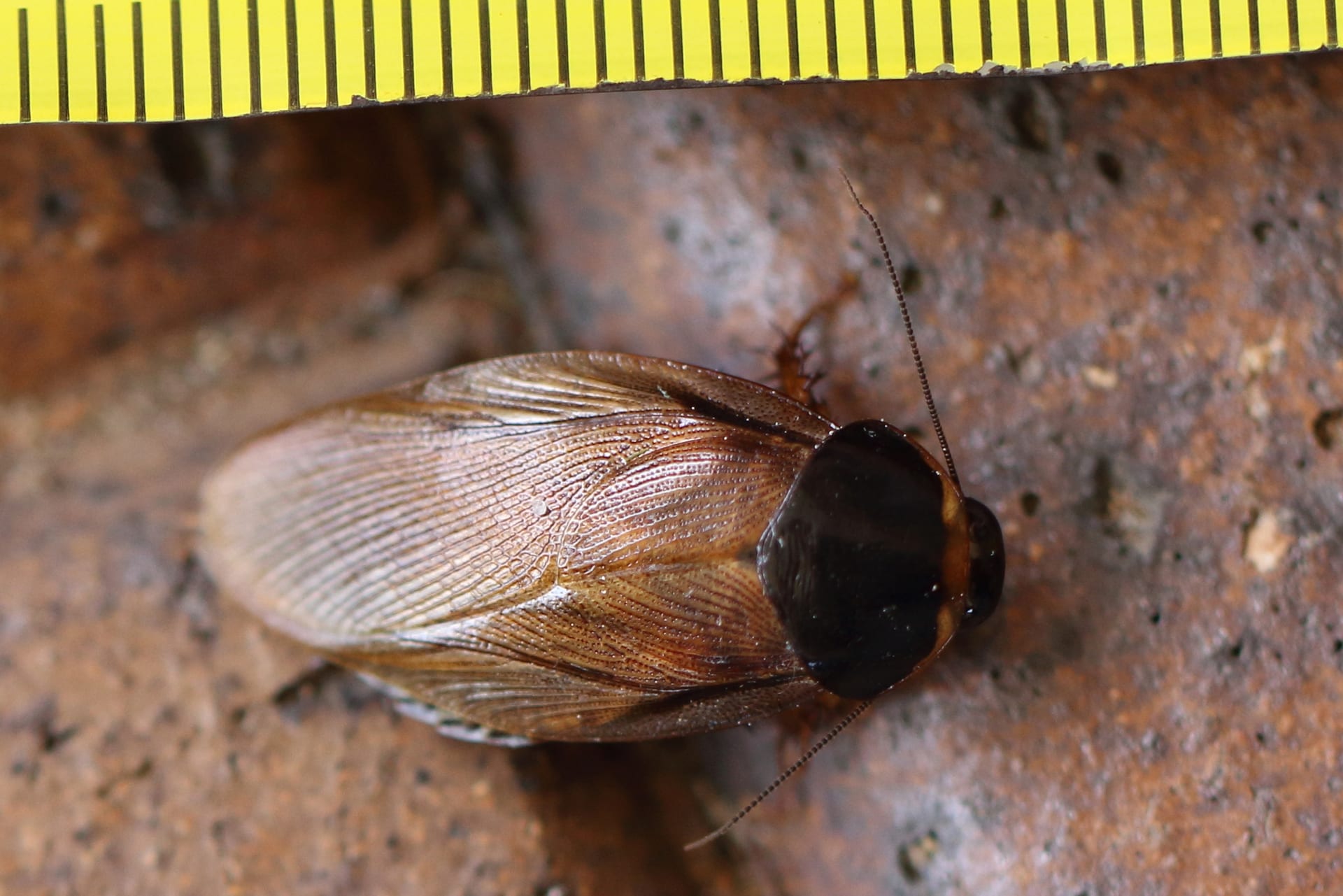
The Surinam cockroach is a small, dark brown cockroach with a yellowish-white edge along the front of its pronotum. Colonies are almost entirely female and reproduce by parthenogenesis, and the insects spend much of their time burrowing in damp soil. Japanese sources give a body length of 13–18 mm, while overseas sources list adults at 18–25 mm. It is rated as beginner-friendly, but it is also an introduced species that can become a pest of plants in greenhouses, so it must be kept securely and never released outdoors. Reliable information on its lifespan is limited.
View Surinam cockroach encyclopedia →0% commission on your first sales!Register by September 30, 2026 and your first 2 sales are commission-free!
Breeder Wanted!
List on BreederDirect and sell directly to customers nationwide!
5 Transparency Standards You Can Trust
When listing Exotic Invertebrates, Breeders disclose the following. We guarantee transparency on growth stage and breeding unit.
- Real Photos
- Breeding Unit
- Generation Info
- Body Length (mm)
- Country of Origin
Browse all 286 breeds
Verified breeders wanted for Exotic Invertebrates
Breeders are signing up now ahead of launch. Subscribe to be notified when new listings go live.
Getting alerts is free with a member account. When new listings match your saved search, we'll notify you by email and in-app.
Browse other categories
Verified breeders (preview)
Are you raising exotic invertebrates?
Register as a breeder and connect with buyers directly.
Apply as a breederSurinam cockroach key facts
- Care level
- Beginner-friendly
- Lifespan
- Little data
- Size
- Body length 13-18 mm (Japanese sources); adults 18-25 mm (overseas sources)
- Diet
- Omnivorous (humus, plant matter, prepared insect food)
- Enclosure
- It lives burrowed in soil, so provide a deep layer of moist substrate such as leaf mould. It can be kept in a colony.
- Temperature & Humidity
- Little temperature data exist. It is a tropical to subtropical species, so avoid winter cold. It loses water easily and copes poorly with dry substrate.
- Diet & Feeding
- Besides humus-rich substrate, offer vegetables and prepared insect food. In greenhouses it is known to gnaw soft plant tissue.
- Temperament & Venom
- Harmless and unlikely to bite. Females reproduce on their own and give birth to live nymphs.
- Notes
- A single insect can start a colony and it is a plant pest, so use an escape-proof container and never dump animals or used substrate outdoors. It is treated as an introduced species in Japan and must never be released.
About Surinam cockroach
The Surinam cockroach (オガサワラゴキブリ) is a small dark brown cockroach that breeds by parthenogenesis in nearly all-female colonies and burrows in damp soil. Beginner-friendly. Size, housing, tips before you bring one home, and FAQ.
7 things to know before welcoming a Surinam cockroach
1Adult size
Adult size is given as 13–18 mm in Japanese sources and 18–25 mm in overseas sources. Because the figures differ by source, it helps to ask the seller about the actual size of the individuals you are considering.
2Nearly all female
Colonies are almost entirely female and multiply by parthenogenesis, so there is no need to think about pairing males and females. A few individuals can grow into a larger group over time, so plan ahead for how many you can comfortably keep.
3Burrowing habit
This species lives by burrowing into damp soil, so provide a layer deep enough for them to dig into. Keep the soil moist without letting it dry out completely, but avoid soaking it to the point where water pools.
4Prevent escapes
Because it is an introduced species that can become a pest of plants in greenhouses, escapes and outdoor releases must be avoided. Keep the lid tightly closed and cover ventilation openings with fine mesh.
5Food and leftovers
Offer small amounts of vegetables, fruit or insect food, and remove leftovers promptly. Damp conditions encourage mold and fungus gnats, so check the enclosure often.
6Humidity and airflow
This species loses water through its body easily and is especially vulnerable to dry substrate. Keep some airflow, but do not let the substrate dry out anywhere. There is no need to soak it until water pools.
7Before you bring them home
Prepare a container with a secure lid and good ventilation, enough soil for burrowing, a spray bottle and fine mesh before they arrive. The species is rated beginner-friendly, but it is best to bring one home only after you understand how readily it multiplies and how to prevent escapes.
Frequently asked questions about Surinam cockroach
- Q.Can a beginner keep this species?
- A.Yes, it is rated as beginner-friendly. However, it multiplies readily and is an introduced species that can become a pest of greenhouse plants, so a secure enclosure is essential.
- Q.Do I need a male and female pair?
- A.No. Colonies are almost entirely female and multiply by parthenogenesis, so pairing is not needed. Even a small group can grow over time, so keep an eye on how many you are housing.
- Q.How long does it live?
- A.Reliable information on lifespan is limited, so we cannot give a firm estimate. Keeping your own care records can be a useful reference for future husbandry.
- Q.How large do adults grow?
- A.Japanese sources give a body length of 13–18 mm, and overseas sources list adults at 18–25 mm. Since the figures vary by source, treat them as a rough guide.
- Q.Is it okay to release them outdoors?
- A.Please do not release them outdoors. This introduced species can become a pest of plants in greenhouses, so it is important to keep them out of gardens and other outdoor areas. If you can no longer keep them, take responsibility for them rather than letting them go.
Learn more about Surinam cockroach in the encyclopedia
View Surinam cockroach encyclopedia entry →
Care difficulty, lifespan, size and diet — all basics covered.
More in this category
Can't find the one you're looking for?
Post your wishes for free and breeders with matching animals will contact you with introductions.