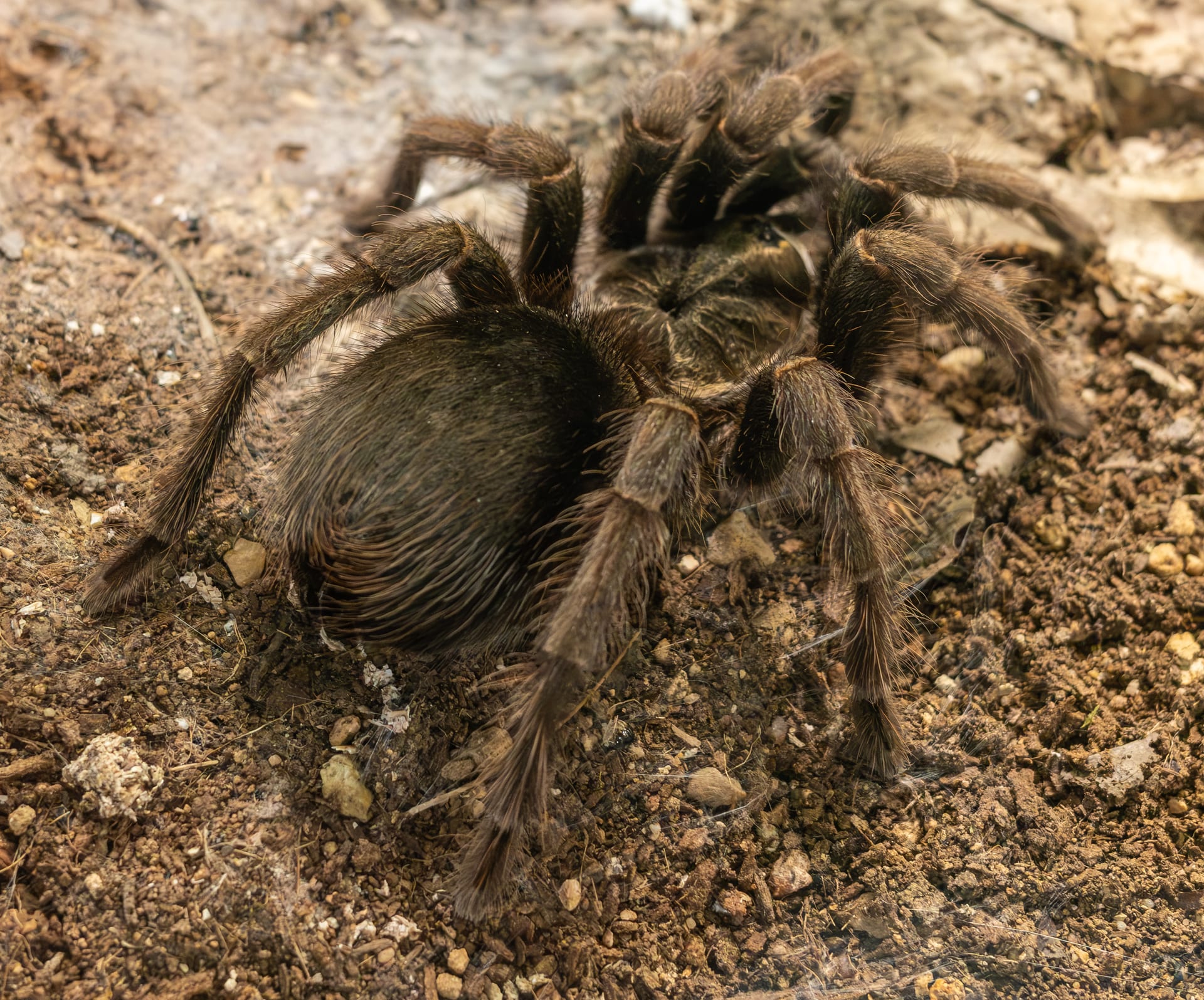
 © Stephan van Helden / CC BY-SA 4.0
Cuban bronze tarantula
The Cuban bronze tarantula is a large tarantula native to Cuba, with a golden carapace and gray hairs that look blue in the right light. Adults reach about 9 cm in body length and about 18 cm in leg span. It is terrestrial and digs burrows, but it often wanders outside them, and it is not shy and feeds eagerly, which makes it rewarding to watch. Females can live up to 15 years, while males live 4 to 5 years. Its care difficulty is rated intermediate, so it suits keepers who already have some experience with large tarantulas.
View Cuban bronze tarantula encyclopedia →0% commission on your first sales!Register by September 30, 2026 and your first 2 sales are commission-free!
Breeder Wanted!
List on BreederDirect and sell directly to customers nationwide!
BreederDirect's 5 Transparency Commitments
When listing Exotic Invertebrates, Breeders disclose the following. We guarantee transparency on growth stage and breeding unit.
- Real Photos
- Breeding Unit
- Generation Info
- Body Length (mm)
- Country of Origin
Browse all 286 breeds
Verified breeders wanted for Exotic Invertebrates
Breeders are signing up now ahead of launch. Subscribe to be notified when new listings go live.
Getting alerts is free with a member account. When new listings match your saved search, we'll notify you by email and in-app.
Browse other categories
Verified breeders (preview)
Are you raising exotic invertebrates?
Register as a breeder and connect with buyers directly.
Apply as a breederCuban bronze tarantula key facts
- Care level
- Intermediate
- Lifespan
- Females up to 15 years / males 4-5 years
- Size
- Body length about 9 cm; diagonal leg span about 18 cm (care information)
- Temperature
- 20〜24℃
- Diet
- Carnivorous (live insects such as crickets and roaches)
- Enclosure
- Terrestrial and a keen burrower. Fill a wide enclosure between half and two-thirds with substrate, and provide a hide and a water dish. Keep singly.
- Temperature & Humidity
- Care information gives 20-24 C. Keep humidity moderate, with moist lower layers and the surface allowed to dry between waterings.
- Diet & Feeding
- Live prey such as crickets and roaches sized to the spider. It is known for a strong feeding response.
- Temperament & Venom
- Bold, fast and sometimes feisty. It has urticating hairs but rarely kicks them. Avoid handling and use long tongs for maintenance.
- Notes
- It is sometimes confused with other Phormictopus species, so confirm the scientific name and origin when buying. Secure the lid against escapes and never release captive animals.
About Cuban bronze tarantula
Large Cuba-native tarantula with a golden carapace and blue-sheened gray hair. About 9 cm long, females live up to 15 years. Suits intermediate keepers.
7 things to know before welcoming a Cuban bronze tarantula
1For Intermediate Keepers
Its care difficulty is rated intermediate. It is large and active and often wanders outside its burrow, so it is easier to manage once you are comfortable with basic tarantula care. If this would be your first tarantula, read up on husbandry before bringing one home.
2Give It Room
Adults reach about 9 cm in body length and about 18 cm in leg span. Choose an enclosure with generous floor space that allows for that full leg spread. Setting up the enclosure, substrate and water dish before arrival lets the tarantula settle in right away.
3Substrate and Hides
This terrestrial species digs burrows, so provide substrate deep enough to tunnel into. A shelter helps it settle, and a wide, low enclosure is easier to manage than a tall one. Keep a clean water dish available at all times.
4Behavior and Temperament
It is not shy and is often seen walking around outside its burrow, which makes it easy to observe. The flip side is that it can slip out when the lid is opened, so take extra care against escapes during maintenance.
5Feeding
This species is a good feeder. However, it may refuse food around a molt, so remove uneaten prey promptly. Leave it undisturbed while it is molting.
6Lifespan by Sex
Females can live up to 15 years, while males live 4 to 5 years, so the two sexes differ considerably. If you want a long-term companion, a female is the better fit, but in either case plan for lifelong care before bringing one home.
7Safe Handling
Tarantulas may defend themselves by flicking irritating hairs or biting, and the hairs can irritate skin or eyes. Avoid handling it with bare hands and use tools such as tweezers for care tasks. If you develop concerning symptoms, consult a medical professional.
Frequently asked questions about Cuban bronze tarantula
- Q.Can beginners keep it?
- A.Its care difficulty is rated intermediate. Because it is large and active, those with little tarantula experience should research its care thoroughly before deciding.
- Q.How large do adults get?
- A.Adults reach about 9 cm in body length and about 18 cm in leg span. As a large species, it needs an enclosure with generous floor space.
- Q.How long does it live?
- A.Females live up to 15 years and males 4 to 5 years. Since the difference is large, plan for the long term based on the sex you bring home.
- Q.Will it hide in its burrow all the time?
- A.It is terrestrial and digs burrows, but it often walks around outside them. It is not shy and is easy to observe, though you should watch for escapes when opening the lid.
- Q.Is it a good eater?
- A.Yes, it is a good feeder. It may refuse food around a molt, so do not force it, and remove uneaten prey promptly.
Learn more about Cuban bronze tarantula in the encyclopedia
View Cuban bronze tarantula encyclopedia entry →
Care difficulty, lifespan, size and diet — all basics covered.
More in this category
Can't find the one you're looking for?
Post your wishes for free and breeders with matching animals will contact you with introductions.