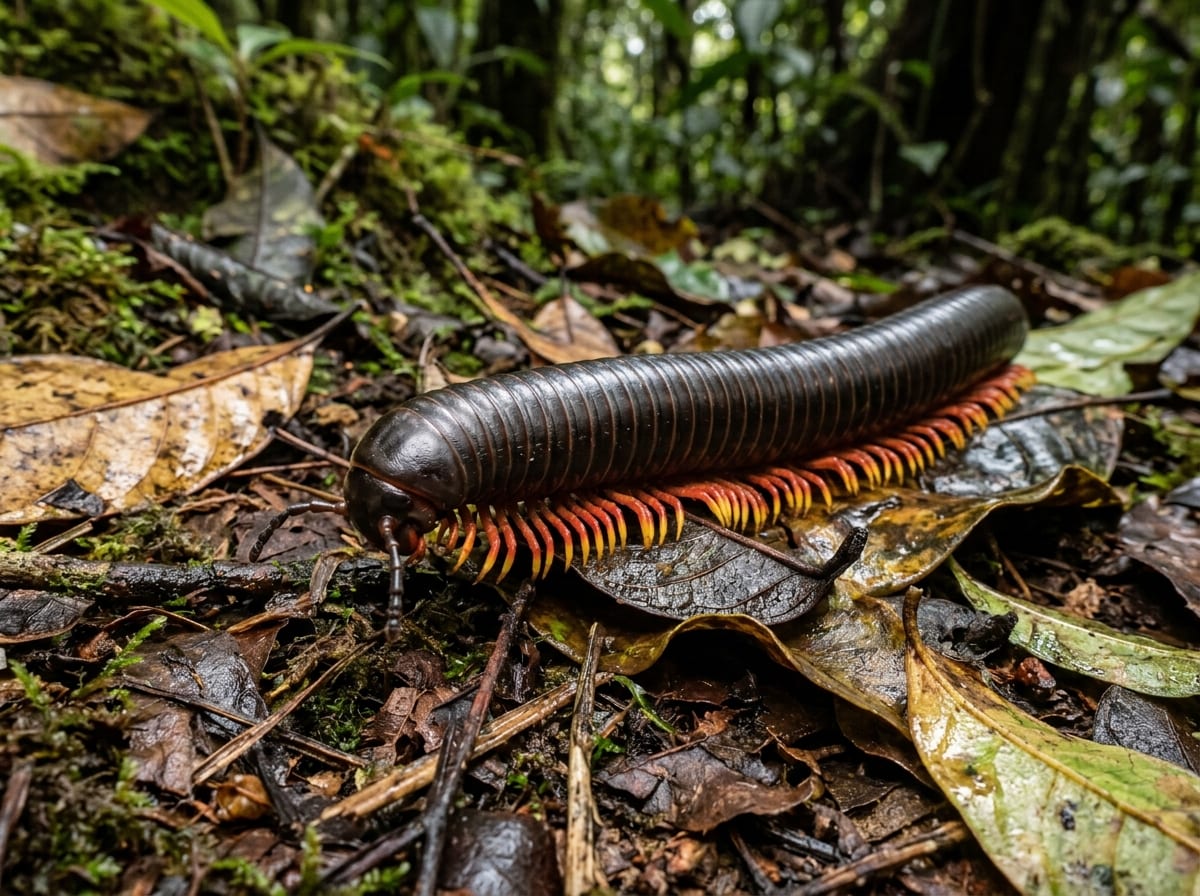
Vietnam giant millipede
The Vietnam giant millipede is a large millipede from the Central Highlands of Vietnam. Described in 2020, it grows to 16–18 cm in length. Its nearly black body contrasts with two-tone legs that are orange-brown at the base and yellow at the tip. It moves slowly, which makes it a rewarding animal to simply watch. Juveniles are said to grow up in wet leaf litter along streams, so humidity management is central to its care. It is suited to intermediate keepers, and little is documented about its lifespan.
View Vietnam giant millipede encyclopedia →Breeder Wanted!
List on BreederDirect and sell directly to customers nationwide!
BreederDirect's 5 Transparency Commitments
When listing Exotic Invertebrates, Breeders disclose the following. We guarantee transparency on growth stage and breeding unit.
- Real Photos
- Breeding Unit
- Generation Info
- Body Length (mm)
- Country of Origin
Browse all 286 breeds
Verified breeders wanted for Exotic Invertebrates
Breeders are signing up now ahead of launch. Subscribe to be notified when new listings go live.
Getting alerts is free with a member account. When new listings match your saved search, we'll notify you by email and in-app.
Browse other categories
Verified breeders (preview)
Are you raising exotic invertebrates?
Register as a breeder and connect with buyers directly.
Apply as a breederVietnam giant millipede key facts
- Care level
- Intermediate
- Size
- Body length 16-17 cm (males), 16-18 cm (females)
- Diet
- Leaf litter (leaf mould), mushrooms
- Enclosure
- Use a container at least twice as wide as the millipede is long, with a deep layer of leaf-mould-based substrate, hardwood leaves and rotten wood. Several can be kept together.
- Temperature & Humidity
- The temperature suited to keeping them is unclear. Juveniles live in soaking wet leaf litter along streams, so keep part of the substrate constantly wet with a drier area as well.
- Diet & Feeding
- The staple is leaf litter and leaf mould, and adults have been seen eating mushrooms. Add vegetables or prepared food only in small amounts.
- Temperament & Venom
- It does not bite or sting. Handle it with clean hands and wash your hands well afterwards.
- Notes
- A similar species with bicoloured legs lives in Borneo, and animals sold under different leg-colour names may include other species. Secure the lid against escapes and never release captive animals.
About Vietnam giant millipede
A guide to the Vietnam giant millipede, a large species from Vietnam's Central Highlands. It reaches 16–18 cm and has a near-black body with two-tone orange-brown and yellow legs. Care level is intermediate; key points to know before bringing one home.
7 things to know before welcoming a Vietnam giant millipede
1A large 16–18 cm species
Adults reach 16–17 cm in males and 16–18 cm in females, making this a large millipede. Choose an enclosure with generous floor space so it can stretch out and roam. Large millipedes can push at lids, so secure the lid firmly.
2Intermediate care level
The care level is intermediate. Experience with millipedes or other myriapods makes humidity and substrate management much easier. If this is your first one, research how to set up the enclosure before bringing it home.
3Keep it moist
Because juveniles grow up in wet leaf litter along streams, a consistently moist setup is the foundation of care. Use a deep layer of damp leaf litter or leaf mold and do not let it dry out. Avoid waterlogging, and leave a slightly drier area in the enclosure as well.
4Substrate doubles as food
Millipedes eat leaf litter and decaying plant matter, so hardwood leaves and well-fermented leaf mold serve as both home and food. Top up the substrate as it is consumed, and remove any vegetables offered as a supplement before they spoil. Some keepers also provide a calcium source such as cuttlebone.
5Lifespan is not well known
This species was only described in 2020, and little is documented about its lifespan, so no reliable figure exists. Be cautious of sources that state a definite number of years, and ask the breeder about rearing conditions and feeding when you get one. Keeping notes on its condition and molting will help you care for it going forward.
6Handling and defensive fluids
It moves slowly and is not an aggressive animal. However, millipedes can release defensive fluids when disturbed, so avoid gripping one firmly with bare hands, and wash your hands afterward without touching your eyes or mouth. People with sensitive skin may want to wear gloves.
7Prepare before arrival
Before the animal arrives, set up the enclosure, substrate, a spray bottle and a hygrometer, and dampen the substrate in advance. Once it arrives, place it somewhere dark and quiet and leave it undisturbed for a while so it can settle in.
Frequently asked questions about Vietnam giant millipede
- Q.How big does the Vietnam giant millipede get?
- A.Adult males reach 16–17 cm and females 16–18 cm in body length. Because it is large, prepare an enclosure with plenty of floor space.
- Q.Can a beginner keep one?
- A.The care level is intermediate. Prior experience with millipedes or similar animals helps, and first-timers should research humidity and substrate management beforehand.
- Q.How long does it live?
- A.Little is documented about its lifespan, so no definite figure is known. The species was only described in 2020, so ask the breeder about their experience keeping it.
- Q.What does it eat?
- A.It mainly eats leaf litter, leaf mold and decaying plant matter. Keep topping up the substrate, and if you offer vegetables as a supplement, remove them before they spoil.
- Q.What should I know before getting a juvenile?
- A.Juveniles are said to grow up in wet leaf litter along streams, so keep the litter consistently damp. Check the substrate often so it neither dries out nor becomes waterlogged. Detailed growth data is scarce, so it helps to ask a breeder with rearing experience.
Learn more about Vietnam giant millipede in the encyclopedia
View Vietnam giant millipede encyclopedia entry →
Care difficulty, lifespan, size and diet — all basics covered.
More in this category
Can't find the one you're looking for?
Post your wishes for free and breeders with matching animals will contact you with introductions.