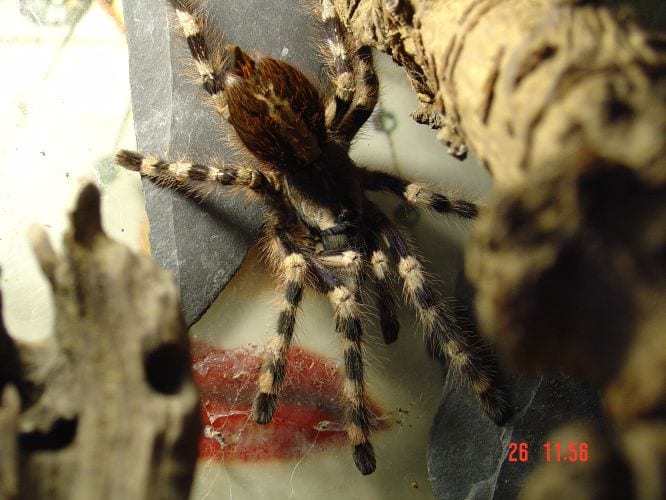
 © J. Polák / CC0
Salem ornamental
The Salem ornamental is an arboreal Poecilotheria found only in the southern part of the Eastern Ghats in southern India. It lives on trees in the wild, so a captive setup needs height and plenty of hiding spots. Members of this genus tend to be fast and wary, and the species is rated for experienced keepers rather than beginners. Habitat loss and collecting have reduced wild numbers, and every Poecilotheria species is listed in CITES Appendix II. Lifespan and adult size are poorly documented, so ask the seller about the individual's origin and condition before you decide.
View Salem ornamental encyclopedia →0% commission on your first sales!Register by September 30, 2026 and your first 2 sales are commission-free!
Breeder Wanted!
List on BreederDirect and sell directly to customers nationwide!
5 Transparency Standards You Can Trust
When listing Exotic Invertebrates, Breeders disclose the following. We guarantee transparency on growth stage and breeding unit.
- Real Photos
- Breeding Unit
- Generation Info
- Body Length (mm)
- Country of Origin
Browse all 286 breeds
Verified breeders wanted for Exotic Invertebrates
Breeders are signing up now ahead of launch. Subscribe to be notified when new listings go live.
Getting alerts is free with a member account. When new listings match your saved search, we'll notify you by email and in-app.
Browse other categories
Verified breeders (preview)
Are you raising exotic invertebrates?
Register as a breeder and connect with buyers directly.
Apply as a breederSalem ornamental key facts
- Care level
- Advanced
- Lifespan
- Little data
- Size
- Little data
- Diet
- Carnivorous (live insects such as crickets and roaches)
- Enclosure
- Arboreal. Use a tall enclosure with upright cork bark as a retreat, good ventilation and a permanent water dish. Keep singly.
- Temperature & Humidity
- Species data are scarce. Care information for the congener P. vittata gives 20-24 C and 65-75% humidity, with good ventilation and regular misting.
- Diet & Feeding
- Live prey such as crickets and roaches sized to the spider. Wait a few days after a moult before feeding.
- Temperament & Venom
- Poecilotheria are very fast and their venom is stronger than that of most tarantulas. Bites in the genus are reported to cause prolonged pain and muscle cramping, so never handle it.
- Notes
- It is fast and may bolt during maintenance, so use a lockable enclosure and locate the spider before opening it. As a CITES Appendix II species, check its origin when acquiring one, and never release captive animals.
About Salem ornamental
Arboreal Poecilotheria from India's southern Eastern Ghats. Care notes for experienced keepers, CITES Appendix II status and what to check before buying.
7 things to know before welcoming a Salem ornamental
1For experienced keepers
This species is rated for experienced keepers. Poecilotheria tend to be fast and wary, so opening a lid or moving a container always carries some risk of escape or a bite. If you have never kept a tarantula, it is safer to build experience with an easier species first.
2A tall enclosure
Because it is arboreal, an enclosure that favors height over floor area suits it best. Add a piece of cork bark or similar propped upright so it has something to climb and hide in. Also make sure the lid closes securely to prevent escapes.
3Hides and a calm setup
In the wild, this type of spider tends to shelter in bark crevices and tree hollows. A tube-shaped cork bark hide helps it settle, and not seeing the spider does not necessarily mean something is wrong. Avoid checking on it too often or moving the enclosure around.
4Temperature and airflow
Because it comes from southern India, plan seasonal temperature control, adding warmth in winter and preventing stuffiness in summer. Provide good ventilation, keep a water dish available, and moisten part of the substrate to hold humidity. Avoid a sealed setup where the air stagnates.
5Feeding and molting
Insects such as crickets and roaches are the usual food, sized to match the spider. Appetite often drops and the spider tends to hide before a molt, so remove uneaten prey promptly and leave it undisturbed during and just after the molt. Feeding frequency changes with growth stage, so it helps to ask the seller about the individual's feeding history.
6Escape and bite safety
Because it moves quickly, decide on a routine and work calmly whenever you open the lid or do maintenance. Avoid handling it with bare hands and use tools such as long tweezers. Bites from this genus are said to sometimes cause strong symptoms, so consult a medical professional if you are ever bitten.
7Check origin and condition
Wild numbers are said to be shrinking because of habitat loss and collecting, so it is reassuring to ask the seller about the origin, including whether the spider was bred in captivity. A severely shrunken abdomen or missing legs are worth checking for. Also ask about the most recent molt date and feeding record.
Frequently asked questions about Salem ornamental
- Q.Can a beginner keep this species?
- A.It is rated for experienced keepers and is hard to recommend as a first tarantula. Since it tends to be fast and wary, it is safer to gain experience with an easier species before considering it.
- Q.How long does it live and how big does it get?
- A.Both lifespan and adult size are poorly documented, so no reliable figures can be given. Ask the seller about the individual's growth stage and history, and be ready to revisit the enclosure as it grows.
- Q.Can I keep several together?
- A.Tarantulas can be cannibalistic, so housing each one in its own enclosure is the standard approach. If you are thinking about breeding, gather thorough information first.
- Q.What kind of enclosure suits it best?
- A.As an arboreal species, it suits an enclosure with more height than floor space. Set it up with upright cork bark for hiding, a water dish and good ventilation as the basics.
- Q.Is it listed under CITES?
- A.Yes. Every Poecilotheria species, including the Salem ornamental, is listed in CITES Appendix II. Because wild populations are shrinking from habitat loss and collecting, it is reassuring to ask the seller about the individual's origin.
Learn more about Salem ornamental in the encyclopedia
View Salem ornamental encyclopedia entry →
Care difficulty, lifespan, size and diet — all basics covered.
More in this category
Can't find the one you're looking for?
Post your wishes for free and breeders with matching animals will contact you with introductions.