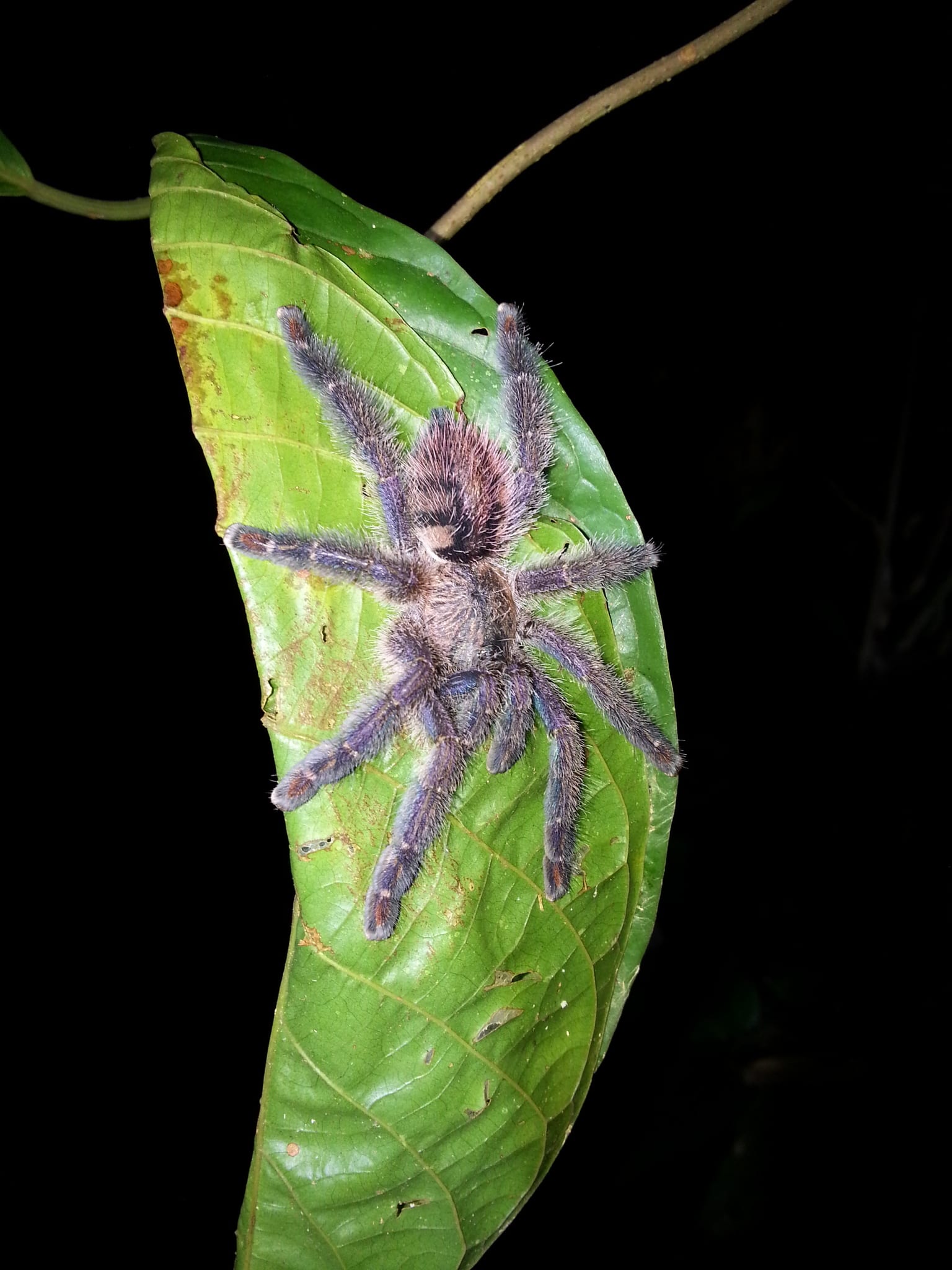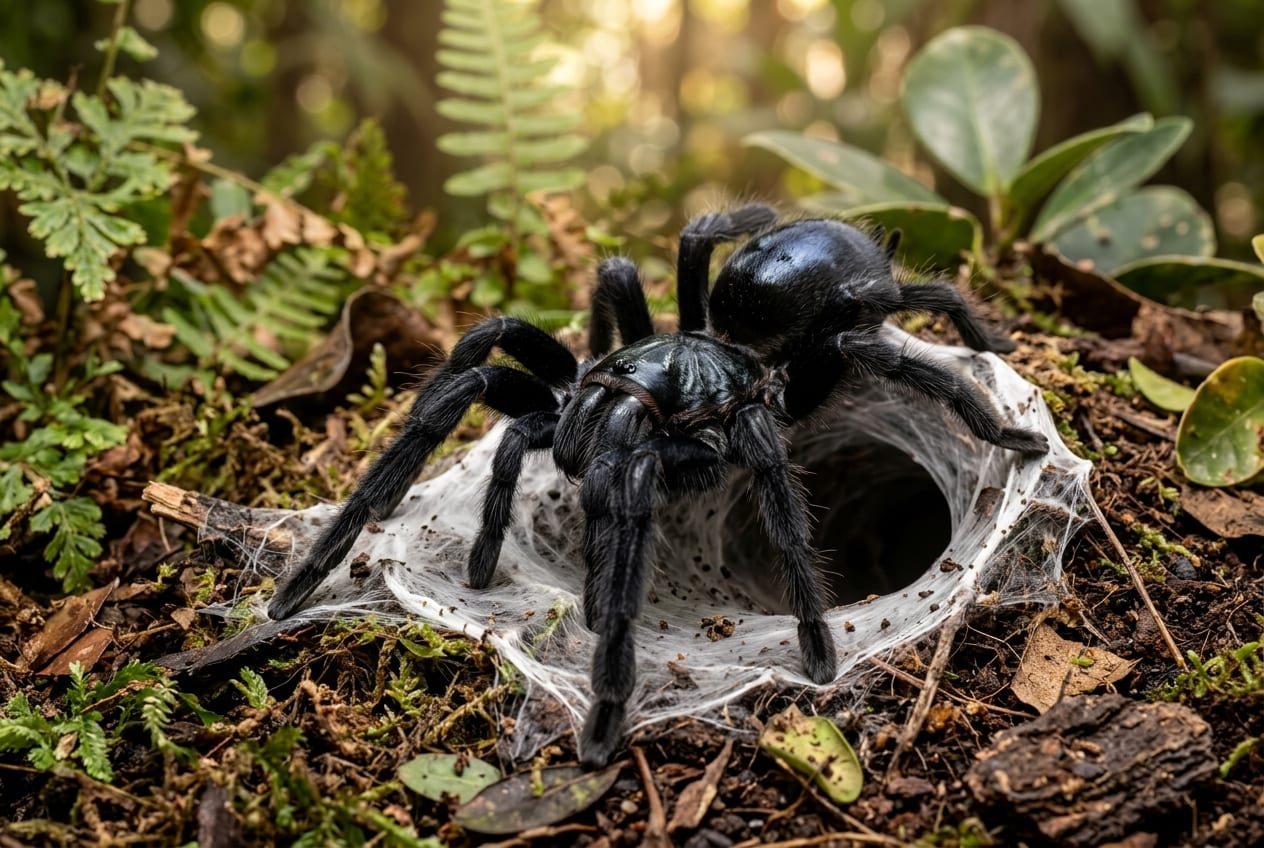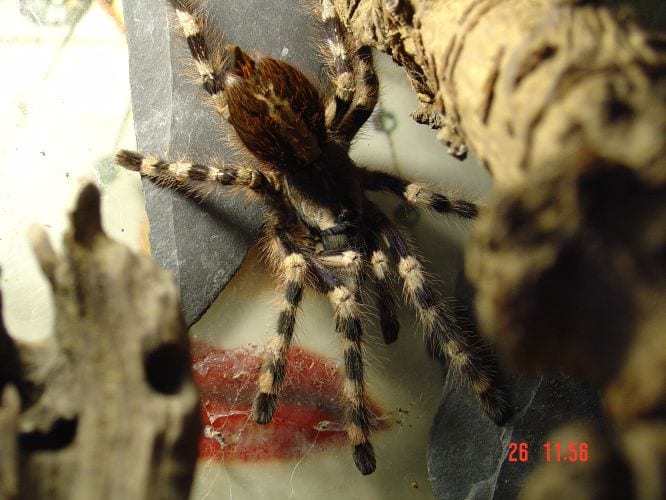
Source: Wikimedia Commons
Salem ornamental
AdvancedPoecilotheria formosa
An arboreal Poecilotheria found only in the southern Eastern Ghats of India. It is declining through habitat loss and collection, and every species in the genus is listed in CITES Appendix II.
Difficulty
Advanced
Lifespan
Little data
Size
Little data
Diet
Carnivorous (live insects such as crickets and roaches)
About
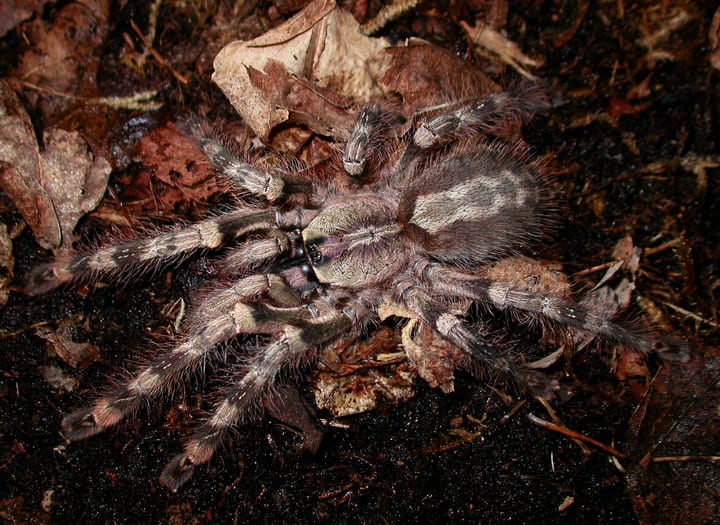
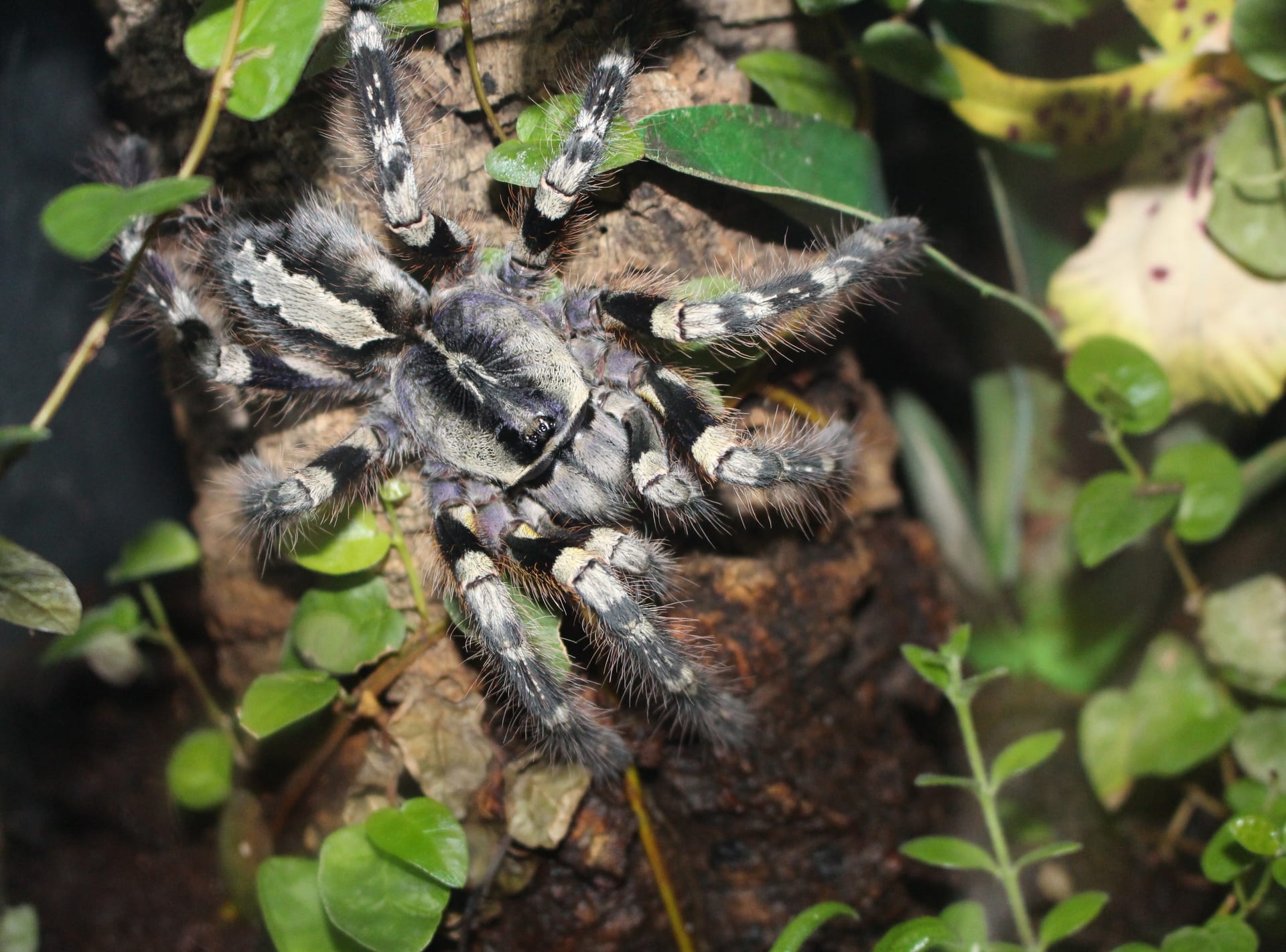
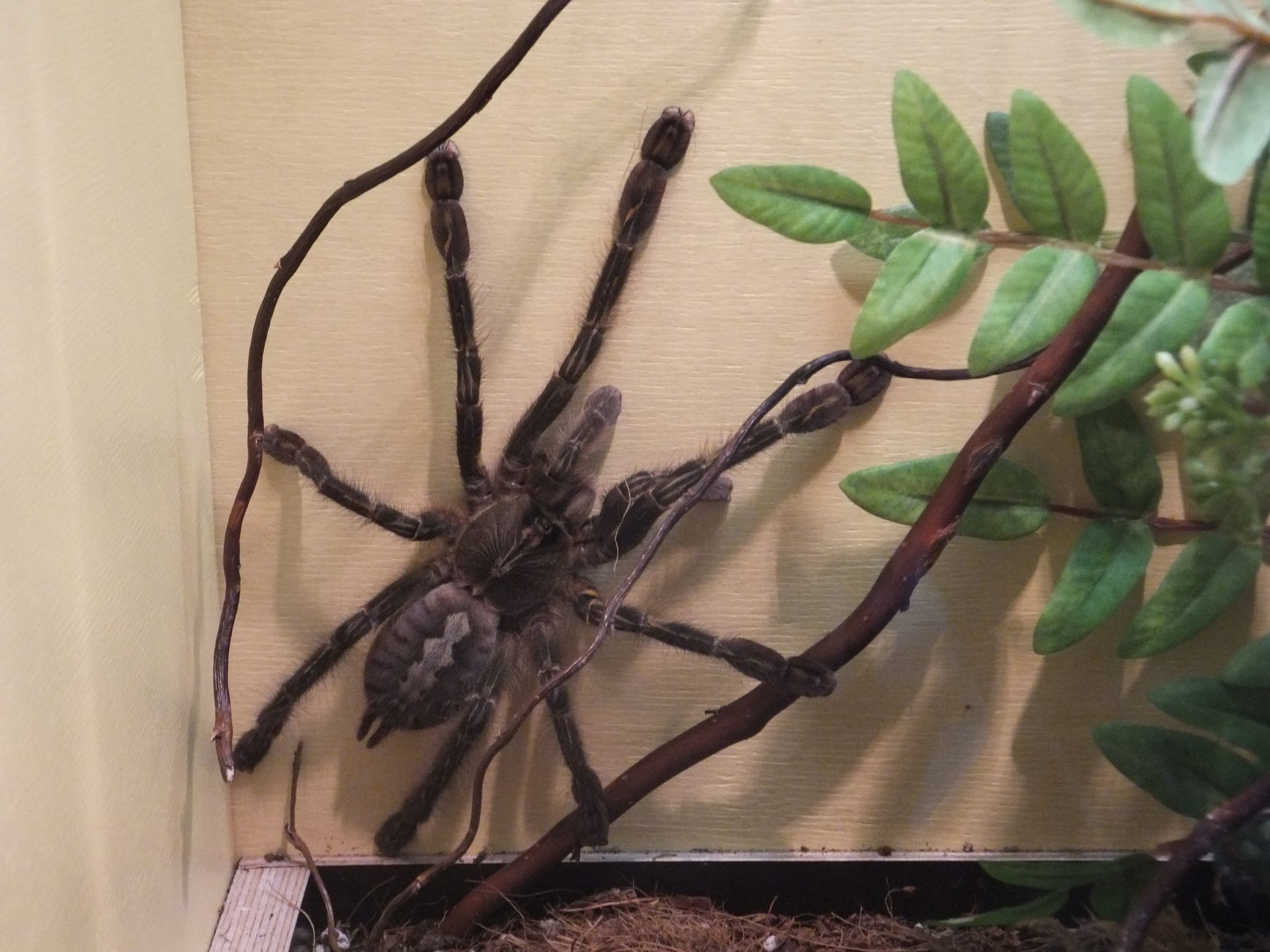
Poecilotheria formosa Pocock, 1899 is an arboreal tarantula of the family Theraphosidae, also called the Salem ornamental or beautiful parachute spider. It is found only in the southern Eastern Ghats of India between Salem and Tirupati, and its population is decreasing through habitat loss and collection for the pet trade. P. nallamalaiensis, described in 2006, is treated as a synonym. Poecilotheria is a genus of arboreal tarantulas from India and Sri Lanka known for vivid patterns, fast movement and venom that is more potent than that of most tarantulas, and since 2019 every species has been protected under CITES. Care information for the congener P. vittata describes the venom as medically significant, causing prolonged pain and muscle cramping, and strongly discourages handling. In Japan captive-bred young still circulate after the genus was listed in CITES Appendix II.
Source: Wikipedia (CC BY-SA 4.0)
Lifespan of the Salem ornamental
Primary sources giving the size or lifespan of this species are scarce.
Basic Info
Origin
Southern India (southern Eastern Ghats between Salem and Tirupati)
Lifespan
Little data
Size
Little data
Diet
Carnivorous (live insects such as crickets and roaches)
Care Guide
References & Sources
Edited & verified by: BreederDirect editorial team
The taxonomic, regulatory, and husbandry data on this page are compiled and verified against the authoritative primary sources below.
Primary sources
- Wikipedia
- Species+: Poecilotheria formosa (CITES Appendix II)
- Ministry of the Environment: List of regulated alien species, including taxa needing an identification certificate (JA)
- Wikipedia: Poecilotheria
- The Tarantula Collective: Poecilotheria vittata care sheet
- GBIF: Poecilotheria formosa Pocock, 1899
Taxonomy & Authority
Regulations & Conservation Status
CITES Appendix II
All Poecilotheria species have been listed in CITES Appendix II since 2019. International trade needs an export permit from the exporting country, but no registration or notification is required to keep or transfer animals within Japan. It is not regulated under the Invasive Alien Species Act (September 2026). Check import paperwork or captive-breeding origin when acquiring one, and never release captive animals.
Sources: Species+: Poecilotheria formosa (CITES Appendix II) / Ministry of the Environment: List of regulated alien species, including taxa needing an identification certificate (JA)
Regulations may change. Always verify the latest information with the relevant authorities.
Salem ornamental Listings
Loading latest listingsFind listings for this species