Ornamental Chicken Breeding Guide (Chabo & Silkies) | Coop Design, Feeding, Breeding, and Predator Protection Basics
Comprehensive guide on raising ornamental chickens, focusing on Chabo (Japanese Bantams) and Silkies. Covers coop design and predator protection, proper feeding and prohibited foods, breed characteristics and care tips, and incubation and chick-rearing procedures—a practical guide for long-term ornamental chicken keeping.
Key Takeaways
Comprehensive guide on raising ornamental chickens, focusing on Chabo (Japanese Bantams) and Silkies. Covers coop design and predator protection, proper feeding and prohibited foods, breed characteristics and care tips, and incubation and chick-rearing procedures—a practical guide for long-term ornamental chicken keeping.
Related Species
Ornamental Chickens (Chabo & Silkies): What They Are
Ornamental chickens (ornamental fowl) are a collective term for chickens bred and kept not primarily for egg or meat production, but rather to enjoy their unique appearance, vocalizations, and behaviors. In Japan, the "Chabo (Japanese Bantam)" and "Silkie" (Ukokkei) have long been cherished as representative ornamental chickens.
The Chabo (Gallus gallus domesticus) is a bantam (small-sized) chicken that was introduced to Japan from Southeast Asia during the Edo period and is a historically significant breed designated as a Japanese National Treasure. Characterized by a compact body, upright tail feathers, and gentle temperament, it is popular as an introductory ornamental chicken breed that is easy for beginners to raise.
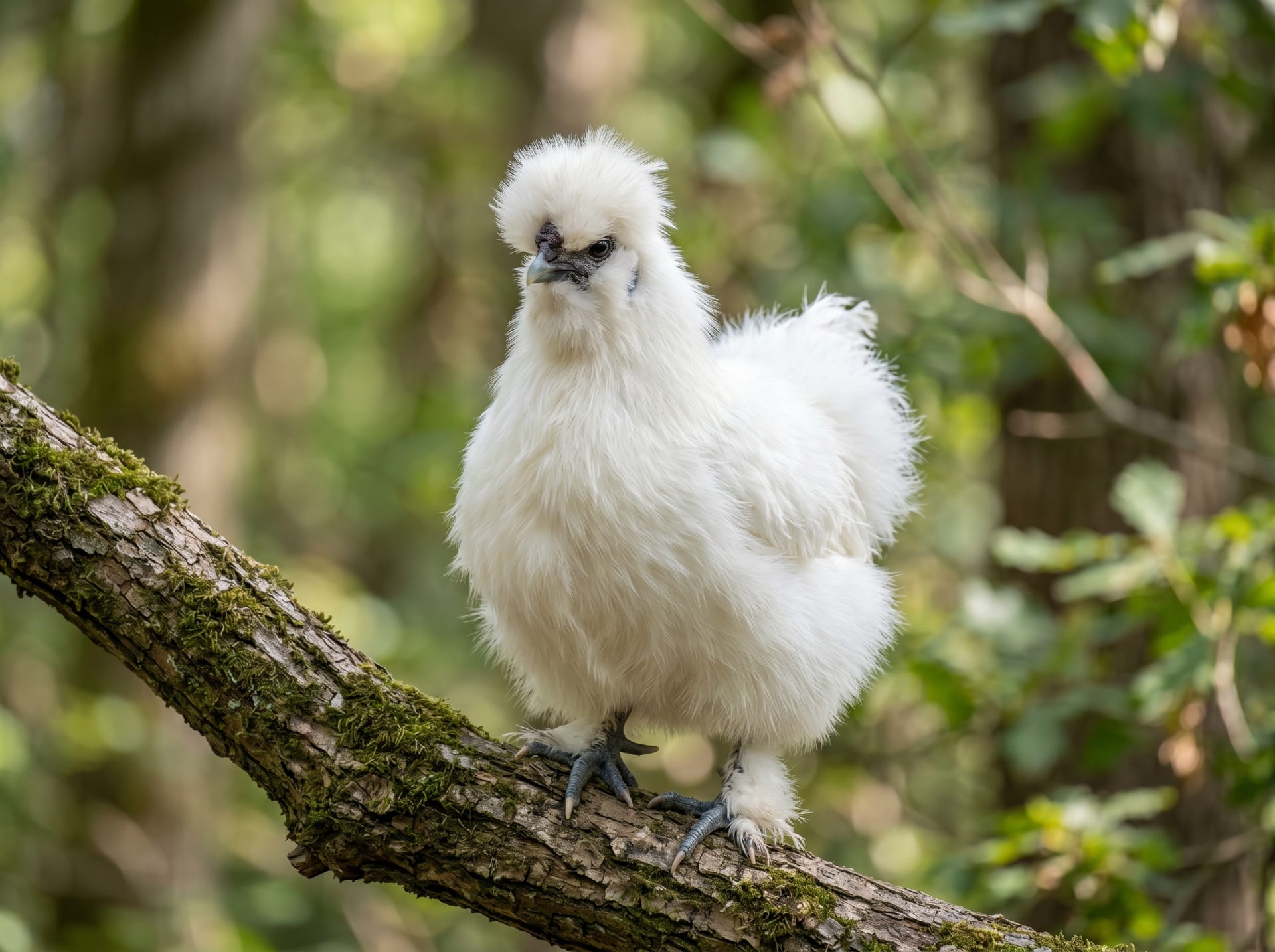
The Silkie (Gallus gallus var.) is a rare chicken with black pigment (melanin) deposited throughout the skin, bones, and organs, believed to originate from China. Its most distinctive visual features are its unique black skin and skeletal structure, along with soft, fluffy plumage known as "silky." In recent years, demand for Silkies has grown not only as food but also as ornamental birds and pets due to their distinctive appearance.
Required Rearing Environment
Raising ornamental chickens requires basic facilities and adequate space. Due to noise concerns—particularly the crowing of roosters—rearing is generally restricted to single-family homes, farmland, or dedicated facilities. Always check local ordinances and municipal regulations before beginning to keep chickens.
Recommended Rearing Environment
| Item | Recommended Value |
|---|---|
| Coop Area (per bird) | Minimum 0.5㎡ or more (Chabo), 1㎡ or more (Silkies) |
| Exercise Space | 2-3 times the coop area |
| Bedding Material | Wood chips, sand, or rice hulls (maintain dry conditions) |
| Roosts | Chabo: ~30cm above ground, Silkies: Lower |
| Temperature | Adults: 5-30℃, Chicks: ~35℃ (using heat lamps) |
Coop Design and Predator Protection
In ornamental chicken keeping, protection from predators (raccoon dogs, foxes, stray cats, and birds of prey) is the primary concern. Nocturnal predator attacks can result in total loss of the flock overnight, making robust coop design essential and non-negotiable.
Coop Design Key Points
- Use metal mesh (hardware cloth: 1.25cm or smaller openings) on all surfaces
- Bury metal mesh 30-45cm into the ground to prevent ground-level infiltration (L-shaped burial)
- Use double-door entry system (airlock) to prevent accidental opening
- Roof must be completely waterproof with bird-netting (to protect against birds of prey)
- Always confine chickens to a locked coop at night (Silkies cannot fly, requiring extra care)
Feed and Water Management
Basic Feeding Guidelines
| Feed Type | Quantity & Frequency |
|---|---|
| Commercial chicken pellet feed (layer pellets) | 100-150g per adult bird daily (can be kept continuously available) |
| Fresh grass and vegetable scraps (lettuce, cabbage, etc.) | 1-2 times daily, free choice |
| Crushed oyster shells (for calcium supplementation) | Always available in separate container, free choice |
| Sand (digestive grit) | Continuously replenished (in sandbox or dedicated container) |
Water containers should be refilled with fresh water daily. Especially in summer, water becomes dirty quickly, so twice-daily replacement is recommended.
Prohibited Foods (harmful to chickens)
- Avocado (all parts, lethal due to persin)
- Scallions, onions, garlic (cause hemolytic anemia)
- Chocolate and coffee (theobromine toxicity)
- High-salt processed foods
- Raw potatoes and tomato leaves (solanine)
Chabo Characteristics and Care Tips
Due to their small size and gentle temperament, Chabo are well-suited for flock rearing. Roosters are territorial and, upon maturity, crow throughout the early morning hours, making consideration for neighbors essential.
- Body Weight: Males 500-700g, Females 400-600g
- Egg Production: Females lay approximately 50-100 eggs per year (egg-laying is not the primary purpose)
- Lifespan: 7-10 years with proper care
- Temperament: Relatively docile and easy to socialize with humans
Silkie Characteristics and Care Tips
Silkies have poor thermoregulation due to their silky plumage and are vulnerable to moisture and cold temperatures.
- Body Weight: Males 1.5-2kg, Females 1-1.5kg
- Egg Production: Females lay approximately 80-150 small eggs per year
- Lifespan: 10-15 years with proper management
- Characteristics: Black skin, meat, and bones (excess melanin deposition). Plumage is soft and silky, making flight impossible
- Moisture Caution: Plumage does not repel water, so indoor shelter is necessary during heavy rain
- Vision Caution: Head plumage can obstruct vision, potentially delaying foraging and predator detection
Breeding (Incubation and Chick-Rearing)
Breeding ornamental chickens begins with nest box installation and hatching egg management.
- Nest Box Installation: Set up a nest box in a dimly lit, quiet location lined with straw and wood chips
- Hatching Egg Selection: Choose well-formed, clean eggs (store at 15-18℃ for up to one week)
- Incubation: Use natural incubation or an incubator. Incubation period is approximately 21 days for both Chabo and Silkies
- Chick-Rearing: After hatching, maintain ~35℃ using heat lamps, gradually acclimating to room temperature over 2-3 weeks
- Initial Feeding: Continuously provide chick starter feed (crumbles) and clean drinking water
Silkies have strong brooding instincts and are well-suited for natural incubation. However, due to their small size, they can only incubate approximately 5-7 eggs at a time.
Common Problems and Solutions
| Symptom | Cause | Solution |
|---|---|---|
| Sudden decrease in egg production | Stress, nutritional deficiency, illness | Check environment, enhance calcium supplementation, consult veterinarian |
| Feather loss | Molting season, mites, overcrowding stress | Natural recovery during molting, treat mites with specialized medications |
| Lethargy and loss of appetite | Possible infection | Isolate bird and consult veterinarian (poultry specialist) |
| Chickens escaping | Gaps in coop, faulty locks | Inspect equipment, repair mesh and doors |
Summary
Ornamental chickens, exemplified by Chabo and Silkies, are delightful fowl that can be enjoyed even in compact rearing spaces. With proper coop design, predator protection, and nutritional management, they become lifelong companions. Their distinctive appearance and gentle nature set them apart from other pets, and purchasing directly from breeders ensures you select genetically pure individuals. Before beginning, always verify local ordinances regarding chicken keeping and never neglect consideration for neighbors—these are prerequisites for sustainable poultry rearing.
Hygiene Management and Disease Prevention
Proper hygiene management is fundamental to maintaining chicken health and the first line of disease prevention. Special care is needed when keeping multiple birds, as illness spreads readily among flocks.
Daily Hygiene Management
- Mix bedding (wood chips or rice hulls) 1-2 times weekly to maintain dryness
- Complete bedding change 1-2 times monthly (replace sooner if damp)
- Wash water and feed containers at least 2-3 times weekly to maintain cleanliness
- Disinfect coop interior walls and floor monthly (using lime or commercial poultry disinfectants)
- Prevent contact with wild birds (potential vectors for avian influenza and other diseases)
Vaccination and Regular Health Checks
In Japan, some vaccines for ornamental chickens are available commercially, but primary vaccines (Newcastle disease, Marek's disease, etc.) should be administered by a veterinarian. When introducing new birds, observe a quarantine period of at least two weeks to prevent disease introduction to the existing flock.
Bonding with Chickens and Socialization Tips
One of the charms of keeping ornamental chickens is the opportunity to interact with birds that have become accustomed to human contact.
- Familiarize from chick stage: Hand-feeding daily from a young age accelerates socialization
- Calm movements and gentle voice: Sudden large movements or loud noises startle chickens. Approach slowly while speaking softly
- How to hold Chabo: Lift gently with both hands supporting the wings. Do not force if the bird resists
- Approach techniques for Silkies: Since head plumage obstructs vision, approach from the side rather than head-on
- Building trust: Consistent daily feeding times establish routine recognition, making chickens feel secure in your presence
Chickens have good memory and can recognize their caretakers. Consistent, gentle daily interaction builds long-term trust.