Source: Wikimedia Commons
Mysore Ornamental
AdvancedPoecilotheria striata
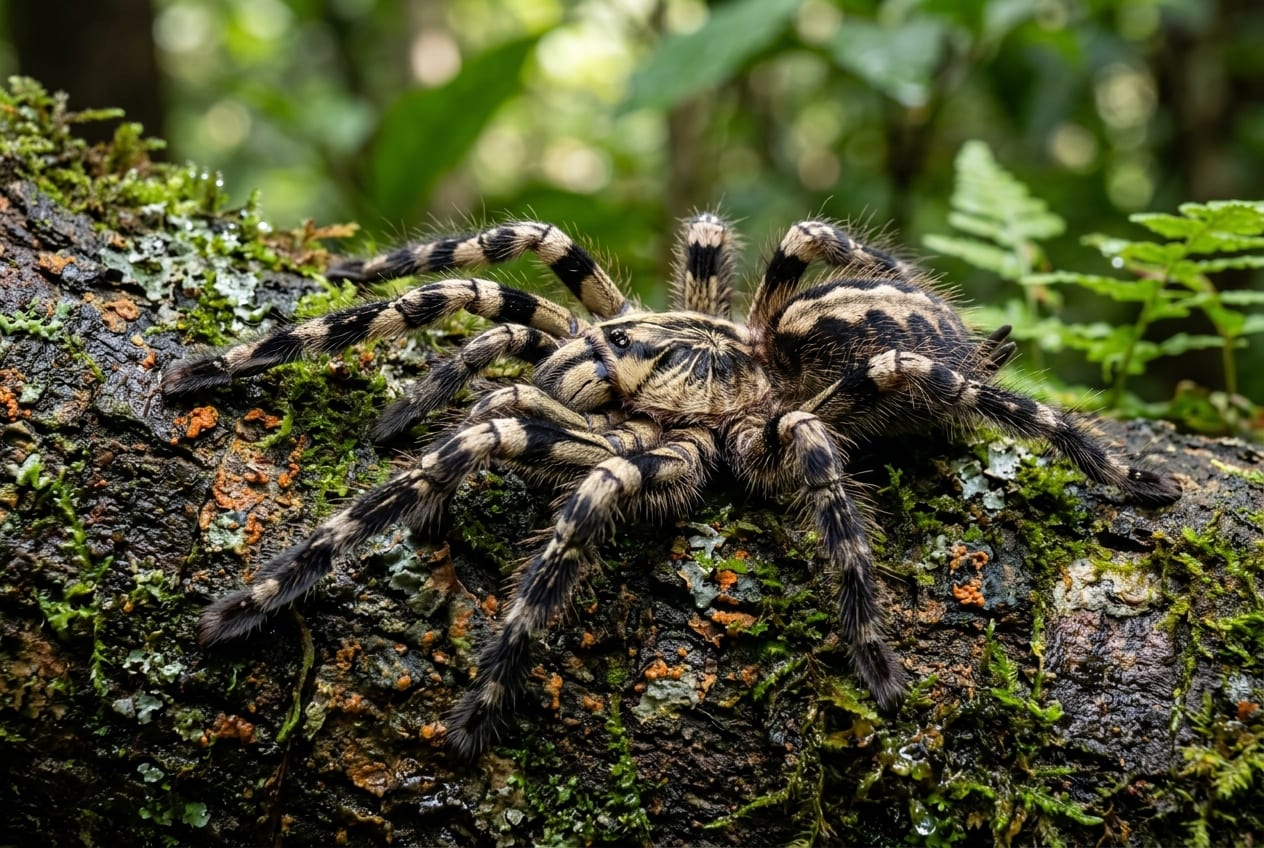
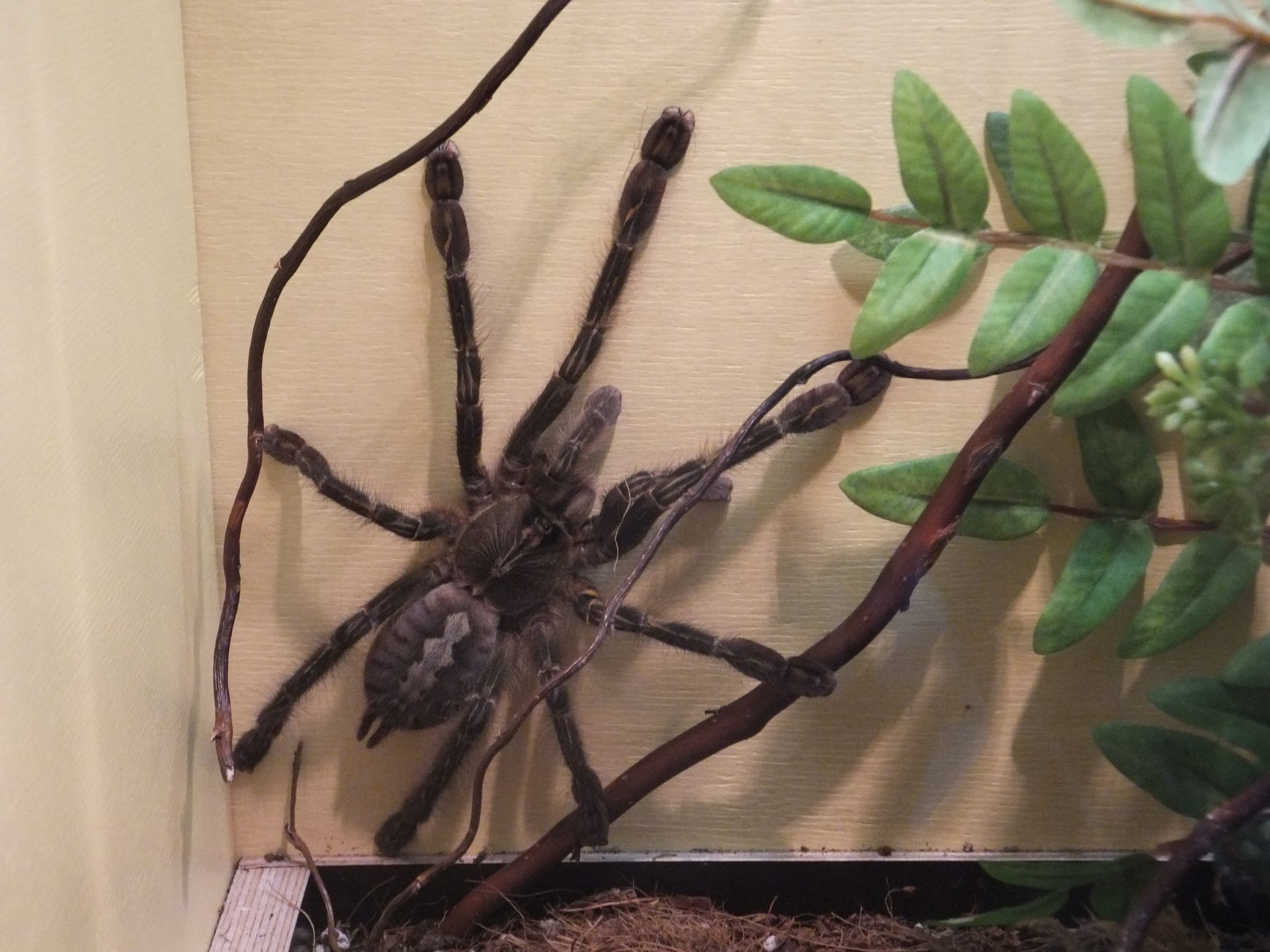
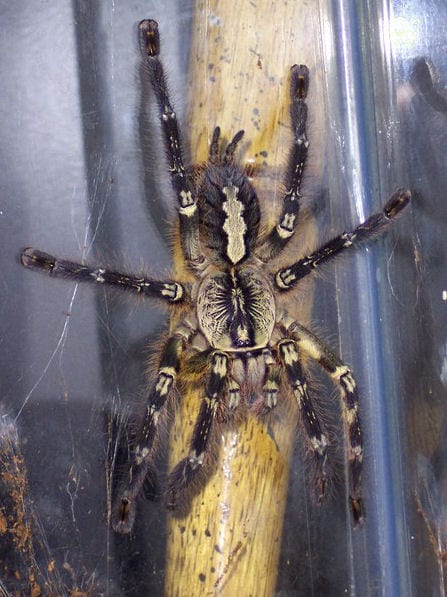
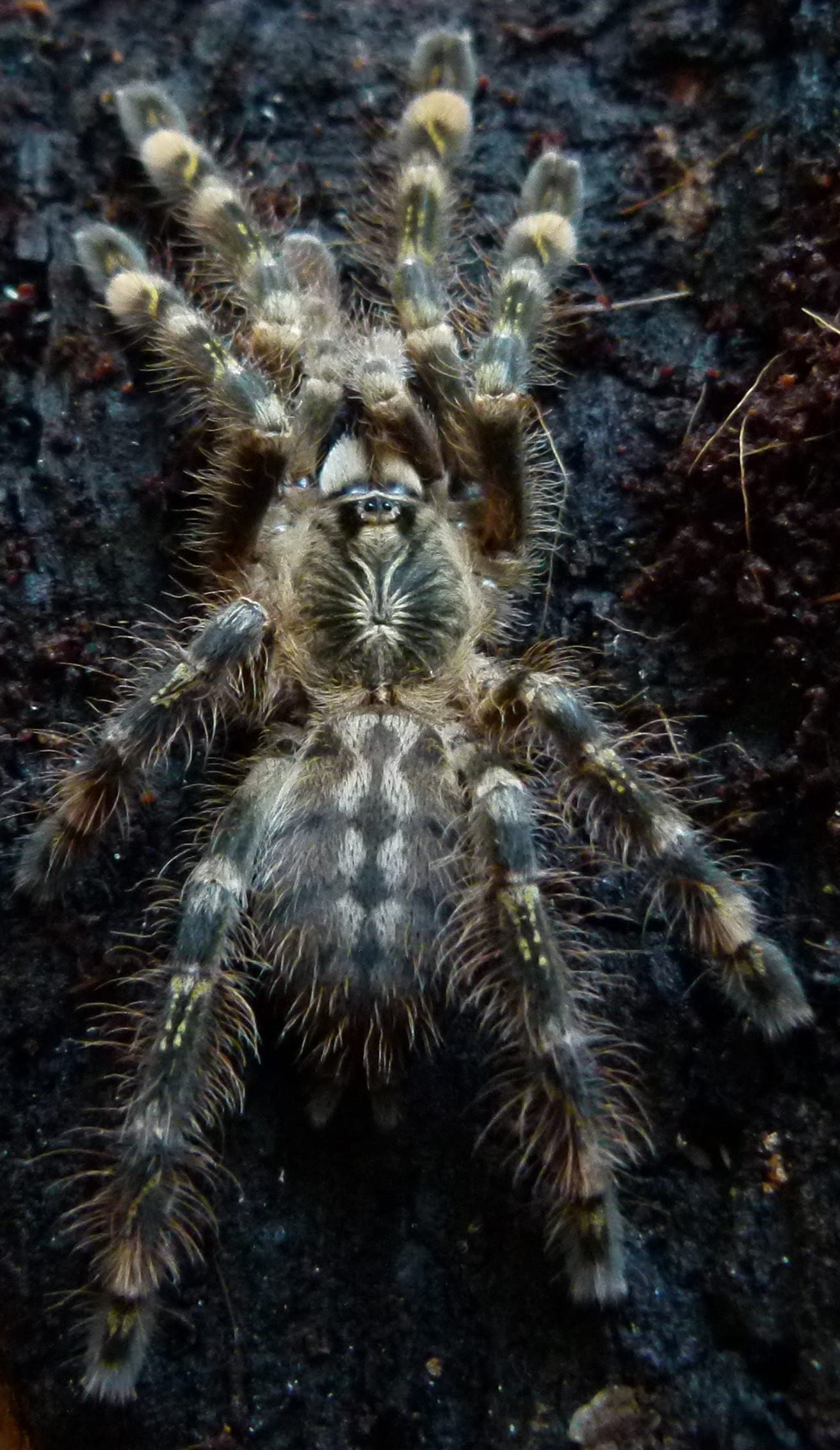
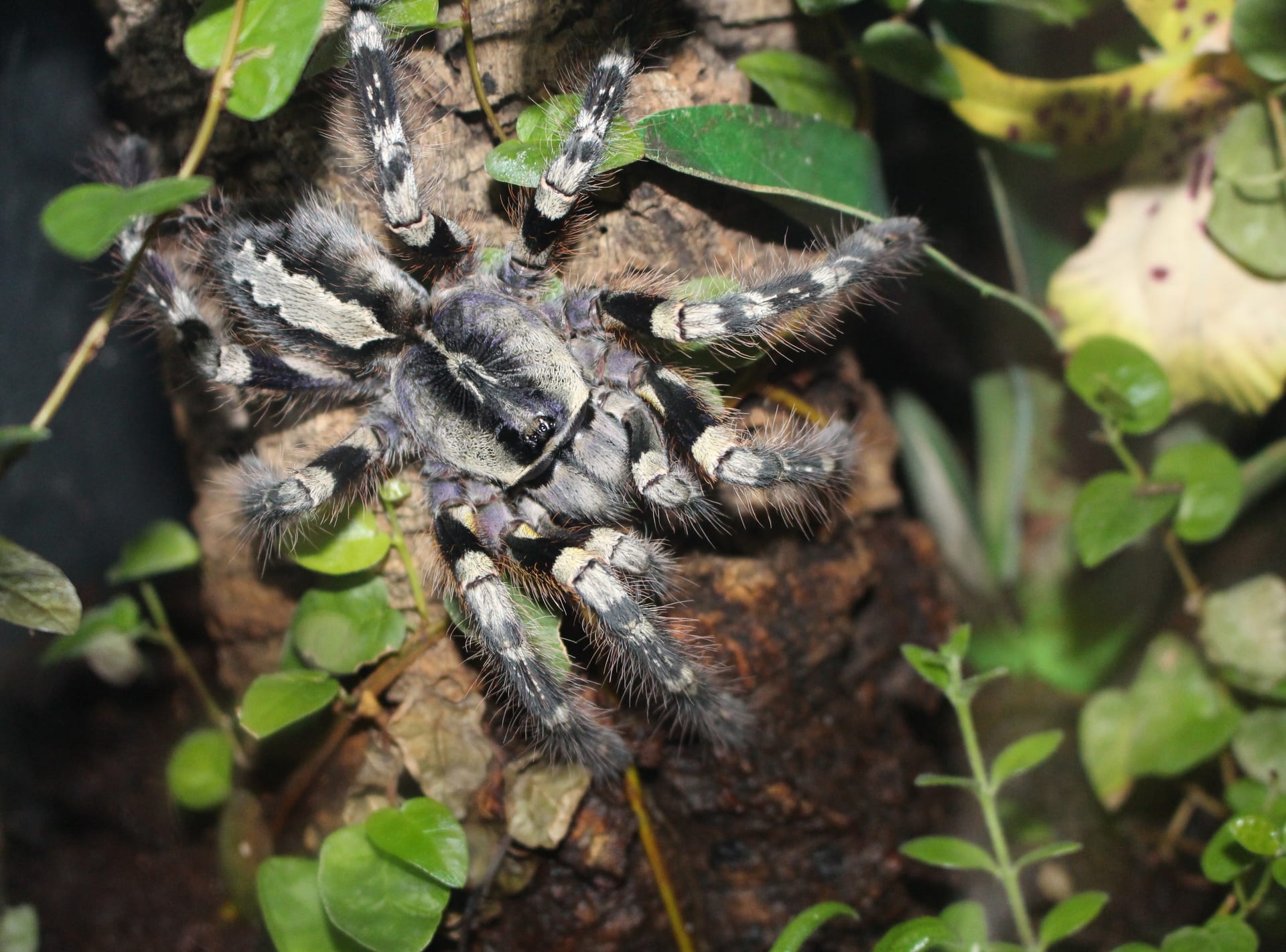
An arboreal tarantula endemic to India, living in deciduous forest between 500 and 1,000 m and apparently surviving in fewer than ten severely fragmented locations. It is a vulnerable species that is nonetheless traded as a pet.
Difficulty
Advanced
Temperature
24〜27℃
Lifespan
Females 12-15 years / males 3-4 years
Size
No primary source for body length or leg span was confirmed
Humidity
65〜75%
Diet
Live insects such as crickets and roaches
About
Poecilotheria striata, described by Pocock in 1895, is an arboreal tarantula endemic to India. It occurs in dry and moist deciduous forest at altitudes between 500 and 1,000 m but appears to survive in fewer than ten severely fragmented locations. Because its range is restricted and declining and its habitat is becoming more fragmented, the IUCN Red List assesses it as Vulnerable, and a distribution survey published in 2015 reported further population losses and suggested the species be reclassified in a higher threat category. It is nevertheless commonly traded as a pet. Like other members of the genus it is nocturnal and crepuscular, builds no capture web, and ambushes prey before pursuing it with exceptional speed and immobilising it with venom. As an Old World species it lacks urticating hairs and defends itself with venom alone.
Source: Wikipedia (CC BY-SA 4.0)
Lifespan of the Mysore Ornamental
The Mysore Ornamental lives Females 12-15 years / males 3-4 years.
Temperature & humidity for the Mysore Ornamental
The ideal temperature for the Mysore Ornamental is 24〜27℃. Ideal humidity is 65〜75%.
Basic Info
Origin
India (endemic)
Lifespan
Females 12-15 years / males 3-4 years
Size
No primary source for body length or leg span was confirmed
Temperature
Care Specifications
Semi-aggressiveSolitary
Sources: Wikipedia / Wikipedia: Poecilotheria (genus) / GBIF / The Tarantula Collective: Poecilotheria regalis (congener reference)
References & Sources
Edited & verified by: BreederDirect editorial team
The taxonomic, regulatory, and husbandry data on this page are compiled and verified against the authoritative primary sources below.
Taxonomy & Authority
Accepted name: Poecilotheria striata Pocock, 1895
Authority databases: GBIF
Nomenclature follows global taxonomic authority databases.
Regulations & Conservation Status
CITES Appendix IIIUCN VU · Vulnerable
Since 2019 all species of Poecilotheria have been listed on CITES Appendix II; international trade requires a CITES export permit from the country of export.
Sources: CITES Appendices (Poecilotheria spp. Appendix II) / IUCN Red List
Regulations may change. Always verify the latest information with the relevant authorities.
Mysore Ornamental Listings
Loading latest listingsFind listings for this species