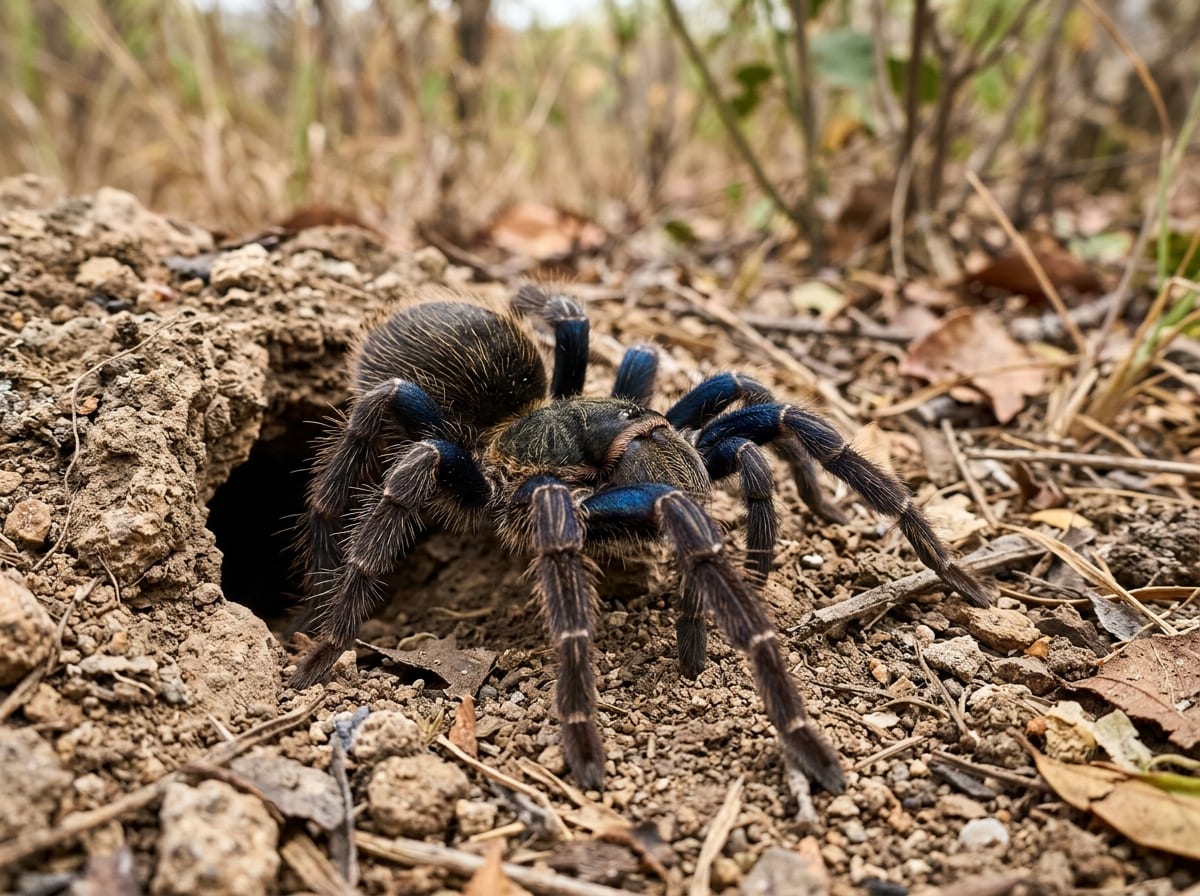
Guerrero blue femur tarantula
The Guerrero blue femur tarantula is a small, ground-dwelling Bonnetina species from southern Mexico. As its trade name suggests, its femurs are said to look blue, which is the main appeal of this species. It was described in 2012 from Guerrero state, so it is a relatively new species and husbandry information is still limited. Lifespan and adult size are not well documented beyond it being a small species, and it is rated for intermediate keepers. It suits people who enjoy quietly watching a terrestrial tarantula and can keep up careful basic care.
View Guerrero blue femur tarantula encyclopedia →Breeder Wanted!
List on BreederDirect and sell directly to customers nationwide!
BreederDirect's 5 Transparency Commitments
When listing Exotic Invertebrates, Breeders disclose the following. We guarantee transparency on growth stage and breeding unit.
- Real Photos
- Breeding Unit
- Generation Info
- Body Length (mm)
- Country of Origin
Browse all 286 breeds
Verified breeders wanted for Exotic Invertebrates
Breeders are signing up now ahead of launch. Subscribe to be notified when new listings go live.
Getting alerts is free with a member account. When new listings match your saved search, we'll notify you by email and in-app.
Browse other categories
Verified breeders (preview)

Are you raising exotic invertebrates?
Register as a breeder and connect with buyers directly.
Apply as a breederGuerrero blue femur tarantula key facts
- Care level
- Intermediate
- Diet
- Carnivorous (live insects such as crickets and roaches)
- Enclosure
- A small terrestrial species. Provide a fairly deep substrate, a hide and a shallow water dish. Keep singly.
- Temperature & Humidity
- The temperature and humidity suited to this species are unclear. Following other terrestrial New World species, keep at room temperature or slightly above with good ventilation and part of the substrate lightly moist.
- Diet & Feeding
- Live prey such as crickets and roaches sized to the spider. Remove uneaten prey and wait a few days after a moult before feeding.
- Temperament & Venom
- Most New World tarantulas kick urticating setae from the abdomen, causing itching and rashes. Keep your face away during maintenance so the setae do not reach the eyes or airways.
- Notes
- Easily confused with congeners or similarly named species; confirm the scientific name and origin. Use a lockable enclosure to prevent escapes and never release captive animals.
About Guerrero blue femur tarantula
A small terrestrial Bonnetina tarantula from southern Mexico with blue-looking femurs. Care basics and what to know before bringing one home; rated for intermediate keepers.
7 things to know before welcoming a Guerrero blue femur tarantula
1Small ground dweller
This is a small terrestrial tarantula of the genus Bonnetina and spends its time on the ground rather than climbing. Choose an enclosure for floor space rather than height. Ground-dwelling tarantulas are thought to be vulnerable to falls, so avoid tall perches or decorations.
2Why intermediate
The species is rated for intermediate keepers. It was described only in 2012 and husbandry information is limited, which is worth keeping in mind. You will need to watch the individual and adjust when things do not go by the book.
3Blue-looking femurs
As the trade name suggests, the femurs are said to look blue. How the color appears can vary with lighting, the individual and how long ago it last molted. Rather than judging from a single photo, ask the seller for several photos of the actual animal.
4Enclosure and hide
Use a low enclosure with plenty of floor space, a deep layer of substrate, and a hide such as cork bark or a piece of flowerpot. Choose a lid that closes securely, with ventilation openings too fine for the tarantula or feeder insects to pass through. It is not unusual for terrestrial species to spend long periods inside their hide.
5Climate and water
Since it comes from southern Mexico, the basic aim is to avoid both cold and stuffy, stagnant air. Keep good ventilation, leave part of the substrate slightly damp, and always provide a clean water dish. Because information on this species is limited, adjust gradually based on conditions in the enclosure and how the animal responds.
6Feeding and molting
Feed insects such as crickets or roaches, choosing prey smaller than the tarantula's body. It may stop eating before a molt; during that time remove any uneaten prey and leave it undisturbed. The body is soft right after molting, so wait a while before feeding again.
7Urticating hairs, handling
Many New World tarantulas flick hairs from the abdomen to defend themselves, and this species may do the same. Avoid touching your eyes or face during maintenance and wash your hands afterward. It is a display animal rather than one to hold in bare hands.
Frequently asked questions about Guerrero blue femur tarantula
- Q.Can a beginner keep this species?
- A.It is rated for intermediate keepers. Because information on the species is limited, it is safer to consider it after you are comfortable with basic tarantula care.
- Q.How long does it live and how big does it get?
- A.Lifespan is not well documented, so no clear estimate can be given. Adult size is also poorly documented, though it is regarded as a small species. It is best to bring one home expecting a long-term commitment.
- Q.Can I keep several in one enclosure?
- A.Keep them one per enclosure. Tarantulas can prey on each other even within the same species, so avoid housing them together.
- Q.How often should I feed it?
- A.It depends on the animal's size and growth stage, so no single schedule fits all. Adjust by watching the fullness of the abdomen and whether prey is left uneaten, and do not force feeding around a molt.
- Q.What should I ask the seller before buying?
- A.Ask when it last molted, whether it is feeding well, its sex, and how it has been kept so far. It also helps to check how the blue femurs look in photos of the actual animal.
Learn more about Guerrero blue femur tarantula in the encyclopedia
View Guerrero blue femur tarantula encyclopedia entry →
Care difficulty, lifespan, size and diet — all basics covered.
More in this category
Can't find the one you're looking for?
Post your wishes for free and breeders with matching animals will contact you with introductions.