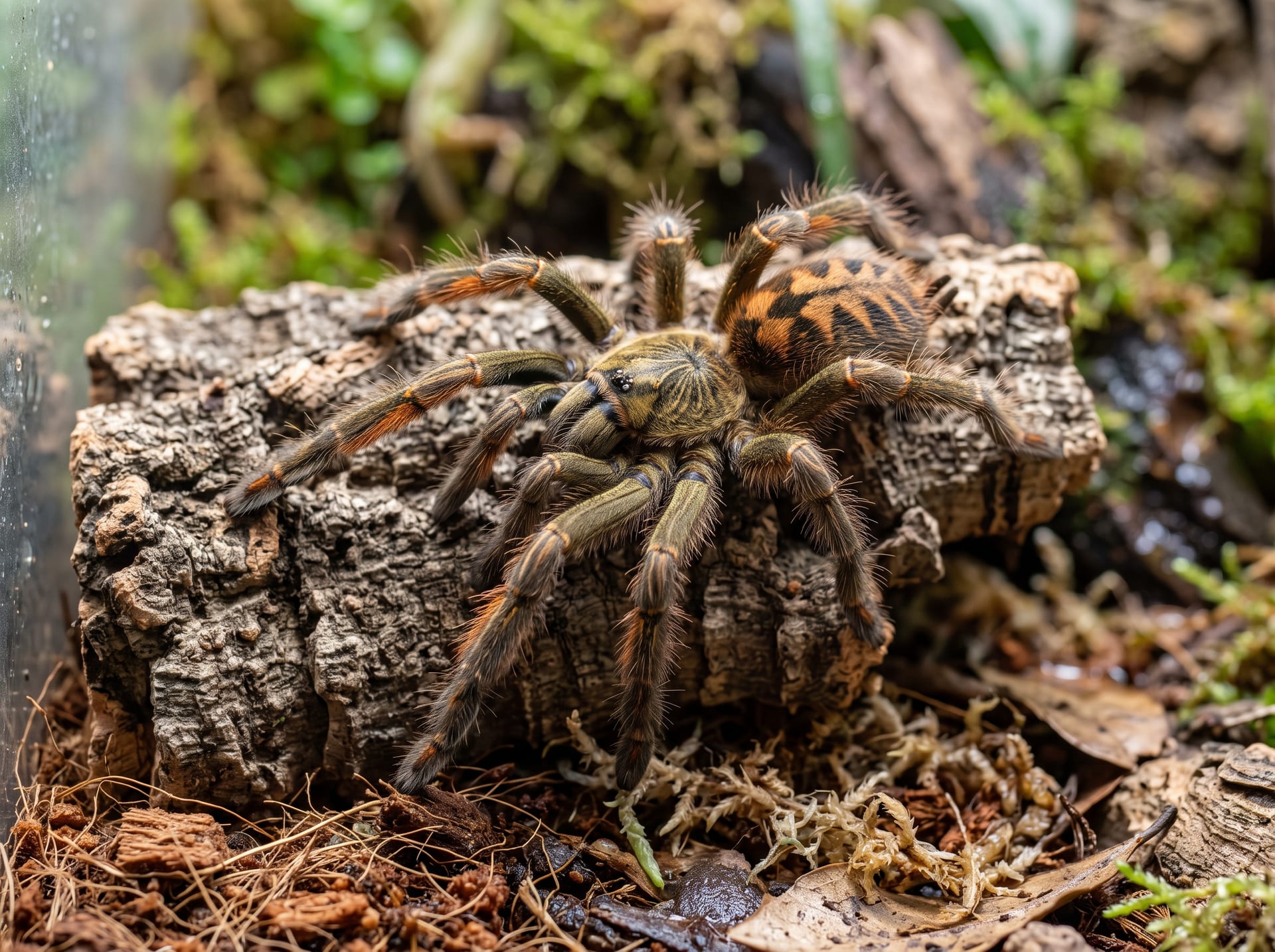
Trinidad Chevron
The Trinidad Chevron is an arboreal tarantula best known for the bold chevron markings across its abdomen and a body color ranging from olive to reddish-brown. Lacking urticating hairs for defense, it relies instead on speed and alertness — a quick, skittish spider that will bolt for cover or flash a defensive posture when startled. Its bite is considered on the stronger side for the hobby, and combined with a fast growth rate, this species suits keepers with some prior tarantula experience. A tall, branch-filled enclosure that lets it climb goes a long way toward keeping one comfortably.
View Trinidad Chevron encyclopedia →0% commission on your first sales!Register by September 30, 2026 and your first 2 sales are commission-free!
Breeder Wanted!
List on BreederDirect and sell directly to customers nationwide!
5 Transparency Standards You Can Trust
When listing Exotic Invertebrates, Breeders disclose the following. We guarantee transparency on growth stage and breeding unit.
- Real Photos
- Breeding Unit
- Generation Info
- Body Length (mm)
- Country of Origin
Browse all 286 breeds
Verified breeders wanted for Exotic Invertebrates
Breeders are signing up now ahead of launch. Subscribe to be notified when new listings go live.
Getting alerts is free with a member account. When new listings match your saved search, we'll notify you by email and in-app.
Browse other categories
Verified breeders (preview)
Are you raising exotic invertebrates?
Register as a breeder and connect with buyers directly.
Apply as a breederTrinidad Chevron key facts
- Care level
- Intermediate
- Lifespan
- Female 10-12 years / Male 3-4 years
- Size
- Leg span 14-16 cm
- Temperature
- 24〜28℃
- Humidity
- 70〜80%
- Diet
- Live insects such as crickets and roaches, offered roughly weekly.
- Habitat
- Tall enclosure with vertical cork bark hides for an arboreal layout.
- Temp & Humidity
- 24-28°C, 70-80% humidity; keep humid with ventilation.
- Feeding
- Hearty feeder and fast grower; feed about weekly.
- Caution
- No urticating hairs but fast and prone to bolting; venom is moderately strong—avoid handling.
About Trinidad Chevron
Trinidad Chevron is an arboreal tarantula known for its chevron-patterned abdomen and quick, defensive nature. It lacks urticating hairs, has a stronger-than-average bite, and grows quickly — suited to intermediate keepers.
7 things to know before welcoming a Trinidad Chevron
1Needs Vertical Space
As an arboreal species, Trinidad Chevron does better in a tall enclosure than a wide one. Add branches or cork bark for climbing, and place hides up off the substrate rather than at ground level. Good ventilation matters too, since it spends most of its time above the floor.
2Watch for Fast Escapes
This tarantula moves extremely quickly and can bolt the moment its enclosure is opened. Work calmly during maintenance, and consider a cage with a secure, lockable lid to reduce the risk of an escape.
3Bite Risk, No Hairs
Trinidad Chevron has no urticating hairs to flick in defense, so it relies on its bite instead, which is considered stronger than average for the hobby. Handling isn't recommended — approach maintenance with that bite risk in mind.
4Grows Quickly
This species grows at a relatively fast pace. Slings in particular tend to molt often, so you'll need to reassess enclosure size and feeding amounts as they grow.
5Lifespan Differs by Sex
Females typically live 10 to 12 years, while males live only about 3 to 4 years after maturing. A female is the better choice for a long-term pet; if breeding is a goal, keep the male's maturation timeline in mind.
6Adult Size to Expect
Adults reach a leg span of about 14 to 16 cm. Plan your enclosure around this eventual size from the start, or budget for an upgrade as your tarantula grows.
7A Watch-Only Pet
This is an alert, defensive species that tends to flash a threat posture or flee when startled rather than tolerate handling. It suits keepers who enjoy observing rather than interacting.
Frequently asked questions about Trinidad Chevron
- Q.Is Trinidad Chevron suitable for beginners?
- A.It's considered an intermediate-level species. Given its fast, defensive temperament and stronger-than-average bite, it's better suited to keepers with some prior tarantula experience.
- Q.Can I handle a Trinidad Chevron?
- A.Since it lacks urticating hairs, it tends to rely on biting when startled instead. Handling isn't recommended — it's best enjoyed as a species to observe rather than hold.
- Q.Does care differ between males and females?
- A.Basic husbandry is the same for both, but lifespan differs a lot — females live around 10 to 12 years, males only about 3 to 4. If you want a long-term companion, a female is the better pick.
- Q.What kind of enclosure does it need?
- A.Since it's arboreal, a tall enclosure works better than a wide, floor-focused one. Add branches or cork bark so it has vertical space to climb.
- Q.Is this species subject to any regulations?
- A.It is not subject to CITES.
Learn more about Trinidad Chevron in the encyclopedia
View Trinidad Chevron encyclopedia entry →
Care difficulty, lifespan, size and diet — all basics covered.
More in this category
Can't find the one you're looking for?
Post your wishes for free and breeders with matching animals will contact you with introductions.