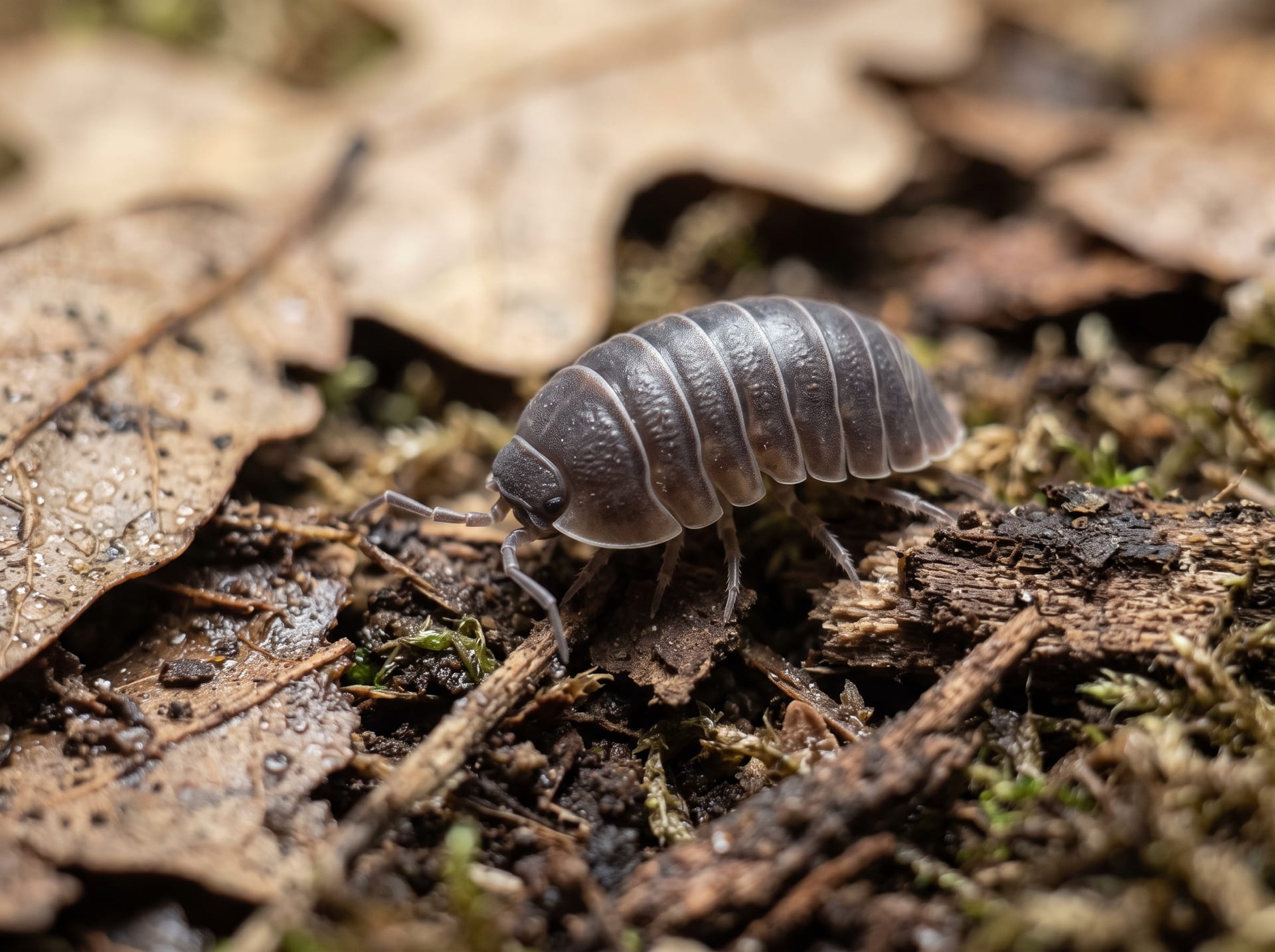
Little Sea Isopod
The Little Sea Isopod is a small woodlouse from the Cubaris group, often recommended as a beginner's entry point into isopod keeping. Adults reach only about 0.8 to 1 cm and have the endearing habit of rolling into a tight ball when disturbed. As a detritivore that feeds on decaying leaves and wood, it has no bite or venom to worry about, making it easy to handle and safe to house alongside other animals. It's a popular cleanup crew choice in bioactive setups, and with easy care, easy breeding, and a lifespan of roughly 1.5 to 2 years, it's a great first species for anyone curious about keeping isopods.
View Little Sea Isopod encyclopedia →Breeder Wanted!
List on BreederDirect and sell directly to customers nationwide!
BreederDirect's 5 Transparency Commitments
When listing Exotic Invertebrates, Breeders disclose the following. We guarantee transparency on growth stage and breeding unit.
- Real Photos
- Breeding Unit
- Generation Info
- Body Length (mm)
- Country of Origin
Browse all 286 breeds
Verified breeders wanted for Exotic Invertebrates
Breeders are signing up now ahead of launch. Subscribe to be notified when new listings go live.
Getting alerts is free with a member account. When new listings match your saved search, we'll notify you by email and in-app.
Browse other categories
Verified breeders (preview)
Are you raising exotic invertebrates?
Register as a breeder and connect with buyers directly.
Apply as a breederLittle Sea Isopod key facts
- Care level
- Beginner-friendly
- Lifespan
- About 1.5-2 years
- Size
- About 0.8-1 cm
- Temperature
- 20〜26℃
- Humidity
- 65〜80%
- Diet
- Mainly leaf litter and rotten wood, with vegetable scraps, a little protein, and calcium as supplements.
- Habitat
- Keep in a ventilated tub with leaf litter, wood, and hides.
- Temp & Humidity
- Hold 20-26C with one side kept moist for a gradient.
- Feeding
- Leaf litter plus small amounts of protein and calcium.
- Notes
- Hardy and prolific; harmless with no venom or bite.
About Little Sea Isopod
A beginner-friendly guide to the Little Sea Isopod, a small Cubaris species known for rolling into a ball and serving as bioactive cleanup crew, covering the care basics to know before bringing one home.
7 things to know before welcoming a Little Sea Isopod
1Known for Rolling Into a Ball
The Little Sea Isopod rolls itself into a tight ball when startled or disturbed. This is a defensive reflex, and it naturally unrolls and resumes normal activity once it feels safe again.
2Detritivore With No Bite or Venom
As a detritivore, it feeds on decaying leaves, wood, and fungi, and has no fangs or venom. It poses little risk when handled and is easy to house alongside other animals.
3A Cleanup Crew for Bioactive Setups
It breaks down leftover food, waste, and other organic matter that can otherwise turn moldy, which is why it's commonly added to reptile and amphibian bioactive enclosures as part of the cleanup crew.
4Balancing Humidity and Airflow
It prefers humid conditions, but an enclosure that stays too wet and stagnant can lead to mold or health problems. Balancing moisture with adequate airflow is key to keeping them long term.
5Substrate and Hiding Spots
A thick layer of hardwood mulch, leaf litter, and rotting wood serves as both hiding spot and food source. Since they favor dark, sheltered spaces, adding several hides helps them settle in.
6Easy to Breed
Considered beginner-friendly, it breeds fairly readily once its enclosure conditions are right. Numbers tend to build into a self-sustaining colony, so keeping several individuals together works better than keeping just one.
7Lifespan and Long-Term Commitment
With a lifespan of roughly 1.5 to 2 years, caring for one means a commitment of over a year. Before bringing one home, it's worth confirming you can maintain a stable setup and routine over that span.
Frequently asked questions about Little Sea Isopod
- Q.Does it bite or have venom?
- A.No, it's a detritivore with no bite or venom, so handling it poses little risk. That said, it's best to handle it gently and avoid causing unnecessary stress.
- Q.Can it be kept with other animals?
- A.Yes, its calm, non-aggressive nature makes it a popular cleanup crew addition to reptile and amphibian bioactive setups. Just check the dietary habits of any tankmate first so it isn't treated as prey.
- Q.How difficult is it to care for?
- A.It's considered beginner-friendly and fairly easy to raise once you have the basics of temperature and humidity management down. Since it breeds readily, it's often chosen as a first isopod or invertebrate species.
- Q.How big does it grow?
- A.It's a small species, reaching only about 0.8 to 1 cm as an adult. When rolled into a ball it becomes even more compact, making it easy to manage in an enclosure.
- Q.What is its lifespan?
- A.Its lifespan is roughly 1.5 to 2 years. With consistent temperature and humidity management, it tends to stay stable and easy to keep throughout that time.
Learn more about Little Sea Isopod in the encyclopedia
View Little Sea Isopod encyclopedia entry →
Care difficulty, lifespan, size and diet — all basics covered.
More in this category
Can't find the one you're looking for?
Post your wishes for free and breeders with matching animals will contact you with introductions.