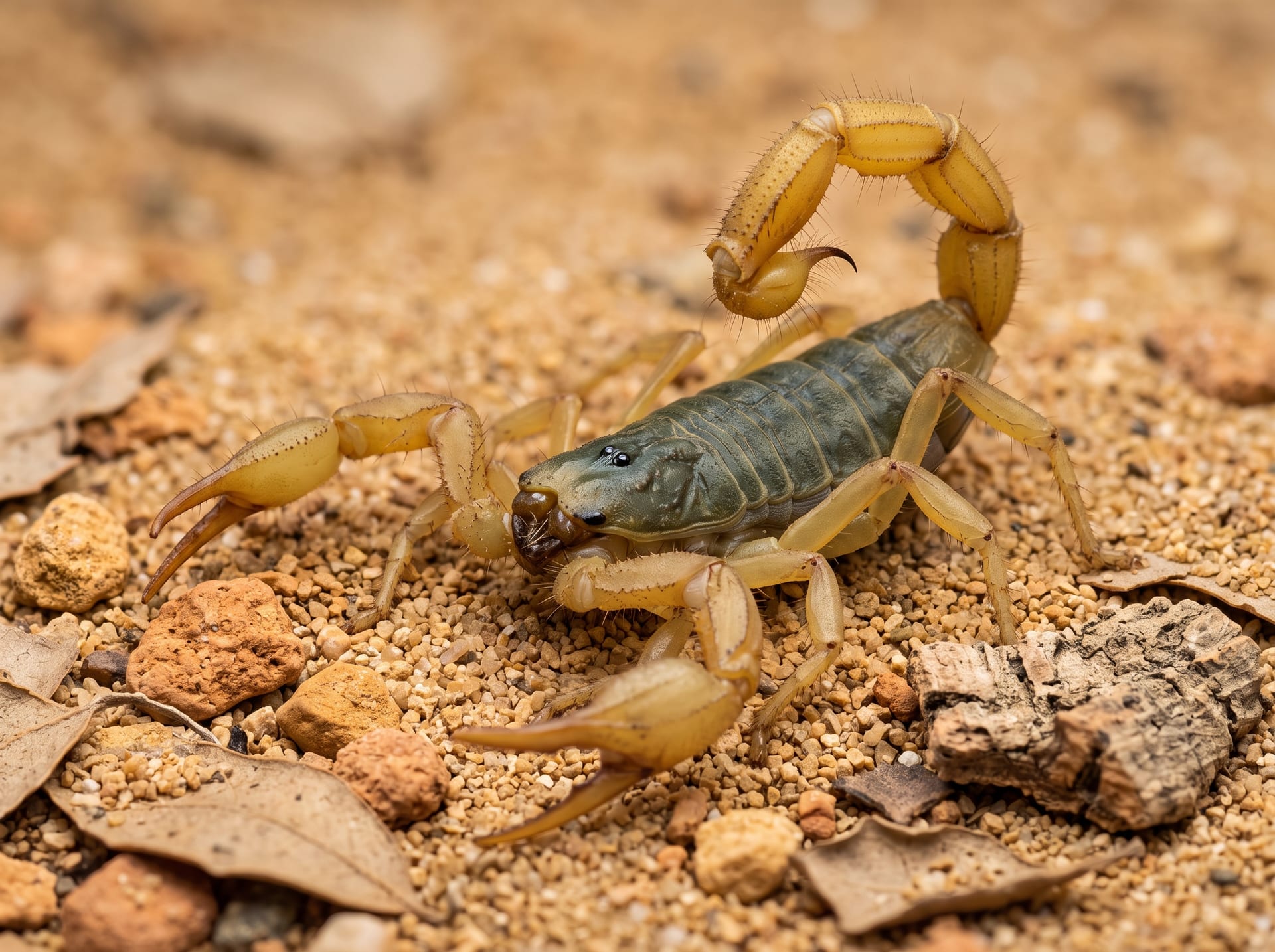
Desert Hairy Scorpion
The Desert Hairy Scorpion is one of the largest scorpion species found in the arid deserts of the southwestern United States and northern Mexico. Its name comes from the fine sensory hairs covering its body, which help it detect vibrations and locate prey in the dark. Its sting is relatively mild, often compared to a bee sting, though its large pincers and quick reflexes mean it should still be handled with caution. Nocturnal by nature, it spends daylight hours resting quietly in its burrow and becomes active after dark. Considered a hardy species suited to intermediate keepers, it thrives when given deep, dry substrate that allows it to dig and create a burrow of its own.
View Desert Hairy Scorpion encyclopedia →0% commission on your first sales!Register by September 30, 2026 and your first 2 sales are commission-free!
Breeder Wanted!
List on BreederDirect and sell directly to customers nationwide!
5 Transparency Standards You Can Trust
When listing Exotic Invertebrates, Breeders disclose the following. We guarantee transparency on growth stage and breeding unit.
- Real Photos
- Breeding Unit
- Generation Info
- Body Length (mm)
- Country of Origin
Browse all 249 breeds
Verified breeders wanted for Exotic Invertebrates
Breeders are signing up now ahead of launch. Subscribe to be notified when new listings go live.
Getting alerts is free with a member account. When new listings match your saved search, we'll notify you by email and in-app.
Browse other categories
Verified breeders (preview)
Are you raising exotic invertebrates?
Register as a breeder and connect with buyers directly.
Apply as a breederDesert Hairy Scorpion key facts
- Care level
- Intermediate
- Lifespan
- About 10-20 years
- Size
- 11-14 cm in length
- Temperature
- 25〜32℃
- Humidity
- 30〜50%
- Diet
- Live insects such as crickets and roaches
- Habitat
- Deep dry sand/soil substrate for burrowing, with a hide and good ventilation.
- Temp & Humidity
- Keep dry at 25-32°C and 30-50% humidity; avoid excess moisture.
- Feeding
- Feed live prey about weekly; offer a small water dish occasionally.
- Caution
- Venom is mild but it is fast; strictly avoid humidity, which it tolerates poorly.
About Desert Hairy Scorpion
A large scorpion native to the deserts of the southwestern US, named for the sensory hairs covering its body. Its venom is mild, comparable to a bee sting, and it needs deep, dry, burrowable substrate, making it a species best suited to intermediate keepers.
7 things to know before welcoming a Desert Hairy Scorpion
1Deep, Dry Substrate Needed
This species digs burrows to hide in, so the enclosure needs several times its body length in dry, loose substrate depth. It does poorly in damp conditions, so aim to recreate a dry, desert-style layout.
2Nocturnal by Nature
During the day it stays hidden in the substrate or under cover, remaining motionless until night, when it becomes active. Not seeing it during daylight hours is completely normal for this species.
3Mild Venom, Handle with Care
Its venom is considered relatively mild, comparable to a bee sting, but its large pincers have a strong grip and a pinch can be painful. Avoid direct handling and use dedicated feeding tongs or tools instead.
4Keep Solitary
Individuals are highly territorial, and housing multiple scorpions together risks cannibalism. Provide a separate enclosure for each individual and keep them solitary.
5Dry Heat & Humidity Care
As a desert species, it prefers dry conditions and stable warmth. Overly damp substrate can cause health problems, so keep the enclosure dry overall while providing a small water dish for hydration.
6A Decade-Plus Commitment
With a lifespan of roughly 10 to 20 years, this is a long-term commitment once you bring one home. Growth is slow as well, so patience is part of keeping this species.
7Prepare Before Arrival
Adults reach about 11 to 14 cm in length, so prepare a roomy enclosure, a hide, and deep dry substrate before bringing one home. Having a thermometer on hand also makes ongoing care easier.
Frequently asked questions about Desert Hairy Scorpion
- Q.Is its venom dangerous if it stings someone?
- A.Its venom is relatively mild, with symptoms generally compared to a bee sting. That said, individual reactions and allergies can vary, so if stung, monitor the area and consult a doctor if needed.
- Q.Is it normal not to see it during the day?
- A.Yes, it's nocturnal and normally stays hidden in the substrate or under cover during the day. You should see it become active once night falls.
- Q.Can multiple individuals share one enclosure?
- A.No, individuals are territorial and cannibalism is a real risk, so each scorpion should have its own enclosure. Avoid housing multiple individuals together.
- Q.What should it be fed?
- A.Live insect prey such as crickets is typical. Appetite varies by individual and temperature, so remove any uneaten prey promptly.
- Q.Is this species suitable for beginners?
- A.It's generally considered suited to intermediate keepers. Following the basics — a dry setup and solitary housing — makes for stable care, though first-time scorpion keepers should research thoroughly beforehand.
Learn more about Desert Hairy Scorpion in the encyclopedia
View Desert Hairy Scorpion encyclopedia entry →
Care difficulty, lifespan, size and diet — all basics covered.
More in this category
Can't find the one you're looking for?
Post your wishes for free and breeders with matching animals will contact you with introductions.